Faculty and Student Spotlights | SLAI Team Completes World's First Outdoor Autonomous Humanoid Robot Ping-Pong Challenge
In April 2026, a high-tech spectacle bridging the gap between the laboratory and the real world unfolded in Zibo, a city with deep historical ties to the ancient Qi State. During the Zibo Ping-Pong Cultural and Tourism Carnival, a team of faculty and students from SLAI completed the world's first outdoor autonomous humanoid robot ping-pong performance against a human opponent. The event did more than just demonstrate the cutting-edge capabilities of domestic humanoid robots in high-dynamic scenarios; it showcased the practical capabilities of SLAI in the field of frontier artificial intelligence.
01 Breaking the Mold: Moving from Lab "Staging" to Outdoor Performance
Traditionally, humanoid robots playing ping-pong have relied heavily on precise motion capture systems. Such systems require dozens of high-frequency cameras arranged in controlled laboratory environments to guide the robot through external perception, resulting in limited environmental adaptability.
The embodied intelligence system debuted in Zibo represents a significant step beyond this model. Developed by a team led by Prof. Ping Luo, Deputy Director of the SLAI Center for Embodied Intelligence and Computer Vision, in collaboration with the HKU MMLab and Shenzhen-based startup Kinetix AI, the system has ditched the "MoCap crutches" in favor of autonomous perception.
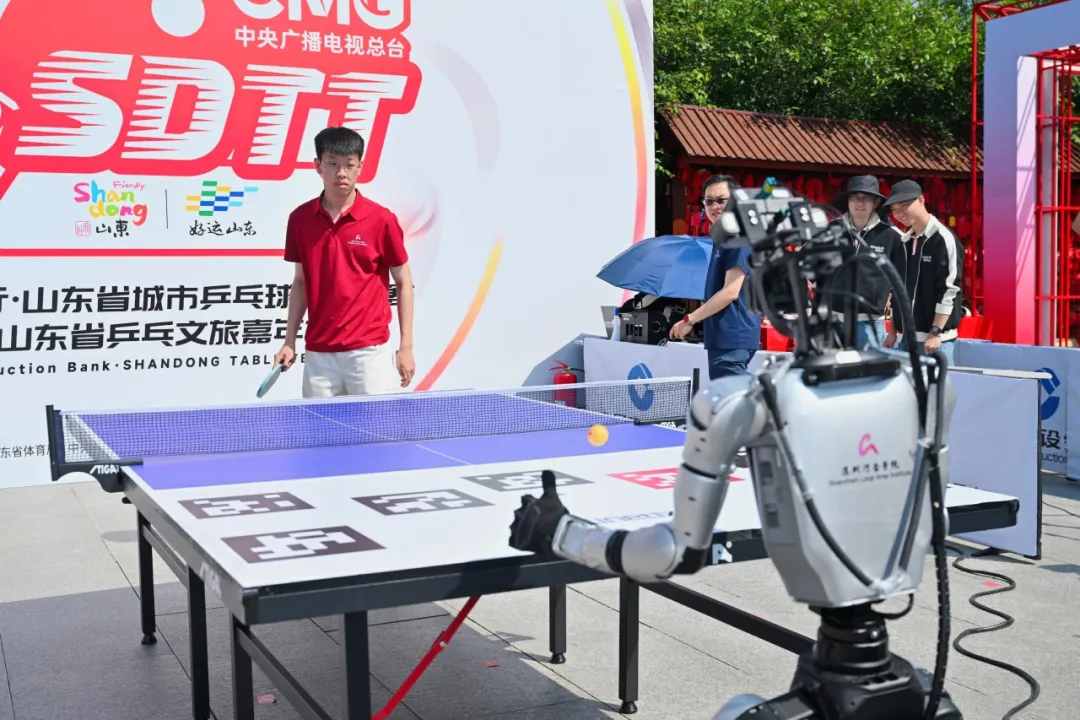 | 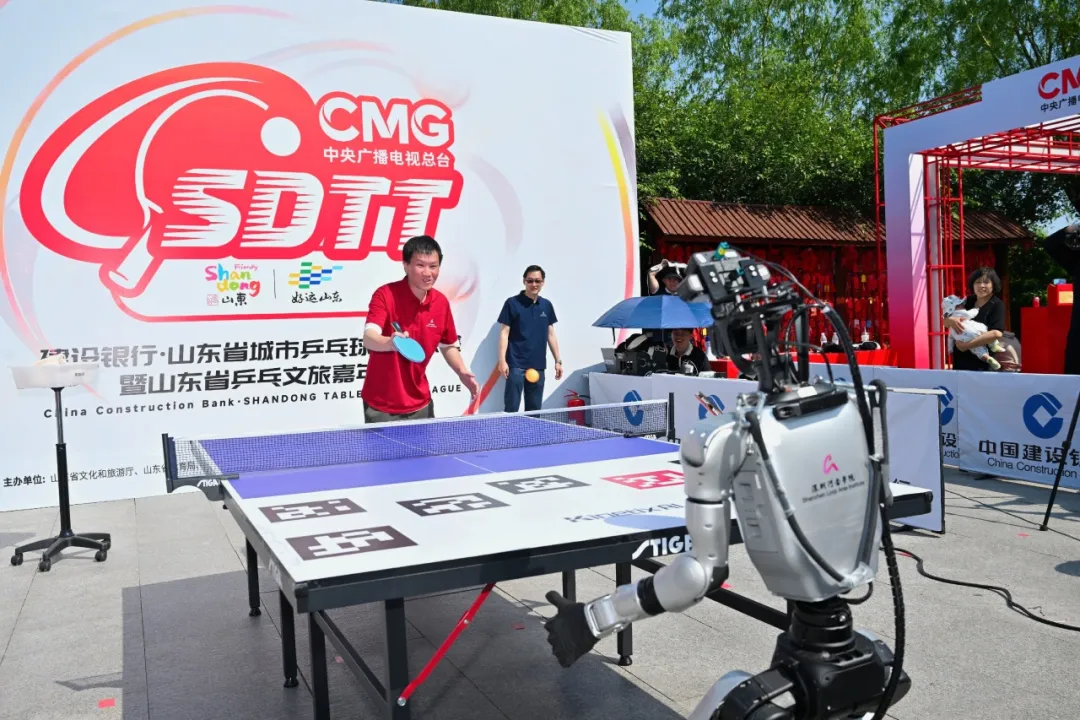 |
"Previously, robots played ping-pong by essentially 'following preset instructions.' Today, they are able to 'observe the game with their own eyes,' " explained Prof. Ping Luo. Under challenging outdoor conditions including wind interference, direct sunlight, and shifting light, the system relied on the robot's onboard visual sensors to overcome three major technical challenges in real time:
1.Rapid Positioning: Precisely identifying the location of the ping-pong table against a complex background.
2.Trajectory Prediction: Calculating the flight path of the moving ping-pong ball in real time.
3.Human-Like Striking: Making human-like paddle-swing decisions and dynamic balance adjustments within milliseconds.
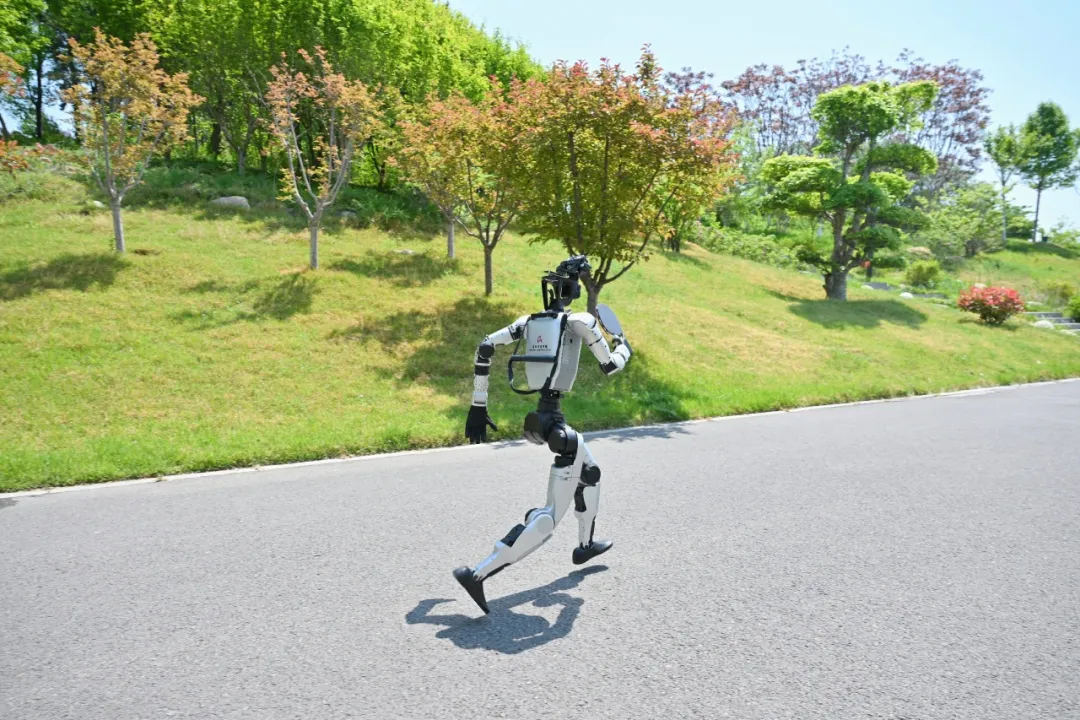
This highly dynamic decision-making system, featuring deep integration between software and hardware, marks a major step forward for humanoid robots in transitioning from controlled environments to unstructured outdoor settings.
02 Faculty and Student Spotlights: A Vivid Example of Industry–Academia Collaboration in Action
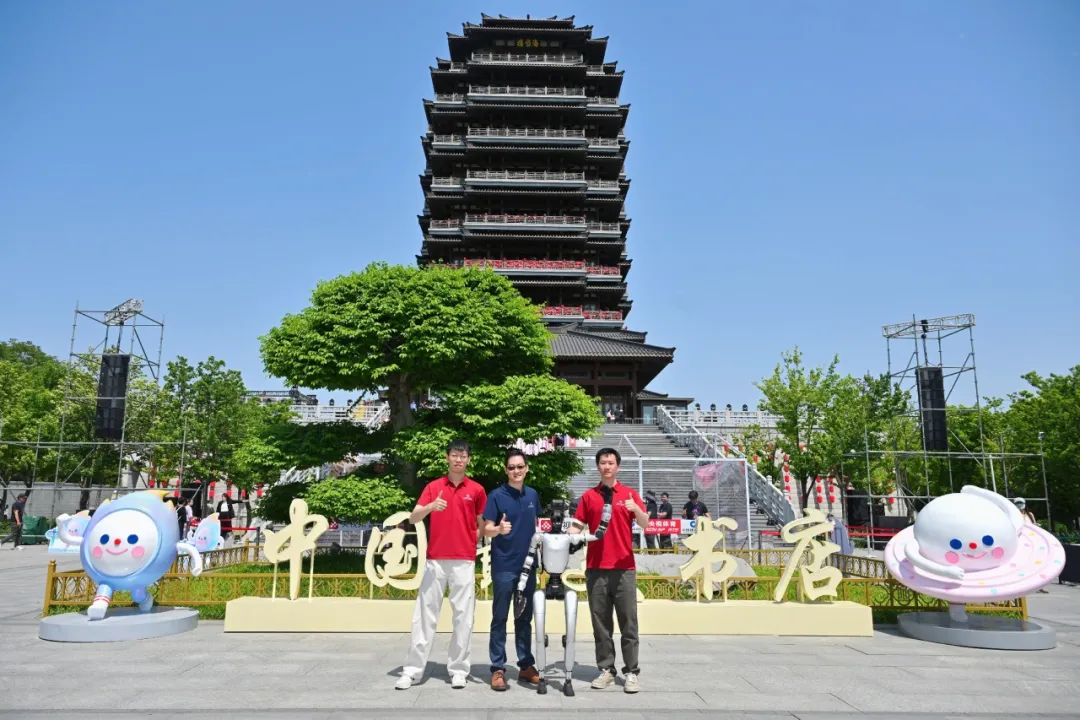
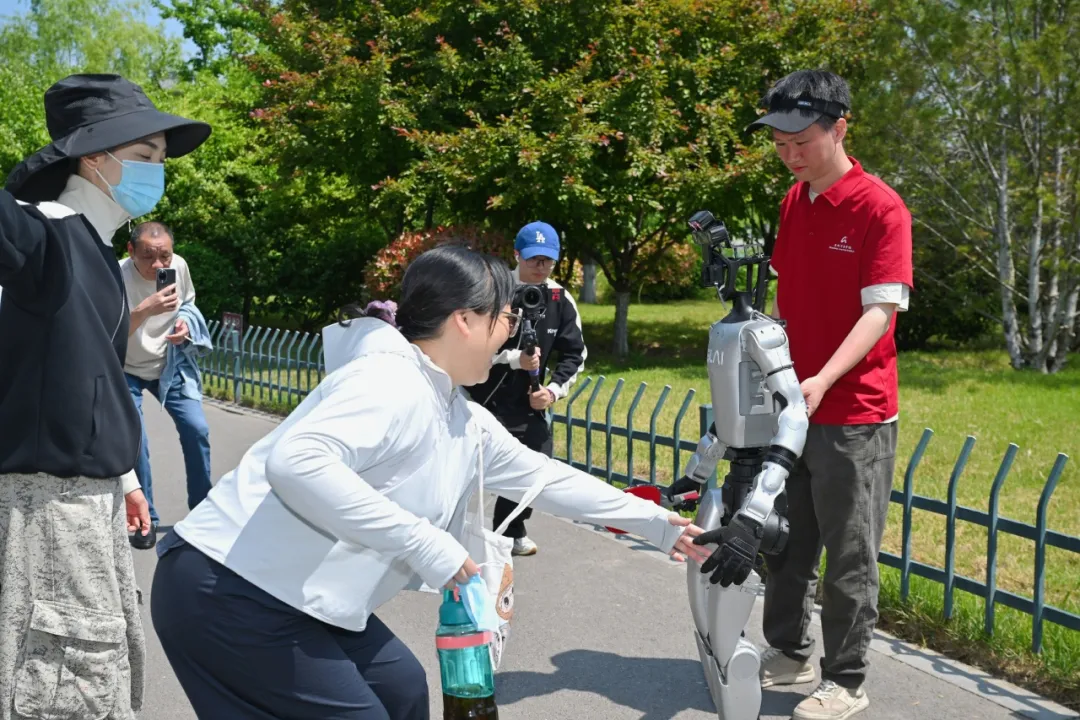
At the event, faculty members and students from SLAI played active roles on the front lines of technical debugging, data collection, and interactive gameplay demonstrations. Working under intense outdoor heat and strong sunlight, the SLAI team demonstrated strong technical professionalism and efficient coordination, operating terminal equipment and monitoring system status in real time to ensure smooth performance throughout the demonstration.
"Participating in the world's first outdoor humanoid robot ping-pong challenge was not only a rare research opportunity, but also strengthened our confidence in continuing to explore the field of embodied intelligence," said a member of the project team.
03 Ping-Pong Cultural Tourism: Technology Brings New Energy to Traditional Sports
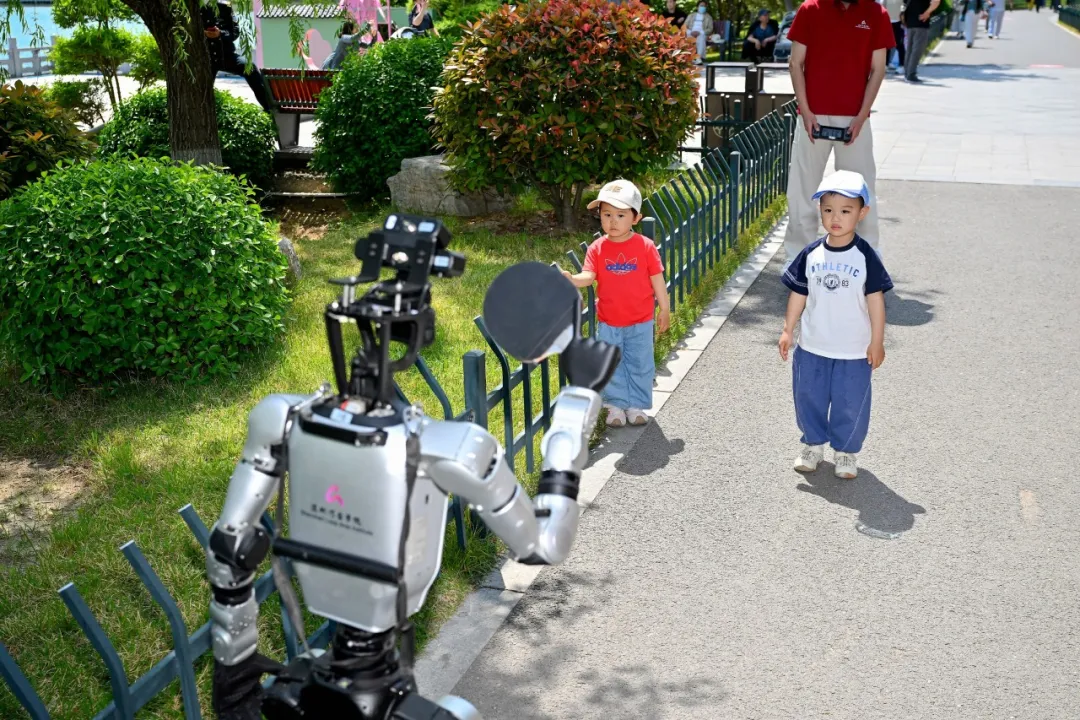
As a centerpiece of the Zibo Ping-Pong Cultural and Tourism Carnival, the performance drew hundreds of citizens and ping-pong enthusiasts. The event successfully used technology to inject a sense of the future into a traditional sport. When the humanoid robot skillfully swung its paddle, the audience erupted in applause.
The cross-regional collaboration among SLAI, The University of Hong Kong, and Shenzhen startups has not only accelerated the transformation of frontier research into practical applications but also created a highly distinctive technology-driven identity for local tourism. Looking forward, the research forces represented by the faculty and students of SLAI will continue advancing embodied intelligence, striving to bring humanoid robots into homes and onto wider sports fields.
 |  |