【SLAI Seminar】第十期:For What Should the Bell Toll?(Nov 10, 10:00)
You are cordially invited to onsite SLAI 10th Seminar to be held on November 10, 2025 (Monday).
Guest Speaker: Prof. David Keyes (KAUST)
Host: Prof. Zhiquan Luo
Date and Time: 10:00-11:30 am, November 10th, 2025 (Monday)
Topic: For What Should the Bell Toll?
Venue: B411 Lecture Hall
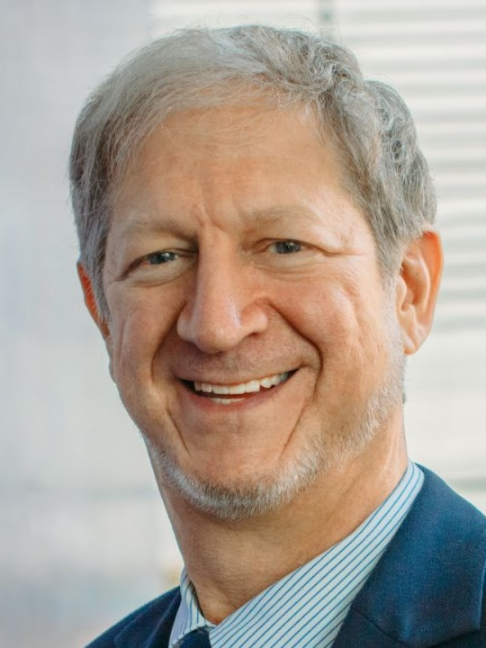
Speaker Biography:
David Keyes is professor of applied mathematics, computer science, andmechanical engineering at KAUST, where he was founding dean in 2009 and founding director of the Extreme Computing Research Center. He earned a BSE from Princeton, a PhD from Harvard, and has taught at Yale, Old Dominion, and Columbia. He has twice received ACM’s Gordon Bell Prize, IEEE’s Sidney Fernbach Award, is a fellow of SIAM,AMS, and AAAS, and was named a “legend of HPC” by HPCWire in 2024. He has helped bring four globally top 25 supercomputers to KAUST and led KAUST to four Gordon Bell Prize finalist nominations.
Abstract:
Over its 37-year history, the Gordon Bell Prize has strongly influenced the development of high performance simulation and big data statistics in mostly positive, but also insome negative, ways, with implications for the operations of leading supercomputer centers. We briefly discuss the evolution of the prize in its several awarded categories, then focus on a handful of submissions of influence. For example, the 1999 Gordon Bell Special Prize paper that first addressed an unstructured grid PDE application is presented as a precursor of the 2009 roofline model now universally used to assess whether an application is compute- or bandwidth-bound, or even instruction-bound at a finer examination. The flop/s rate orientation of the Prize has encouraged wasteful flops, where a smaller number would provide more cost-effective delivery of quantities of scientific interest to working accuracy; we provide examples from four of our own recent submissions. How to pilot the Prize at the confluence of the roaring rivers of simulation and learning, with the tributary of quantum computing about to join, is the final topic of discussion. As energy costs now dominate what can be simulated and what can be learned or inferred, the elusive metric of “science per Joule” is proposed as one of several aspects to be addressed in the future evolution of this inspiring legacy.