Industry–Academia Collaborative Innovation Delivers New Results, "AI + Energy" Laboratory Officially Unveiled
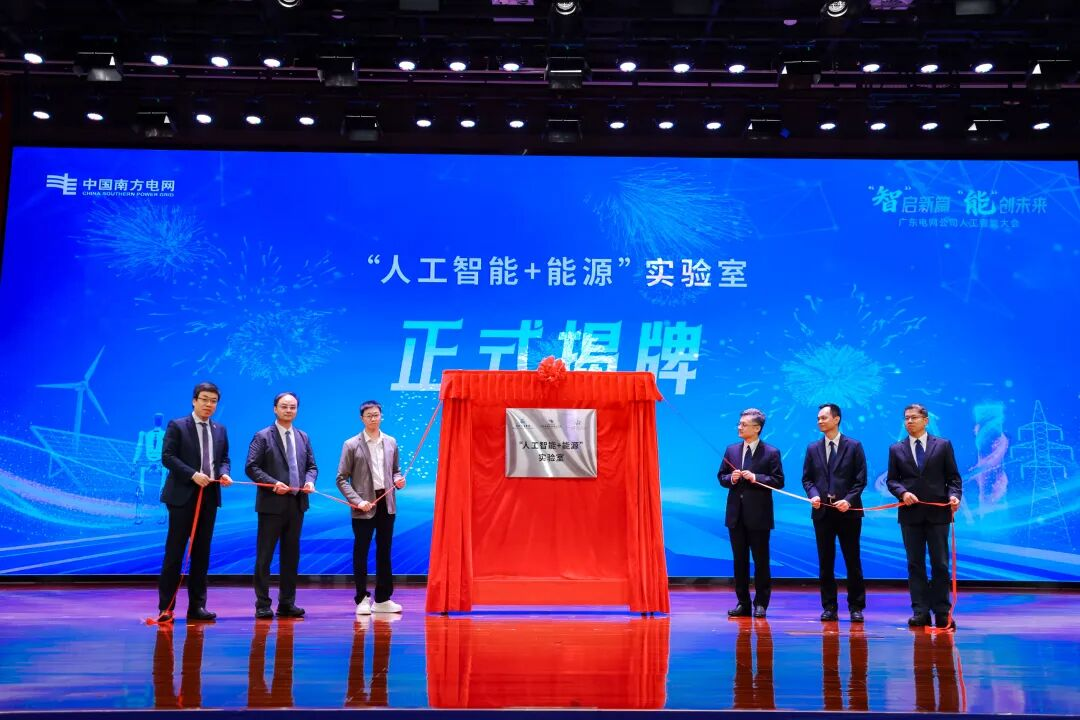
On March 20, 2026, the Guangdong Power Grid AI Conference, guided by China Southern Power Grid (CSG) and hosted by Guangdong Power Grid Corporation (GPG), was grandly held in Guangzhou. As a core co-founding institution, SLAI joined hands with GPG and Shenzhen Institute of Artificial Intelligence and Robotics for Society (AIRS) to officially unveil the "AI + Energy" Laboratory, marking a new stage of collaborative innovation between SLAI and GPG in frontier science and technology.
01
Tripartite Collaboration to
Build a New Hub for "AI + Energy" Innovation
At the conference, Professor Zheng Weishi, Deputy Dean of SLAI, Dr. Ding Ning, Executive Vice President of AIRS, and Professor Huang Jianwei, Associate Vice President of The Chinese University of Hong Kong, Shenzhen, Deputy Director of AIRS, and dual-appointed professor at SLAI, were invited to attend the unveiling ceremony together with leaders from GPG.
The establishment of the Joint Laboratory represents an important step in SLAI's efforts to deepen its "AI+" strategy and support the high-quality development of the Guangdong–Hong Kong–Macao Greater Bay Area (GBA). The laboratory will integrate the strategic advantages of the Hetao Shenzhen–Hong Kong Science and Technology Innovation Cooperation Zone (HTCZ), the research strengths of AIRS, and the industrial application scenarios of GPG to build an innovation ecosystem deeply integrating industry, academia, research, and application, while laying the groundwork for AI development during China's 15th Five-Year Plan period.
02
Jointly Appointed SLAI Professor Huang Jianwei
Invited to Deliver Keynote Speech and Accept Media Interviews Including GRT Satellite Channel
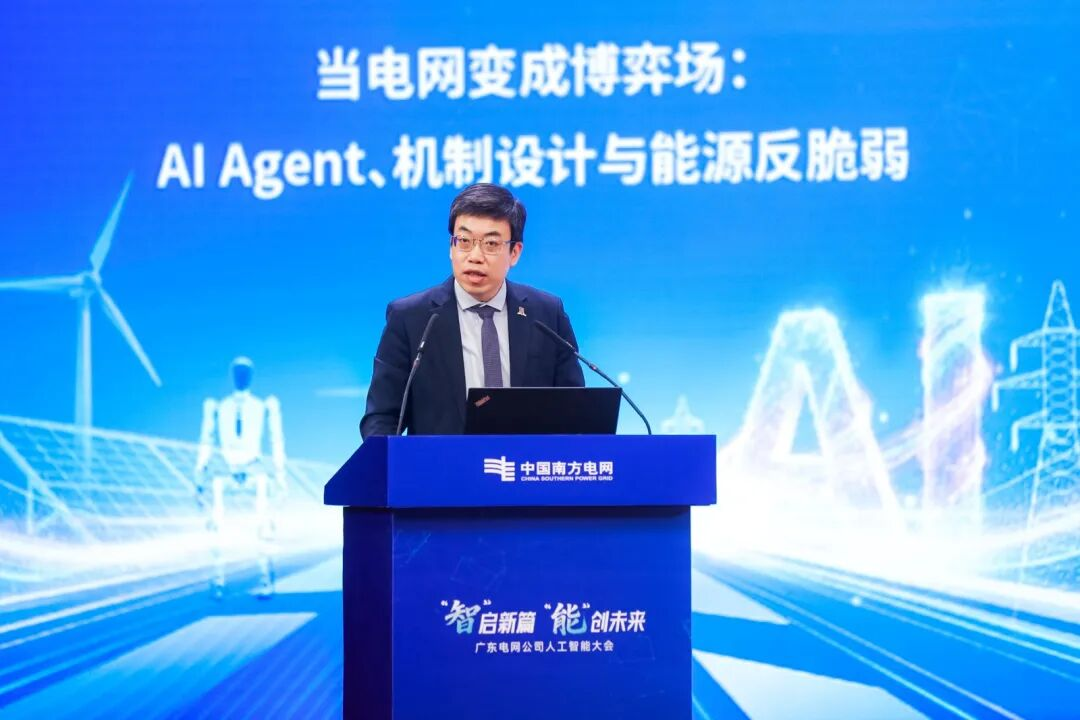
As a distinguished speaker during the conference's professional presentation session, Professor Huang Jianwei delivered a keynote speech titled When the Power Grid Becomes a Game Arena: AI Agent, Mechanism Design, and Energy Antifragility, which drew significant attention from the industry.
From a frontier academic perspective, he provided an in-depth analysis of the structural challenges facing a new electricity system and proposed a solution centered on the concept of an "antifragile power grid." Through mechanism design, he argued, the power grid can be endowed with structural optionality at the institutional level, enabling the system to evolve from traditional "engineering optimization" toward "game governance." Such an approach would create systems with convex characteristics capable of transforming uncertainty into a resource for continuous optimization.
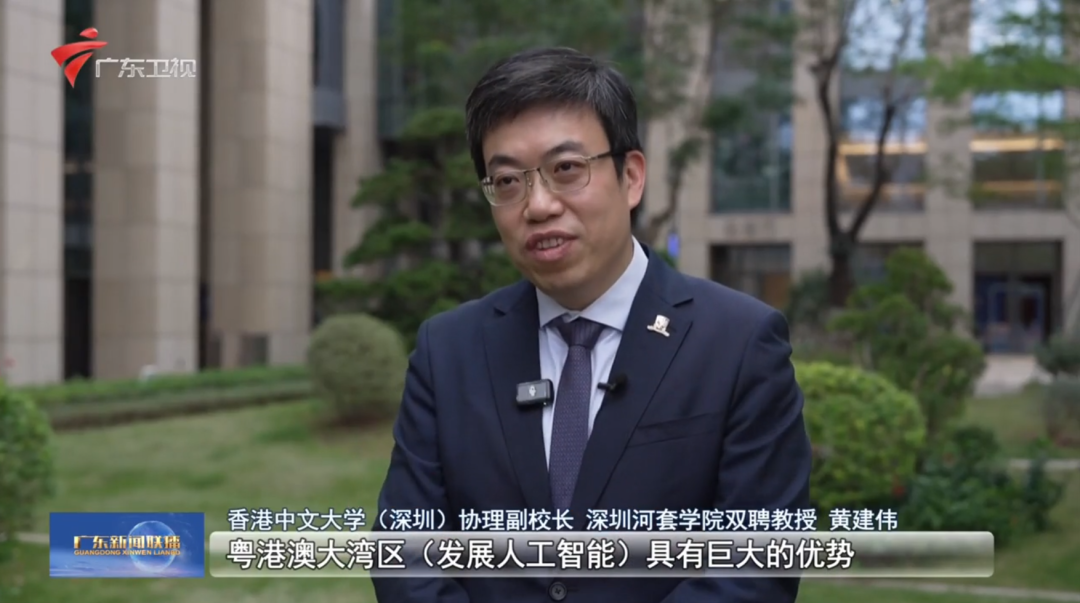
The conference also received extensive coverage from mainstream media outlets. Multiple media organizations, including GRT Satellite Channel, conducted special reports on the event and interviewed Professor Huang Jianwei.
During the interviews, Professor Huang further explained the strategic significance of the "AI + Energy" Joint Laboratory. By leveraging collaborative research between Shenzhen and Hong Kong, the initiative aims to deeply integrate Shenzhen's technological strengths in AI with GPG's real-world energy scenarios, explore an antifragile dispatch paradigm driven by computable uncertainty, and transform dispatch systems from static solvers into dynamic evolutionary engines.
03
Starting From HTCZ,
Empowering GBA's Energy Transformation
As an important academic platform within HTCZ, SLAI has consistently been committed to advancing the deep integration of frontier technologies and industrial needs. The unveiling of the Joint Laboratory represents a key strategic move in the Institute's broader "AI+" initiative:
- Platform Advantages: Leveraging the cross-border collaborative mechanisms of HTCZ to gather world-class research resources.
- Interdisciplinary Integration: Combining expertise in artificial intelligence, energy and power systems, mechanism design, and related disciplines to create a new research paradigm.
- Industrial Empowerment: Directly addressing real operational scenarios within GPG and accelerating the transition of technological achievements from laboratories to frontline industrial applications.
Reported by Guangdong News Broadcast
Looking ahead, SLAI will continue to serve as a bridge for integrated innovation between Shenzhen and Hong Kong. Anchored by the "AI + Energy" Joint Laboratory, SLAI will support GBA in building a secure, efficient, and antifragile next-generation energy system, contributing expertise and innovation to China's dual-carbon goals and national energy security.
The video featured in this article is reproduced from Guangdong News Broadcast.