SLAI’s AI4SE 2026 Open Day Charts New Paths for AI in Science and Engineering
Shenzhen Loop Area Institute (SLAI) recently hosted the 2026 Open Day of its Center for AI for Science and Engineering (AI4SE) at the Institute’s auditorium. As the first major academic event in a series marking the Institute’s first anniversary, the Open Day brought together members of leading academies, university scholars, industry representatives, and young researchers. Participants shared the latest advances and new practices in artificial intelligence (AI) for science and engineering through a program featuring opening remarks, the signing and unveiling of a joint laboratory, invited talks, and research showcases.
The event was led by AI4SE, with the Futian District Science, Technology, Industry and Information Technology Bureau (AI Industry Office) and Shenzhen Honeycomb Internet Technology Co., Ltd. as co-organizers. Showcasing the Center’s research progress to date, the Open Day set out to connect academic research with industrial demand and build a platform for exchange and collaboration across disciplines and institutions.
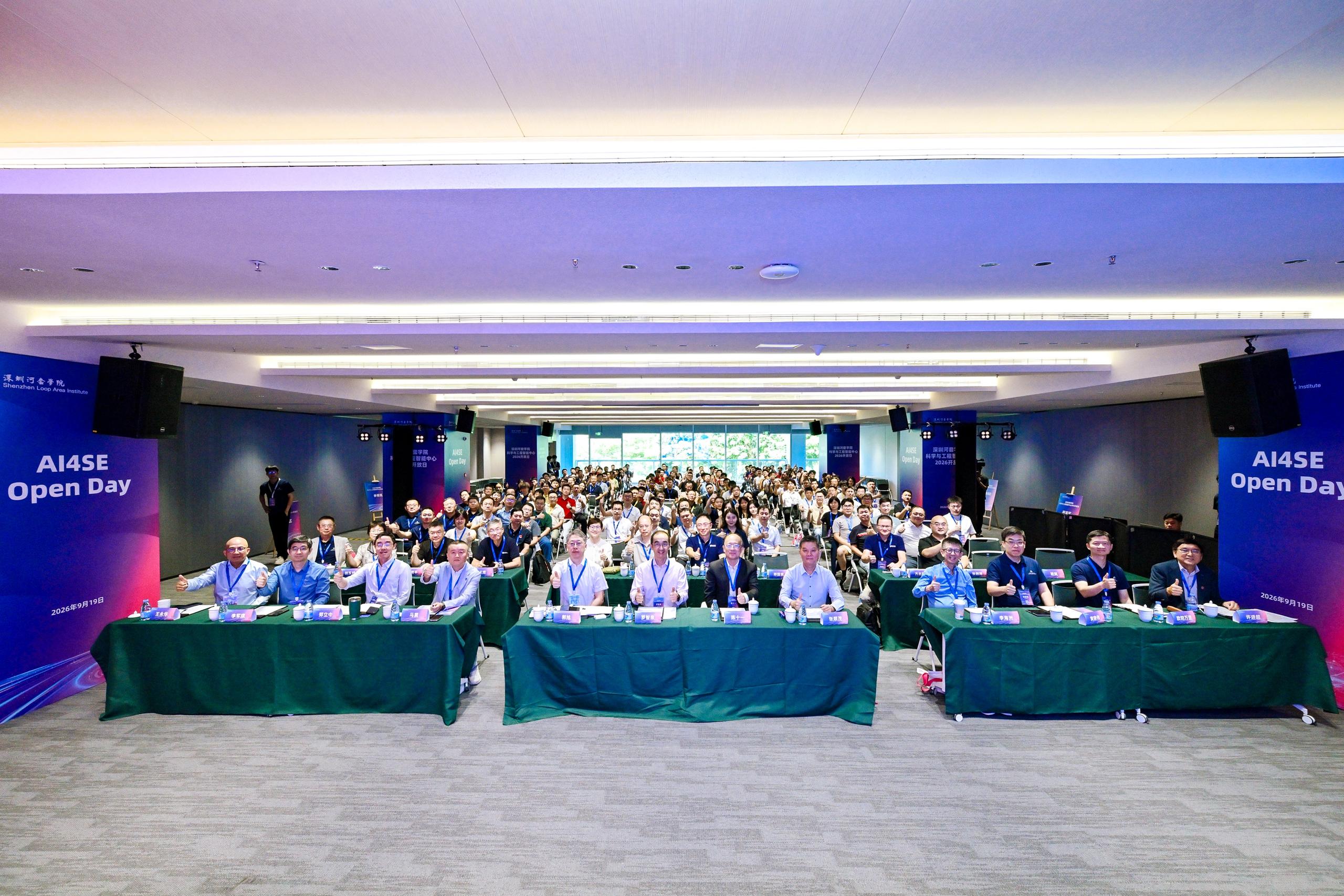
Guests and participants gather for a group photo at the AI4SE 2026 Open Day
01 Uniting Academic and Industry Forces for AI4SE’s Development
In his opening remarks, Prof. Zhi-Quan (Tom) Luo, Executive Dean of SLAI and an academician, set out the Institute’s 3 missions: developing top-tier talent, making breakthroughs in cutting-edge technologies, and building a world-class think tank. He also reviewed the Institute’s exploration of a global approach to education and of Shenzhen-Hong Kong collaboration. Turning to the host center, he described AI4SE’s mission of deeply integrating AI with science and engineering, noting that AI is entering scientific research and engineering practice at an accelerating pace and creating new opportunities for interdisciplinary collaboration and for solving complex engineering problems. He added that the Institute will build on domestic computing platforms to align AI technologies with industry needs, deepen research in scientific intelligence and robot simulation, and work with partners such as Honeycomb to bring research outcomes into real-world application.
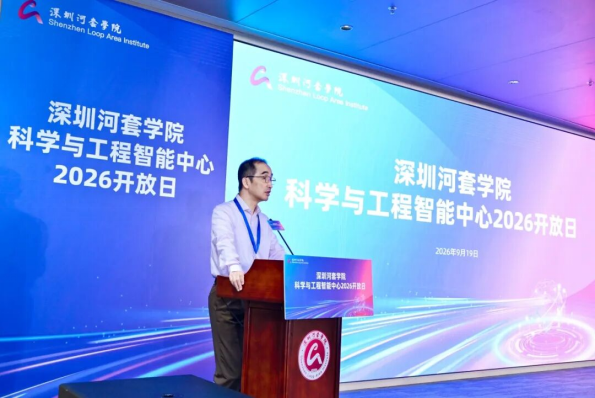
Prof. Zhi-Quan (Tom) Luo delivers his opening remarks.
02 Signing and Unveiling a Joint Laboratory for Intelligent Simulation to Advance Industry-Academia-Research Collaboration
A highlight of the event was the signing and unveiling of the SLAI-Honeycomb Joint Laboratory for Intelligent Simulation. Co-founded by SLAI, Shenzhen Honeycomb Internet Technology Co., Ltd., and the Shenzhen Research Institute of Big Data (SRIBD), the laboratory is directed by Prof. Jinchao Xu , an academician. It will pair SLAI’s disciplinary strengths with Honeycomb’s industrial expertise to link basic research, technological breakthroughs, and engineering applications in computer-aided engineering (CAE) and AI, thereby delivering a steady stream of innovative results and talent with hybrid skill sets.
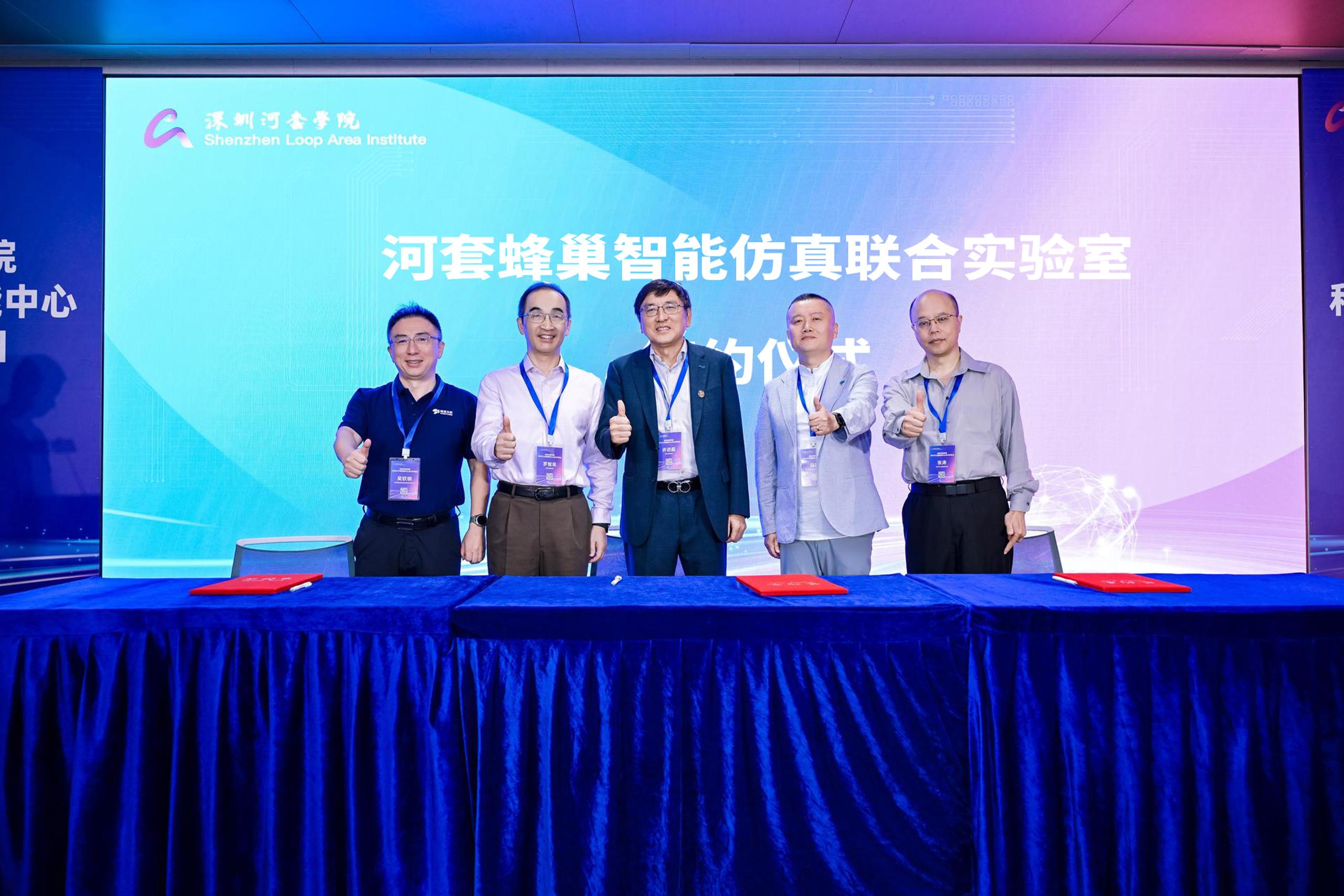 | 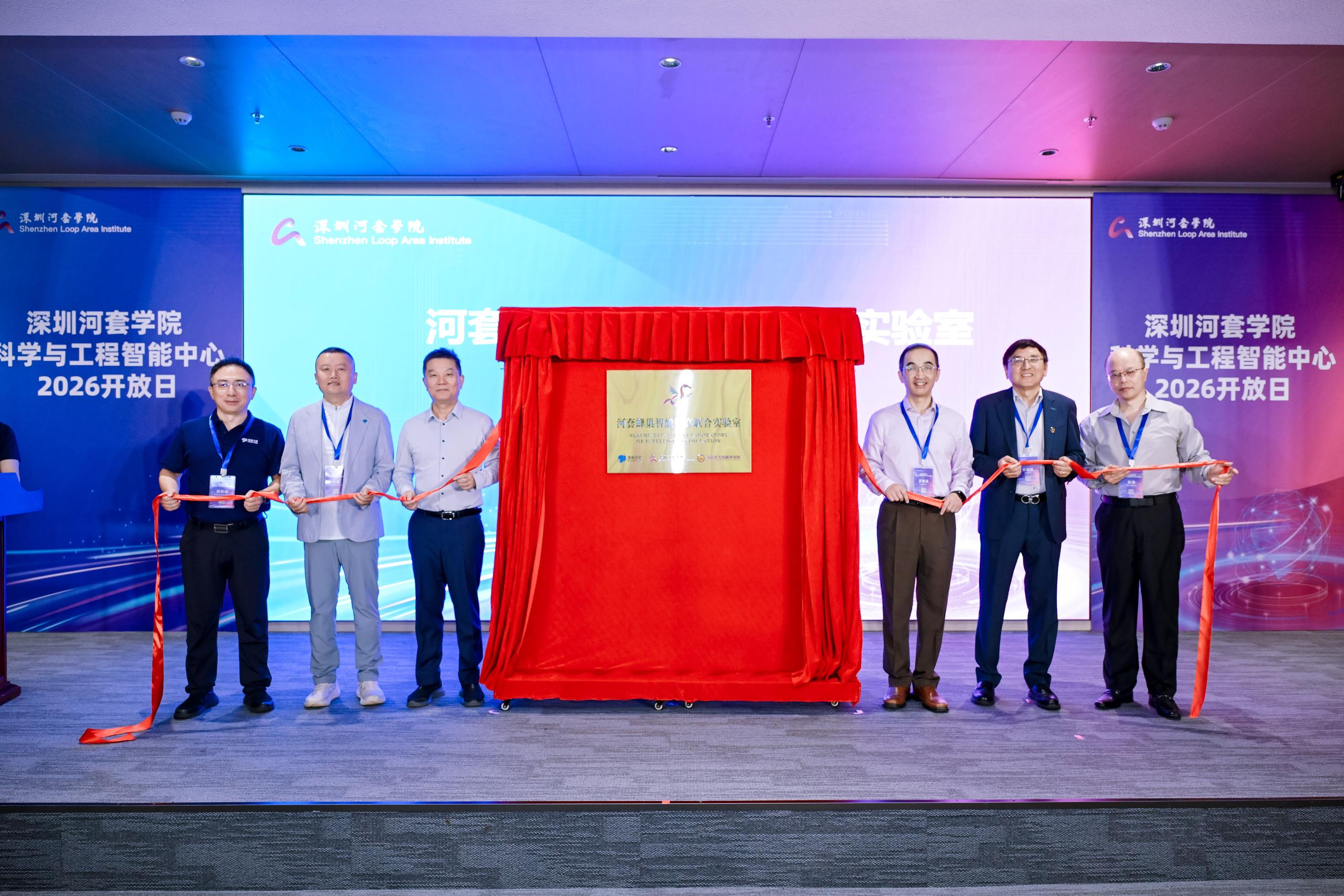 |
Representatives of the 3 partner institutions jointly sign the agreement and unveil the plaque of the SLAI-Honeycomb Joint Laboratory for Intelligent Simulation.
Prof. Xu said that solving complex engineering problems calls for mathematics, algorithms, software, and domain knowledge to work in concert, and that AI opens up new possibilities for knowledge retrieval, automated programming, and algorithm composition. Starting from industry needs, he noted, the joint laboratory will combine mathematical methods and algorithms with Honeycomb’s industrial experience and application scenarios to chart new technological pathways for intelligent simulation and robot simulation and address real industrial demands through collaborative research.
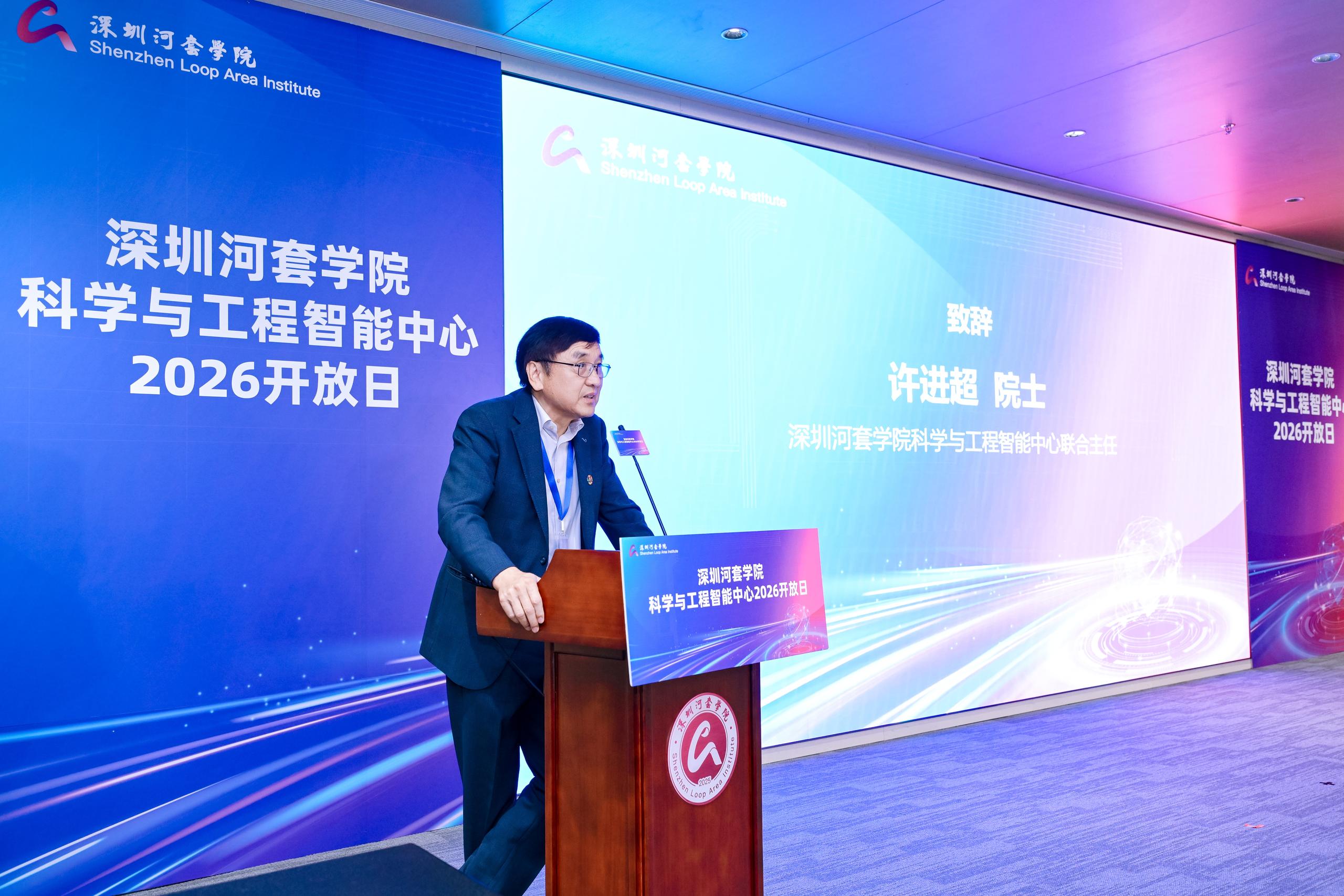
Prof. Jinchao Xu shares his vision for collaboration at the joint laboratory.
Zhen Ma, Chairman of Shenzhen Honeycomb Internet Technology Co., Ltd., spoke from the industry side. The laboratory, he said, will take on real problems from the industrial world and deliver high-impact results: turning algorithms into software, and software into productivity. The ultimate goal, he added, is to bring physical AI simulation technology to the front lines of manufacturing.
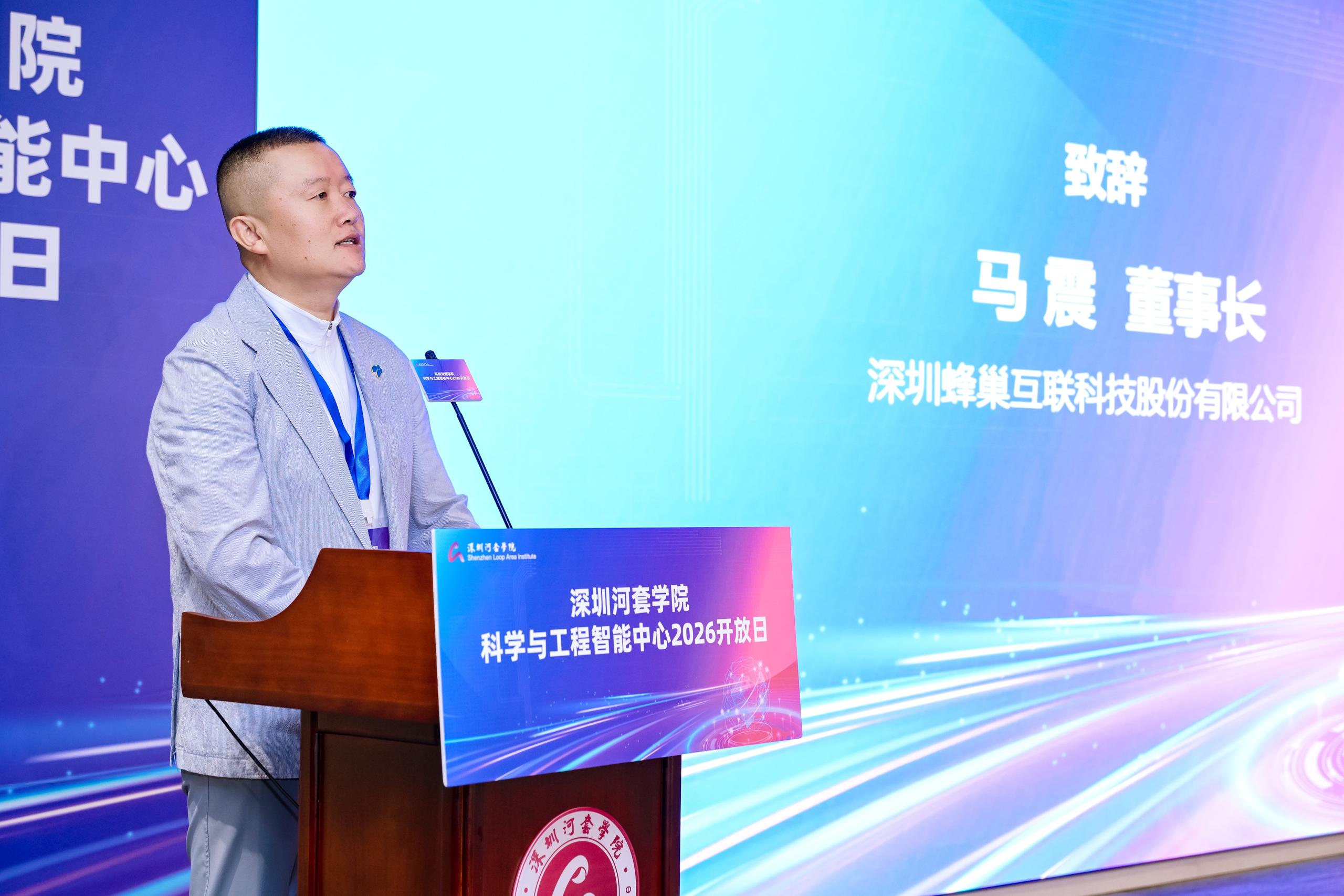
Zhen Ma, Chairman of Honeycomb, shares his vision for collaboration at the joint laboratory.
03 Exploring New Simulation Pathways in Physical AI and Industrial Software
Prof. Shiyi Chen, an academician and President of the Eastern Institute of Technology, Ningbo, addressed the convergence of physical AI and simulation, underscoring the central role of simulation in world models. Representing and simulating physical laws, he explained, underpin our ability to understand and predict the real world, and AI is opening new routes around the accuracy and efficiency bottlenecks of traditional CAE. Citing application cases such as a differential operator library and automotive design, he presented research efforts that use AI to improve simulation efficiency and expand engineering applications.
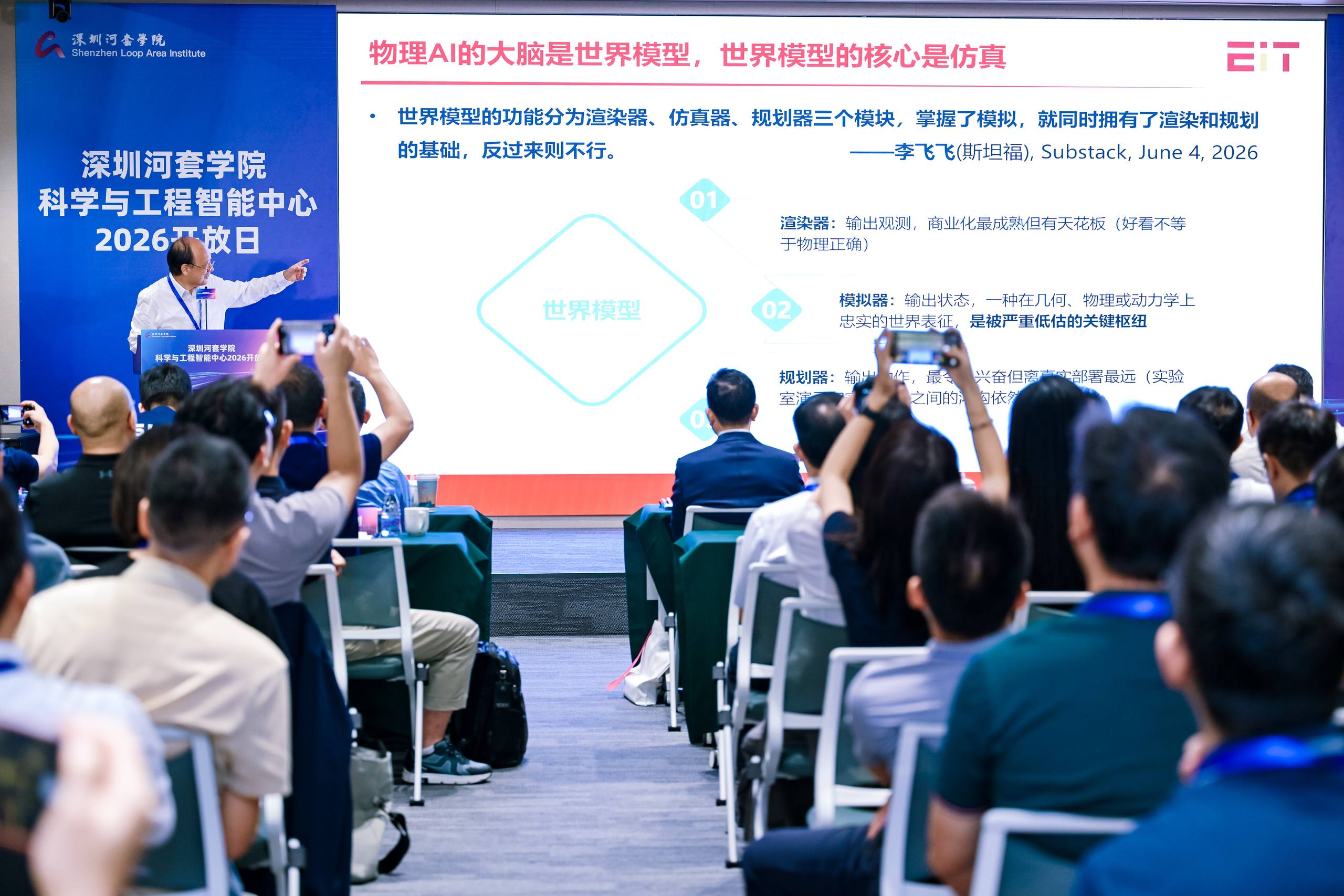 | 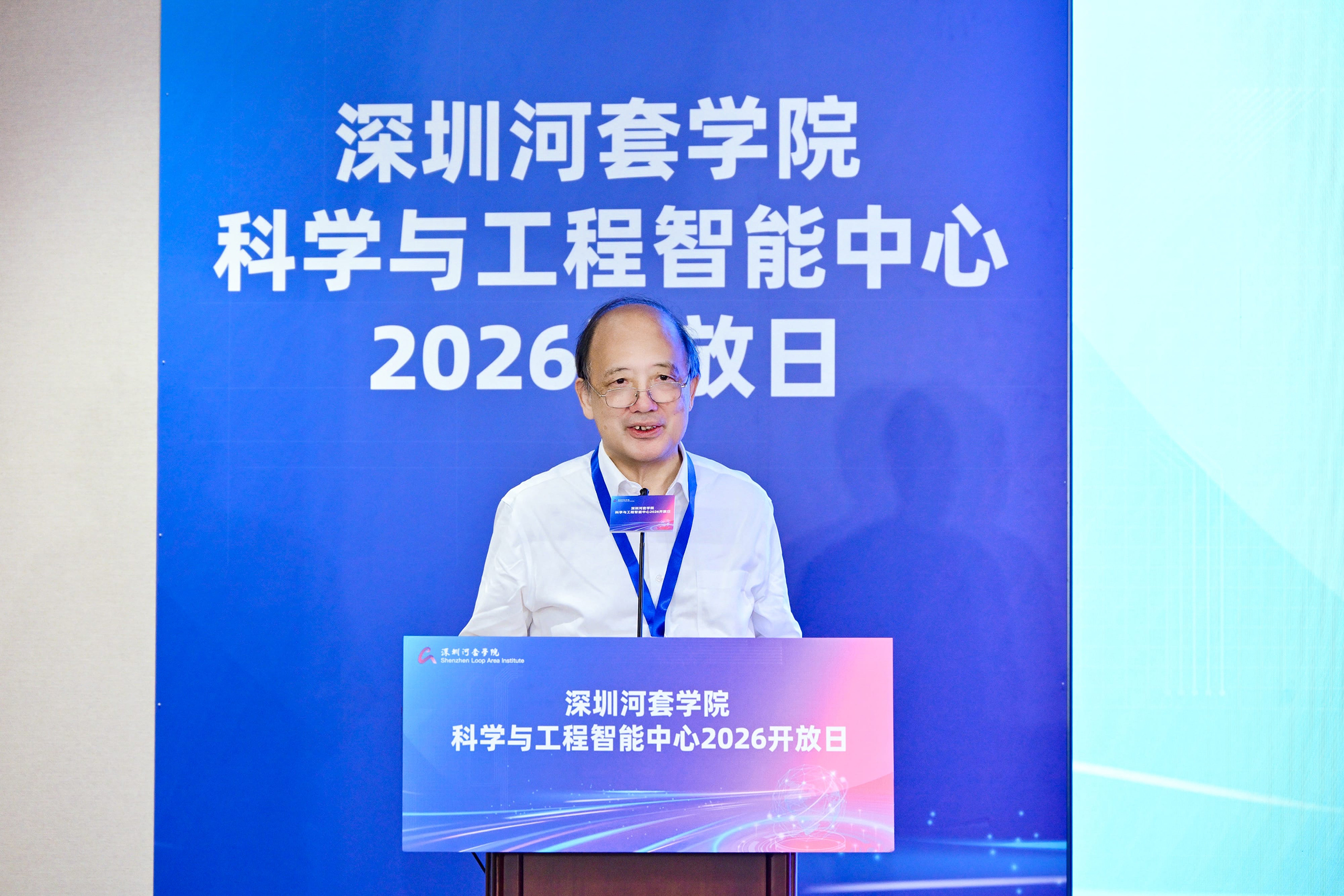 |
Prof. Shiyi Chen delivers an invited talk.
Prof. Xu Guo, an academician and Dean of the School of Mechanics and Aerospace Engineering at Dalian University of Technology, turned to the challenges of AI-empowered industrial software development. Traditional computing frameworks, he observed, struggle with complex coupled problems, which makes a solid foundation for intelligent industrial software all the more critical. He called for software systems capable of self-sensing and self-evolution and urged leading enterprises to open up real-world scenarios that provide practical support for forward design and technology validation.
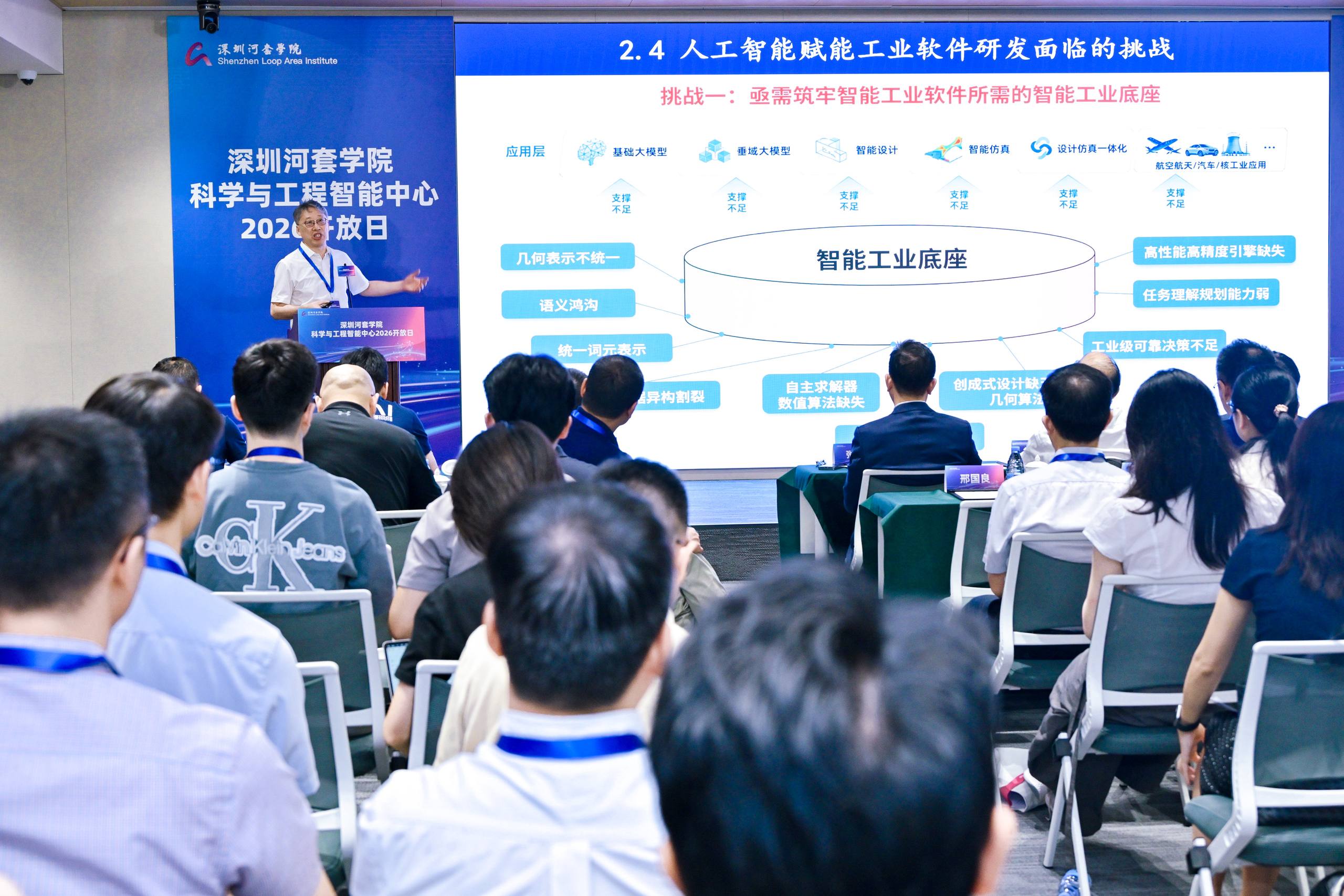 | 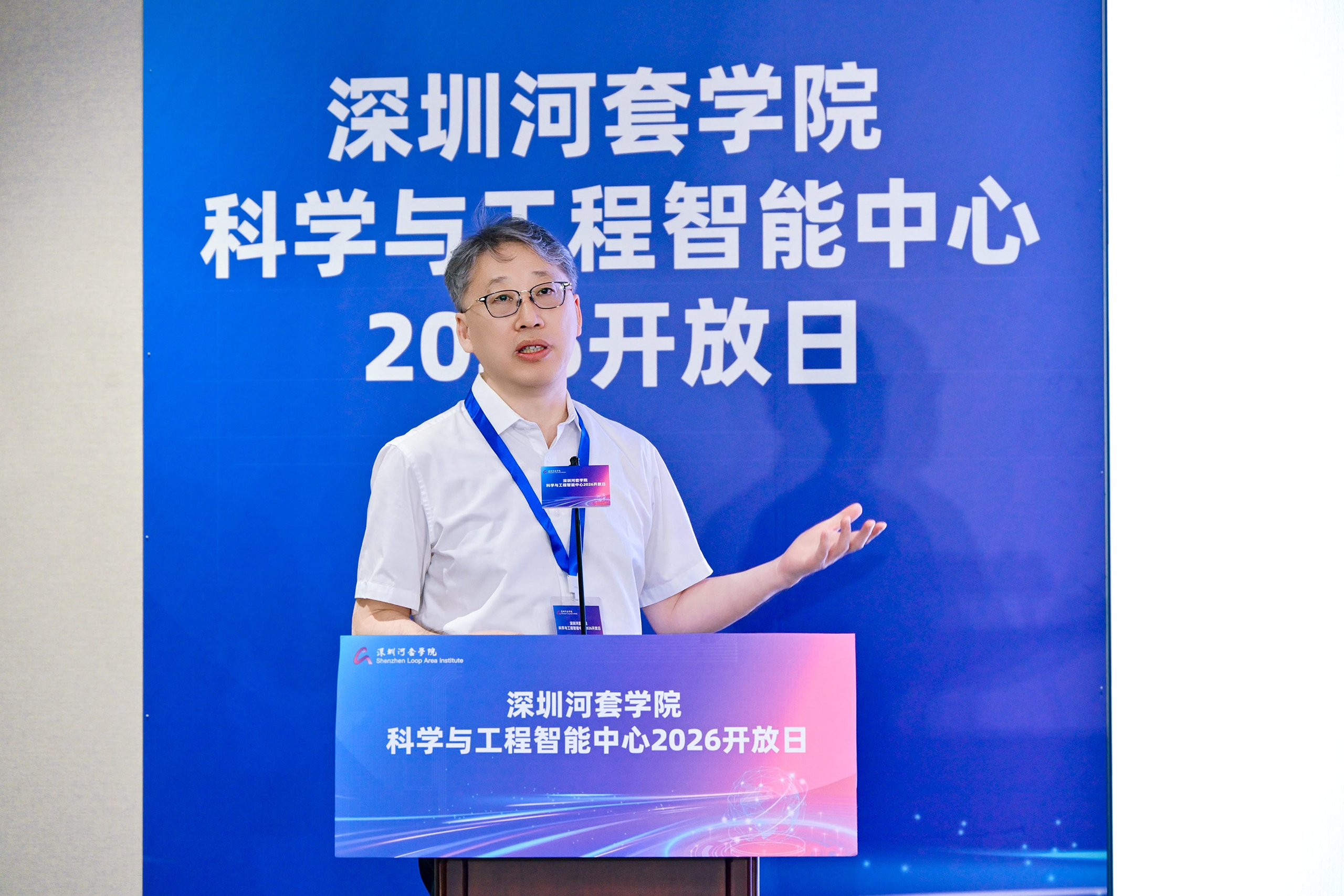 |
Prof. Xu Guo delivers an invited talk.
04 Connecting Research Achievements with Application Scenarios
During the Open Day, guests toured the exhibition area and spoke face to face with project teams about the more than 50 research achievements on display. Posters and live demonstrations on AI for CAE, embodied robotics, and scientific embodied multi-agent systems carried the day’s themes into concrete technologies and application scenarios. Across these exhibits spanning scientific and engineering computing, robot simulation training, and intelligent research experimentation, guests and young researchers traded technical ideas and explored application needs, building the mutual understanding on which future collaboration can grow.
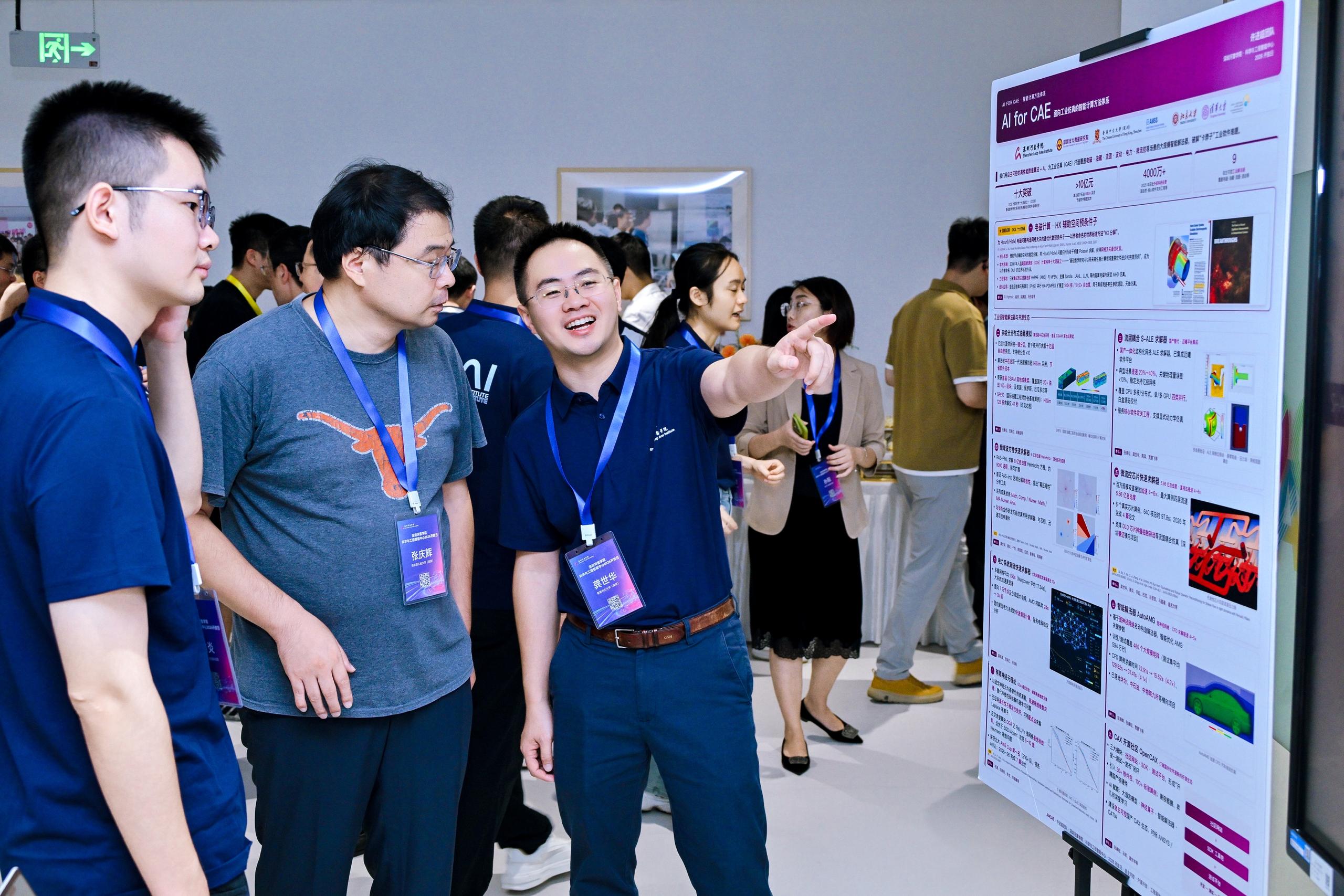 | 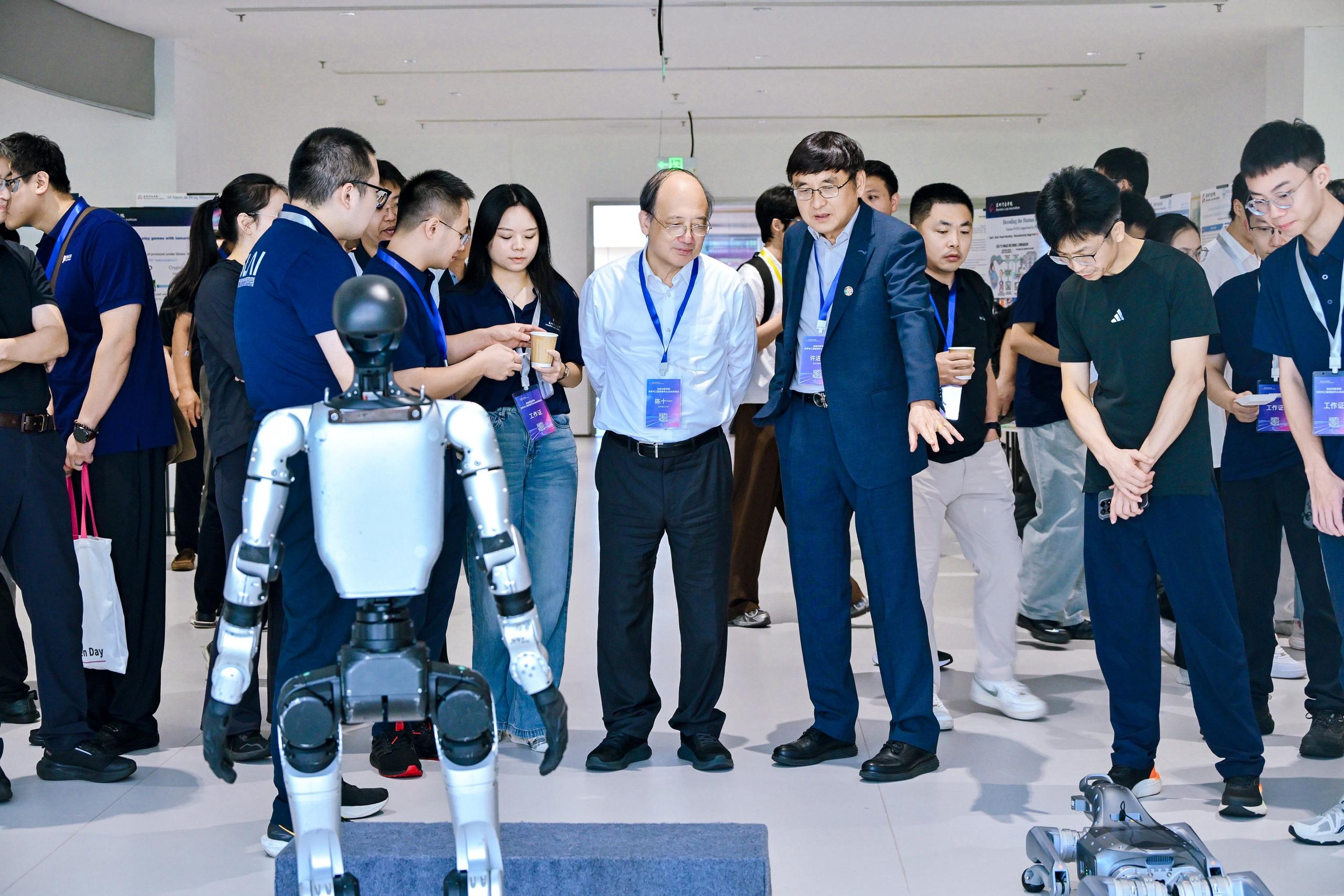 |
Guests view research demonstrations of AI for CAE and embodied robot simulation training.
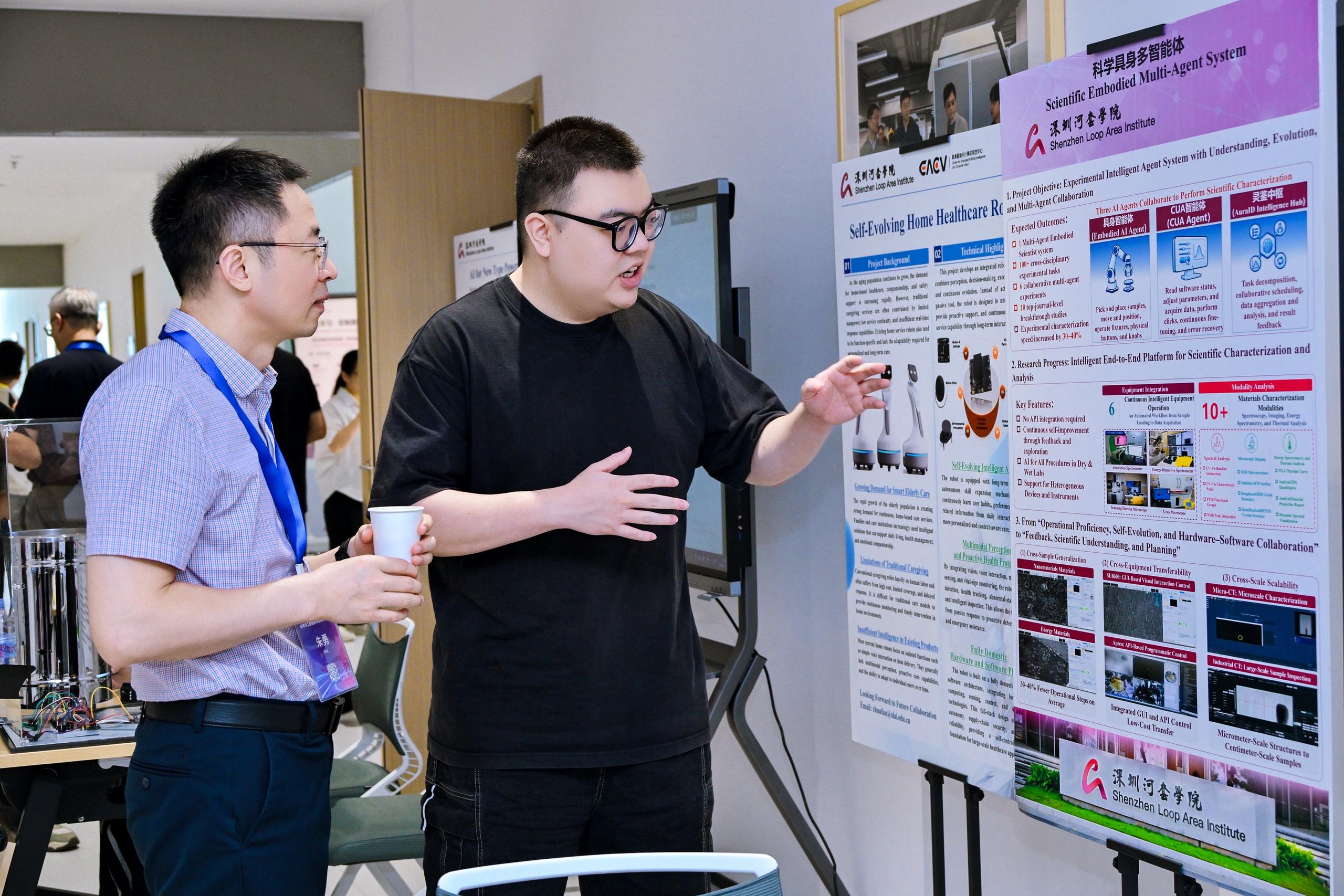 | 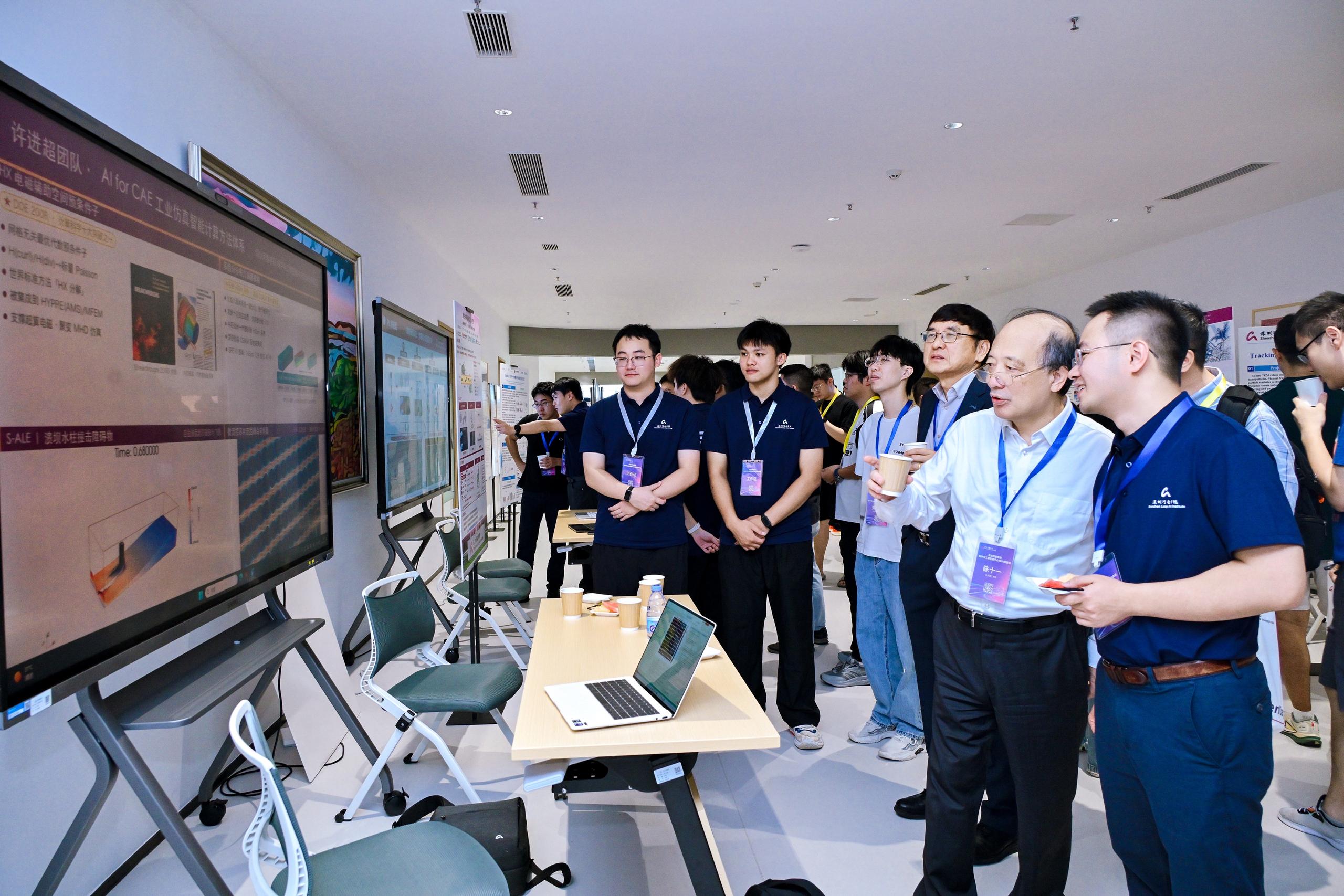 |
Project team members present their research progress on scientific embodied multi-agent systems and intelligent simulation.
05 Pushing the Boundaries of AI-Empowered Engineering Through Industry Practice
Prof. Lizhong Zheng, President of the International Digital Economy Academy (IDEA), examined what it takes to move the low-altitude economy from concept to deployment, focusing on the interface among technology systems, operations management, and commercial applications. He proposed building public infrastructure for communication, navigation, surveillance, computing, and control, citing high-density flight validation at the Dapeng Test Site. He also emphasized the role of domestic computing power, arguing that decomposable and composable large model capabilities can address highly individualized engineering needs.
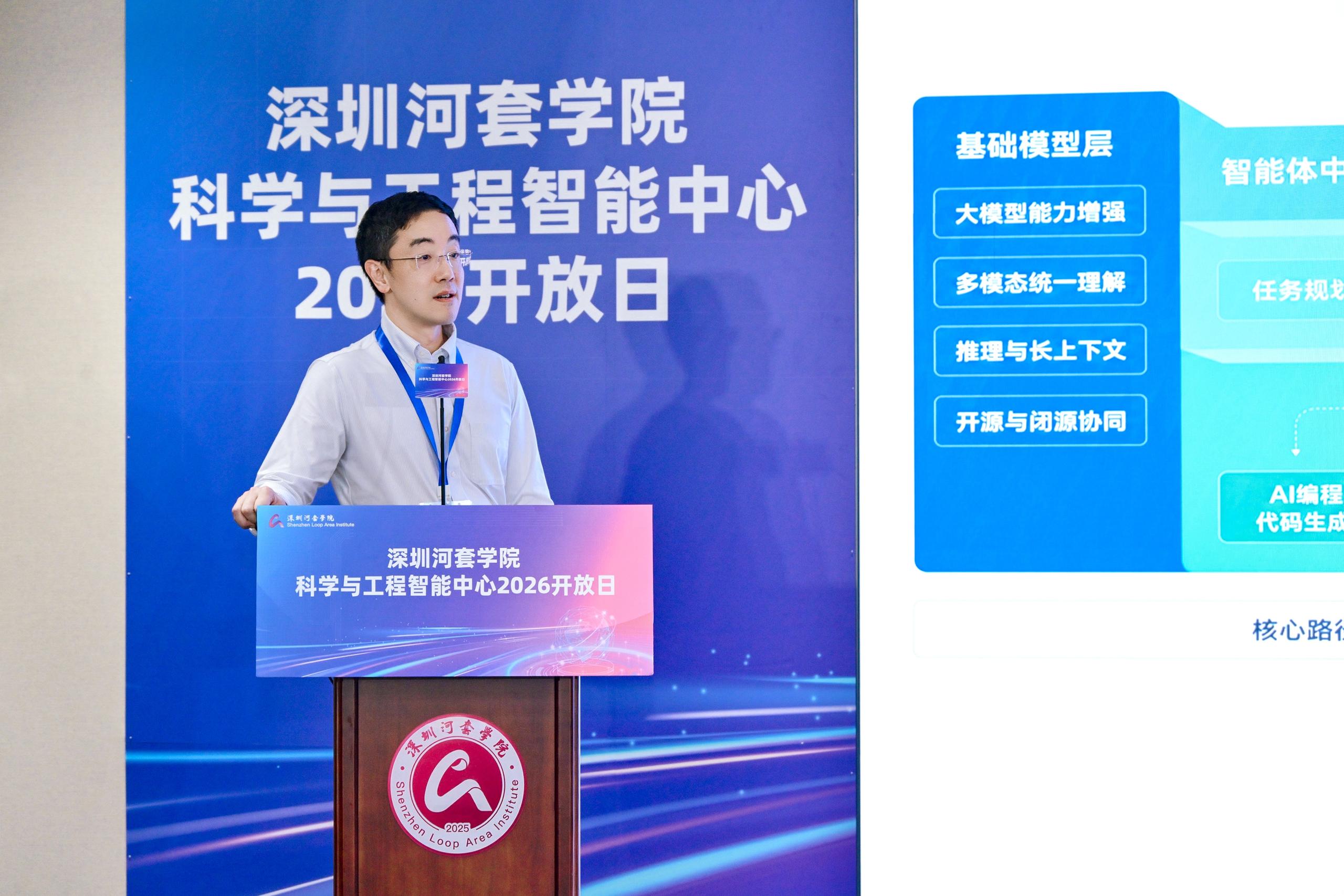
Prof. Lizhong Zheng delivers an invited talk.
Prof. Guoliang Xing, a Dual Appointed Faculty member at SLAI and Professor at The Chinese University of Hong Kong, reported progress on on-device physical AI. To address the memory-access bottleneck of Transformer architectures, his team has been exploring persistent memory architectures. Drawing on a multimodal home dataset and a home-care robot system, he discussed how well such models hold up in complex real-world environments. The talk moved from computing architecture to scenario validation, sketching a research path by which AI enters everyday life.
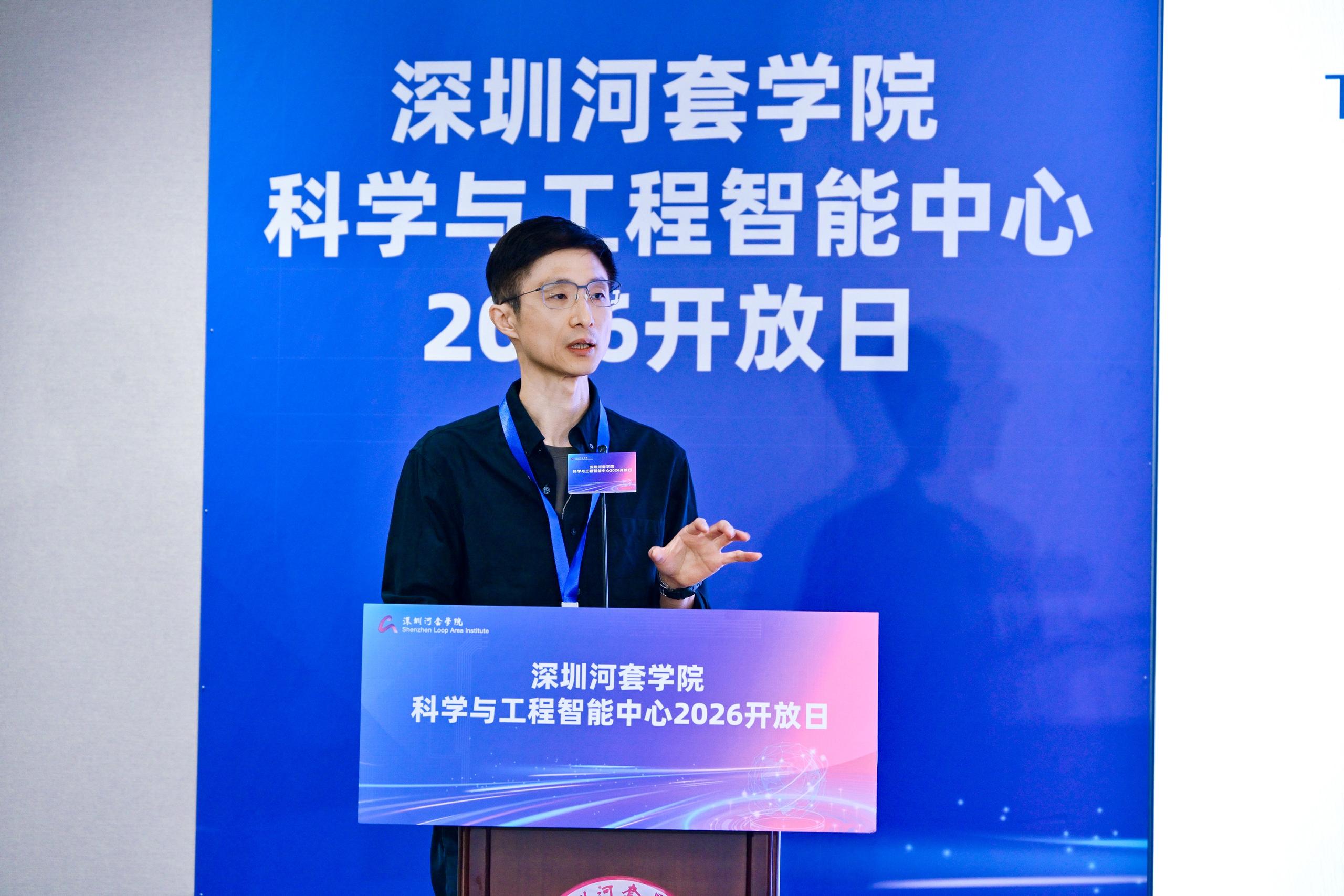
Prof. Guoliang Xing delivers an invited talk.
Dr. Junqi Li, former Chairman of Foxconn Industrial Internet Co., Ltd., spoke on “The Evolution and Future Trends of Intelligent Manufacturing”. Drawing on his track record in ultra-precision machining and the mass production of consumer electronics, he shared practical insights from Industry-Academia-Research collaboration. Industrial upgrading, he argued, should be driven by the coordinated development of intelligent manufacturing and the industrial internet. Through a digital twin factory case, he explored future manufacturing models and the demand for training talent with hybrid skill sets.
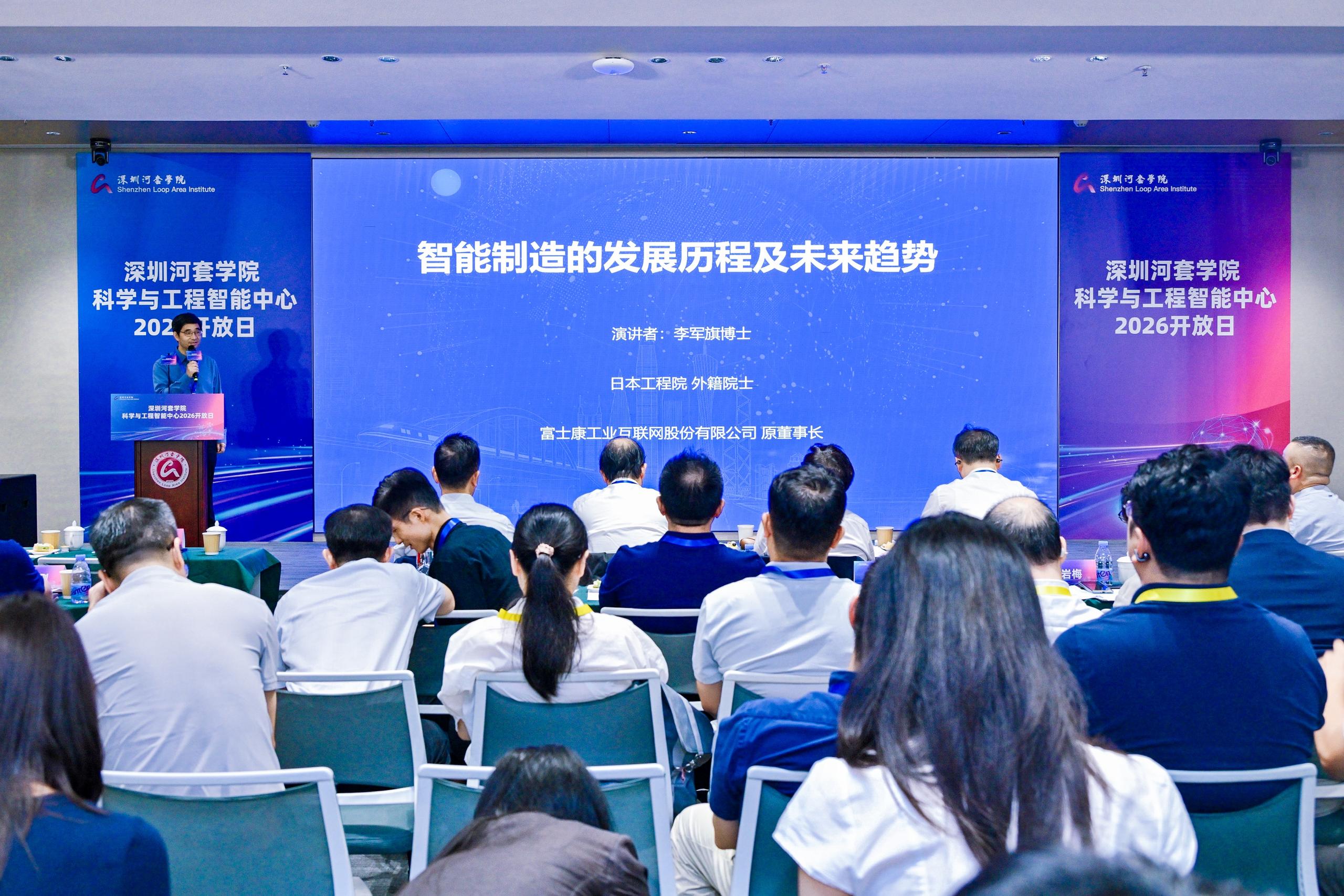
Dr. Junqi Li delivers an invited talk.
Shunmao Zhang, Senior Vice President of Huawei Technologies Co., Ltd., looked ahead to AI shifting industrial design toward an intent-driven paradigm. He detailed Huawei’s efforts to break through in core industrial software, covering adaptation to domestic computing platforms, operator capability building, and the exploration of industrial large models and digital workforce systems. Professional tools and large models, he proposed, should be connected through interface calls, so that human-machine collaboration can raise the efficiency of industrial research and development (R&D) and design.
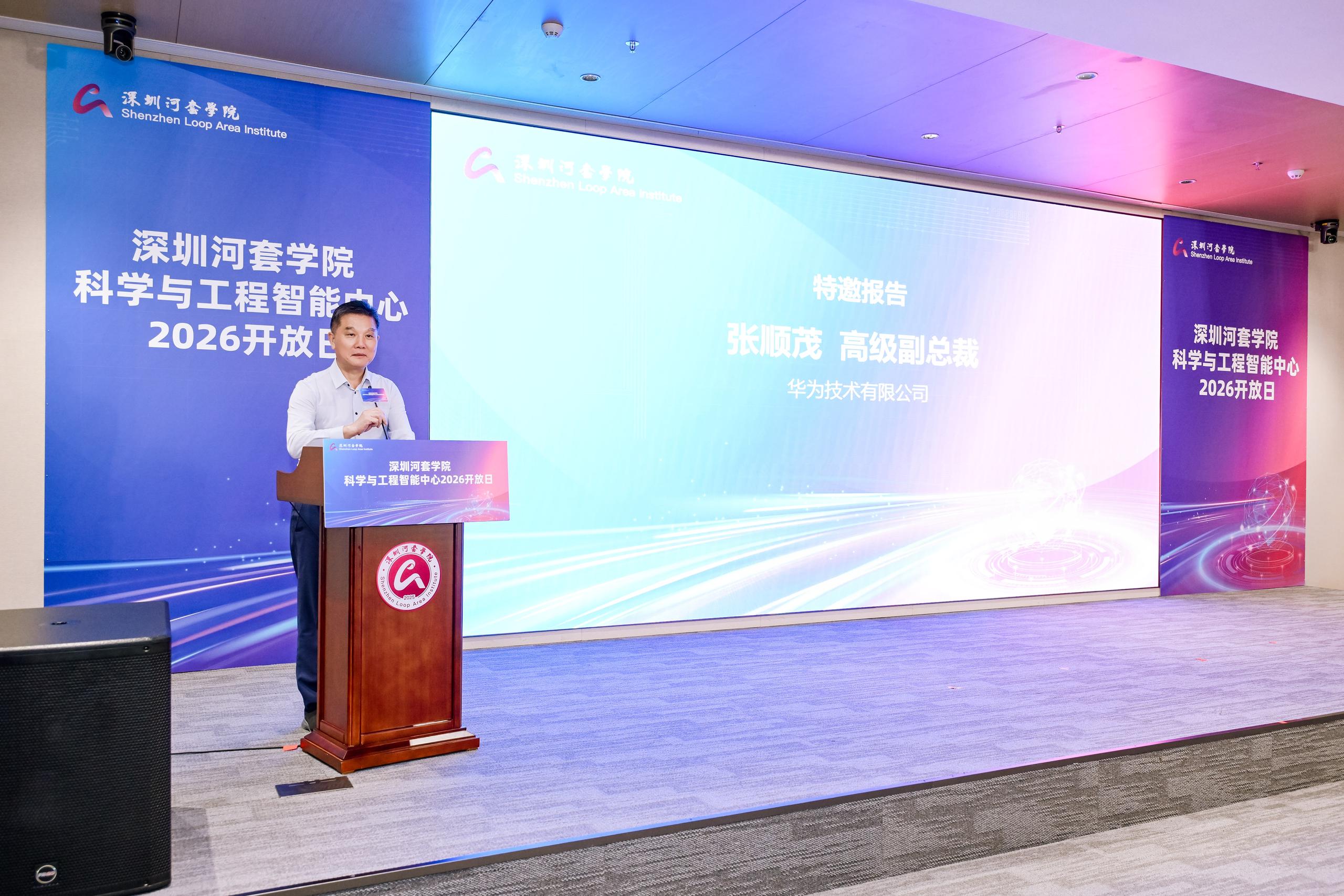
Shunmao Zhang, Senior Vice President of Huawei, delivers an invited talk.
From the launch of the joint laboratory to new approaches in simulation, and from the low-altitude economy and home care to industrial R&D and intelligent manufacturing, the Open Day kept returning to a single theme: integrating AI deeply with scientific and engineering knowledge, and testing the value of research in real-world scenarios. That afternoon, the AI4SE Summit Forum continued in parallel across 3 venues, where 6 thematic sub-forums delved into power world models, AI4Net, AI for CAE (AI4CAE), single-cell large models, embodied AI for science, and embodied robot simulation. These exchanges extended the morning’s agenda, probing how AI can serve real research needs and solve complex engineering problems. A pathway for intelligent innovation is coming into focus: one driven by real problems, supported by interdisciplinary collaboration, and validated in industrial settings.
Looking ahead, AI4SE will continue to build open platforms for exchange, deepen the connection between academic research and industrial practice, and move more research outcomes into application. As the Institute enters its second year, the Center is opening a new chapter for AI-empowered science and engineering.