SLAI at WAIC 2026, Initiative Named One of Seven Benchmark Cases of "AI-Empowered Education in Practice"
Lead
From July 17 to 20, the 2026 World Artificial Intelligence Conference and High-Level Meeting on Global AI Governance (WAIC 2026) was held in Shanghai. Chinese President Xi Jinping attended the opening ceremony and delivered a keynote address.. Under the theme "Intelligent Partners, Shared Future", the conference brought together members of leading academies, industry leaders, representatives of international organizations, and AI experts from around the world, providing an important window into the latest developments in AI technology, industry trends, and governance.
At this premier global gathering for AI, an integrated research and talent -development initiative developed by Shenzhen Loop Area Institute (SLAI) on the Ascend computing platform was selected as one of the seven featured cases for "AI-Empowered Education in Practice" and presented at the "AI + Education" parallel forum. It was the only selected case focused on industry-education integration. The initiative was also showcased in the Ascend AI Industry Application Zone, highlighting SLAI's efforts to advance industry-education collaboration through domestic computing infrastructure.
At WAIC: A New Model for AI Education Built on Research, Talent Development, and a Self-Reliant Ecosystem
On the afternoon of July 17, the "AI + Education" parallel forum, themed "Human-AI Co-Education: Reshaping Universities" was held in the Red Hall of Shanghai World Expo Centre. Qingsen Xu, Vice Minister of Education, and other guests attended and delivered opening remarks. Representatives from more than 50 organizations - including Turing Award and Nobel Prize laureates, presidents of leading universities, and distinguished Chinese and international scholars, gathered to discuss the systemic transformation of university education for the AI era.
In partnership with Huawei, SLAI presented "University Research Innovation and Talent Development for a Self-Reliant AI Ecosystem", showcasing four key achievements in model adaptation, operator development, and talent cultivation to a global audience. Together, these efforts offer a practical pathway to help address China's shortage of AI talent for self-reliant technology ecosystems .On the afternoon of July 17, the "AI + Education" parallel forum, themed "Human-AI Co-Education: Reshaping Universities" was held in the Red Hall of Shanghai World Expo Centre. Qingsen Xu, Vice Minister of Education, and other guests attended and delivered opening remarks. Representatives from more than 50 organizations - including Turing Award and Nobel Prize laureates, presidents of leading universities, and distinguished Chinese and international scholars, gathered to discuss the systemic transformation of university education for the AI era.
In partnership with Huawei, SLAI presented "University Research Innovation and Talent Development for a Self-Reliant AI Ecosystem", showcasing four key achievements in model adaptation, operator development, and talent cultivation to a global audience. Together, these efforts offer a practical pathway to help address China's shortage of AI talent for self-reliant technology ecosystems .
01 AscendBridge: Cutting Model Adaptation Time from Days to One Hour
SLAI developed AscendBridge, a multi-agent collaborative tool for automated model adaptation and tuning. By coordinating six AI and codifying expert know-how into reusable skill modules, the tool creates a fully automated, end-to-end closed-loop that reduces the adaptation and tuning time for select models from days to approximately one hour - a 60-fold improvement over manual methods. To date, AscendBridge has adapted and tuned more than 500 open-source models. The tool now is now available as open-source software on GitCode and is ready to use, significantly lowering the technical barrier for Ascend developers.
02 DeepSeek-V4-Pro Full-Parameter Post-Training: Faculty-Student Collaboration Demonstrates Domestic Training Capabilities
Developing top talent through real-world challenges is a defining feature of SLAI's educational model. A 42-member faculty and student team from the Institute’s AI Training Platform completed the industry's first full-parameter post-training of DeepSeek-V4-Pro, a trillion-parameter mixture-of-expert (MoE) model, in just one month using domestic Ascend computing infrastructure. The project provided end-to-end validation that the Ascend SuperPod could move beyond simply running the model to training it stably, efficiently, and effectively. overtraining remained stable for more than 1,500 consecutive steps, operator efficiency improved by 14%, and the post-trained model outperformed the original model across all four core evaluation metrics. Throughout the project, students at different stages took on tasks of varying complexity, strengthening their engineering capabilities through hands-on work.
03 Operator Ecosystem Development: A Core Contributor to the Self-Reliant Ecosystem
As a core ecosystem contributor to the CANN operator repository, SLAI is deeply involved in foundational technology development. The Institute has contributed 10 high-performance operators - the largest number among ecosystem partners - and is the repository’s only ecosystem maintainer. SLAI has also co-developed the ops-blas operator library and established the Linear Algebra Special Interest Group (SIG), while creating CANN-Bench, the first benchmark designed to assess AI programming capabilities within the Ascend C operator ecosystem.
04 SLAI Ascend Micro-Courses: Bridging the Classroom and Real-World Practice
SLAI has established a three-tier Ascend micro-course program spanning preparatory, introductory, and advanced levels. The curriculum covers Ascend AI software and hardware platform, automated model adaptation and tuning, automated operator generation and optimization, and multi-node, multi-device parallel training and inference. The first five micro-courses launched in May, reaching more than 60 faculty members and students across more than 200 individual course enrollments. By the end of the courses, participants were able to use Ascend computing resources proficiently. Going forward, the program will be offered every semester to develop a steady pipeline of hands-on talent for the domestic computing ecosystem.
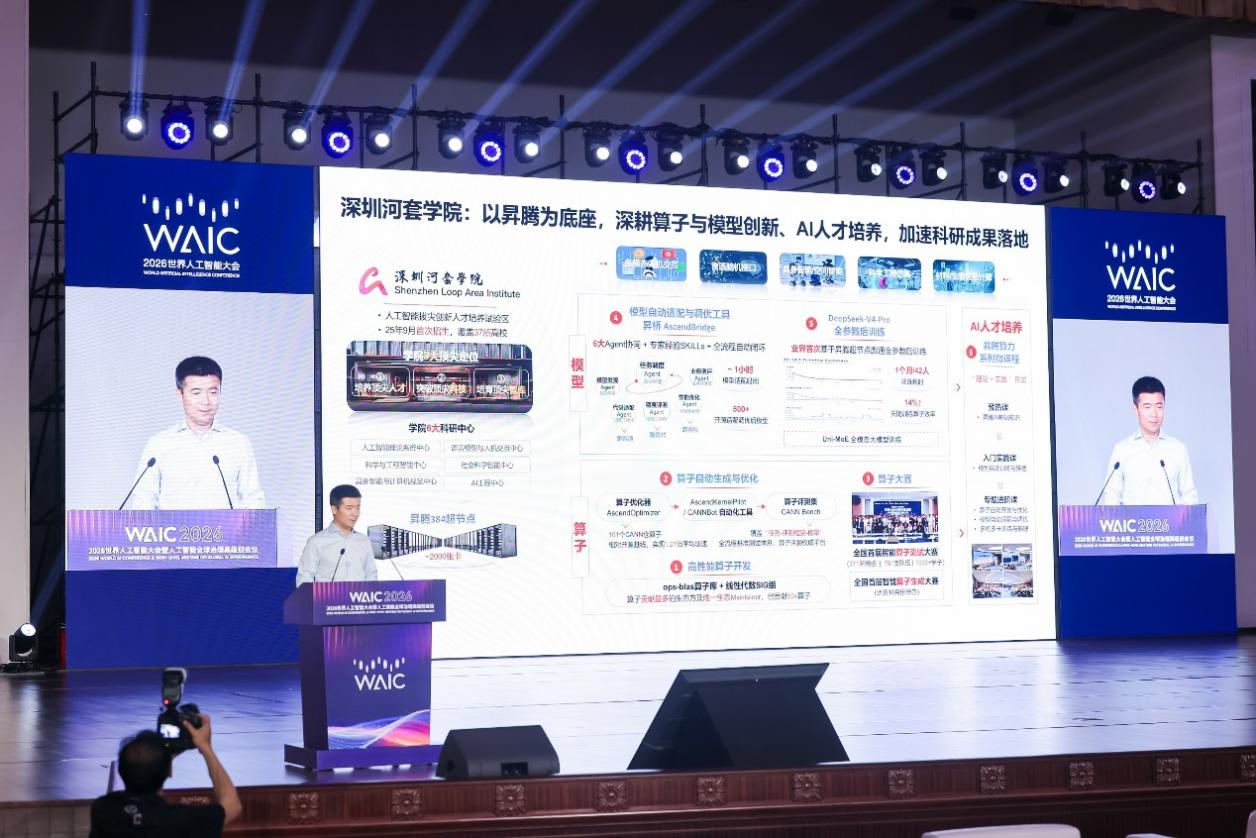
Figure 1: SLAI's solution is presented WAIC's "Human-AI Co-Education: Reimagining the University" forum
Featured Showcase: Ascend AI Industry Application Zone
During the conference, SLAI's achievements were featured in the Ascend AI Industry Application Zone as a benchmark solution, offering university and industry representatives a direct view of how research innovation and talent development can reinforce one another within a domestic computing ecosystem. Experts noted that the case offers a model for integrating domestic computing infrastructure into university research training, engineering practice, and talent-development systems, helping to ease the shortage of AI talent for self-reliant technology ecosystems. Moreover, the initiative represents an important advance in adapting domestic computing infrastructure for ultra-large-scale models. It marks a transition from model inference to independent, full-parameter training of ultra-large models on domestic infrastructure - supporting greater technological self-reliance across China's AI industry chain, lowering the cost of industry adoption, and creating stronger foundations for real-world AI deployment.
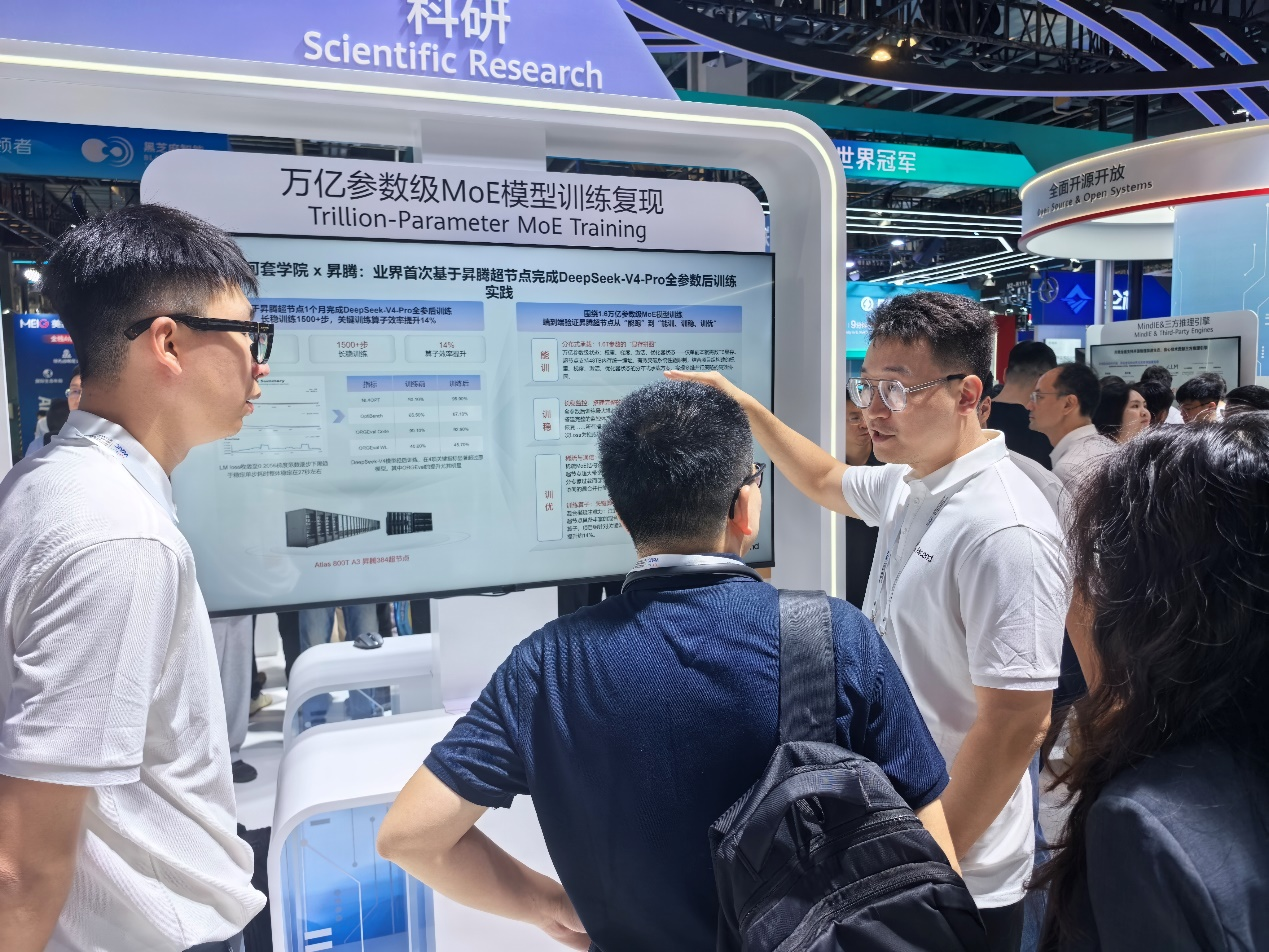
Figure 2: SLAI’s DeepSeek-V4-Pro full-parameter post-training results are showcased in the Ascend AI Industry Application Zone
SLAI's Perspective: Unique Approach to AI Education Reform
During the conference, Yiting Wang, Head of the Research Administration and Talent Services Office at SLAI, introduced the Institute's mission, talent-development model, and the significance of the benchmark-case selection to industry experts and members of the public visiting the exhibition area.
She highlighted that SLAI, as a pilot zone for cultivating top-tier innovative talent in artificial intelligence, works with 31 universities on the Chinese Mainland and six in Hong Kong and Macao, and began student admissions in September 2025. Guided by its core mission of "Social Intelligence", the Institute follows a "3I" talent-development model - internationalized, interdisciplinary, and industry-integrated - and operates five research centers to cultivate outstanding talent, advance frontier research, and develop a world-class think tank.
Wang said, "Competition among major powers in AI is, at its core, a competition for talent. Across industries, demand continues to grow for interdisciplinary professionals and deeper collaboration among academia, industry, and research. As an institution dedicated to cultivating top-tier innovative AI talent, SLAI will continue to build on a self-reliant computing ecosystem develop outstanding professionals who combine deep technical expertise with a strong understanding of industry. We will also advance the deeper integration of AI and education to deliver broader benefits to society."
The initiative’s selection as a benchmark case at this high-profile education forum marks a milestone in validating SLAI’s approach. It indicates that the Institute's model of industry-education integration is moving beyond internal teaching experimentation toward a reference model for AI education reform. With top-tier AI talent development at its core, SLAI uses domestic computing platforms and real-world research projects to connect an end-to-end chain of capabilities spanning operator development, model adaptation, ultra-large-scale model training, toolchain development, and curriculum design. This approach offers valuable practical experience for reshaping university talent-development models in the AI era.
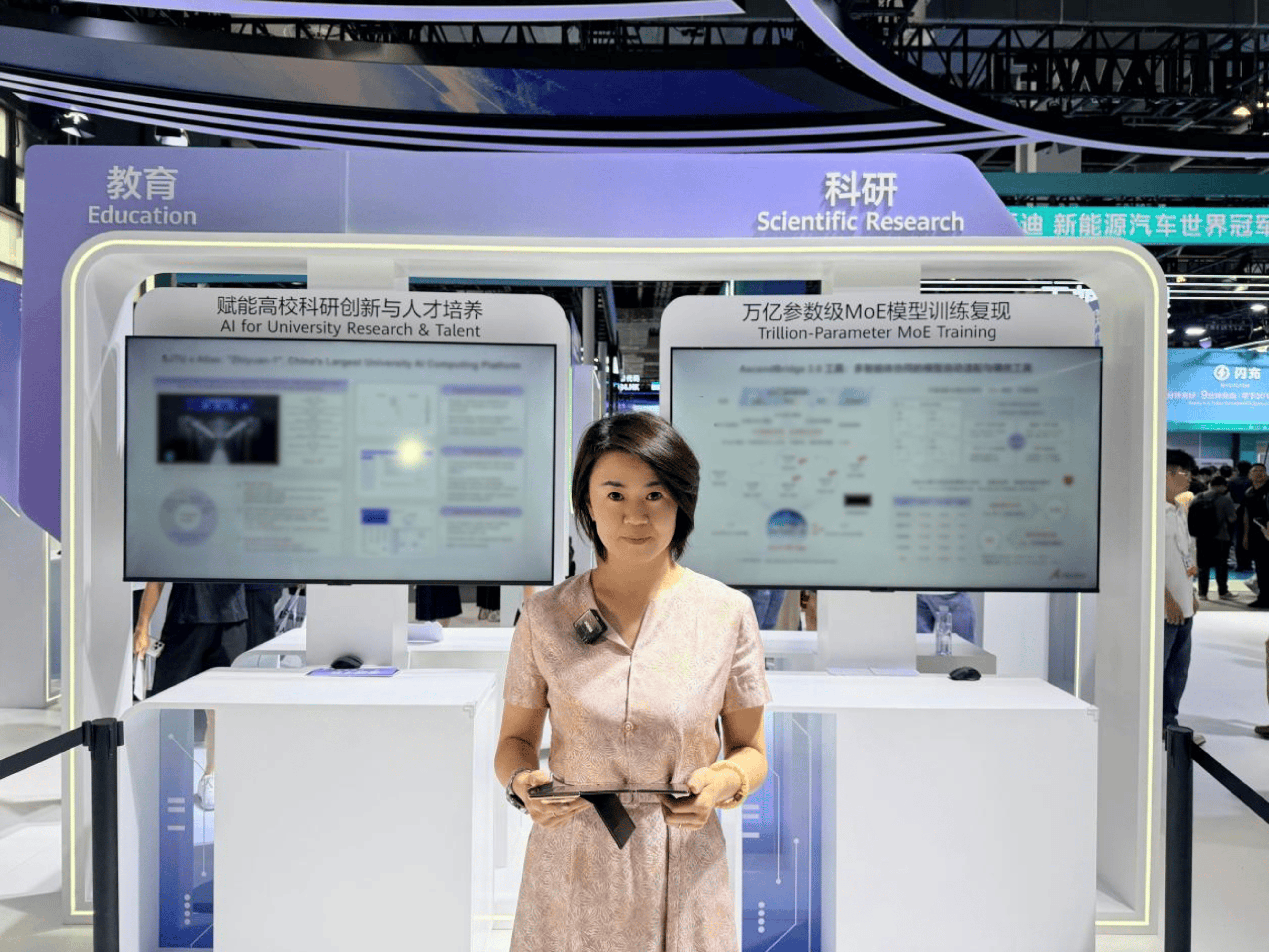
Figure 3: Yiting Wang, Head of the Research Administration and Talent Services Office, presents SLAI's achievements.
Conclusion
SLAI’s participation at WAIC 2026 provided a comprehensive showcase of its achievement in talent development and research innovation for a self-reliant ecosystem. It also reflected the Institute’s efforts to advance the coordinated development of education, science and technology, and talent, contribute to China's domestic AI ecosystem; and build channels for exchange and collaboration with universities, research institutions, industry partners, and developers.