Media Spotlight | A Top Mathematician's Choice of Shenzhen Brings the Greater Bay Area Its First Gauss Prize
A four-decade-old mathematical theory
now powers AI training.
A world-class mathematician has chosen Shenzhen.
A young city meets foundational science.
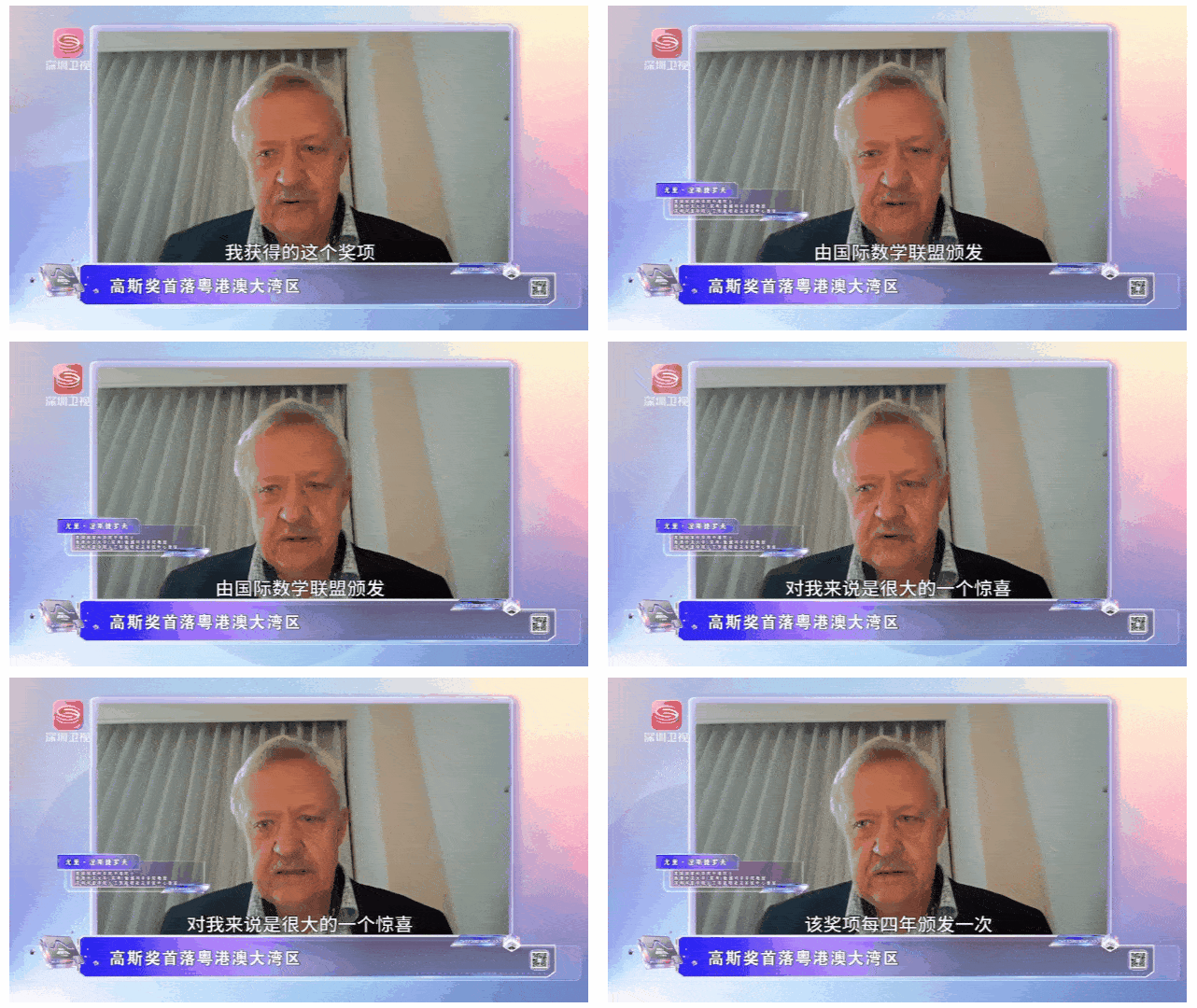
Professor Yurii Nesterov, Professor at the Center for AI Theory and Systems of Shenzhen Loop Area Institute (SLAI) and at The Chinese University of Hong Kong, Shenzhen (CUHK-Shenzhen), as well as a Foreign Associate of the U.S. National Academy of Sciences was awarded the 2026 Gauss Prize at the recently concluded International Congress of Mathematicians (ICM) in Philadelphia. This achievement marks the first time in the award's two-decade history that a mainland Chinese institution has secured the honor.
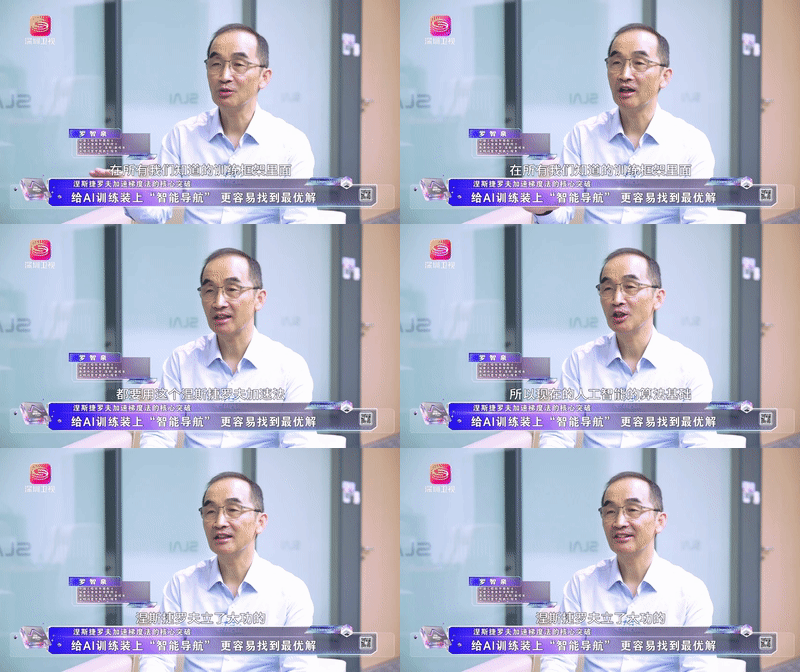
Following the ceremony, Prof. Yurii Nesterov joined Prof. Zhi-Quan (Tom) Luo—Executive Dean of SLAI, Vice President of CUHK-Shenzhen, Foreign Member of the Chinese Academy of Engineering, and Fellow of the Royal Society of Canada—for an exclusive interview on Shenzhen TV's Frontiers of Sci-Tech Innovation. The two scholars shared their in-depth observations on how mathematical theories can be translated into real-world impact, how AI and mathematics are driving each other forward, and what makes Shenzhen an increasingly compelling destination for foundational scientific inquiry.
A Four-Decade-Old Mathematical Theory Guides AI Training Like an "Intelligent Navigator"
The efficient optimization methods that Prof. Nesterov has devoted decades to researching, especially the Nesterov accelerated gradient method he pioneered in the late 1970s and early 1980s, were proposed long before anyone could have foreseen the advent of the AI era. Yet this very theory has since become an indispensable cornerstone of machine learning training, functioning as an "intelligent navigator" that dramatically boosts training efficiency for complex models. In the interview, Prof. Nesterov underscored the profound role that mathematics has played in advancing AI, while also pointing to the reciprocal impact—as AI increasingly provides new methodologies and analytical frameworks for mathematical inquiry.
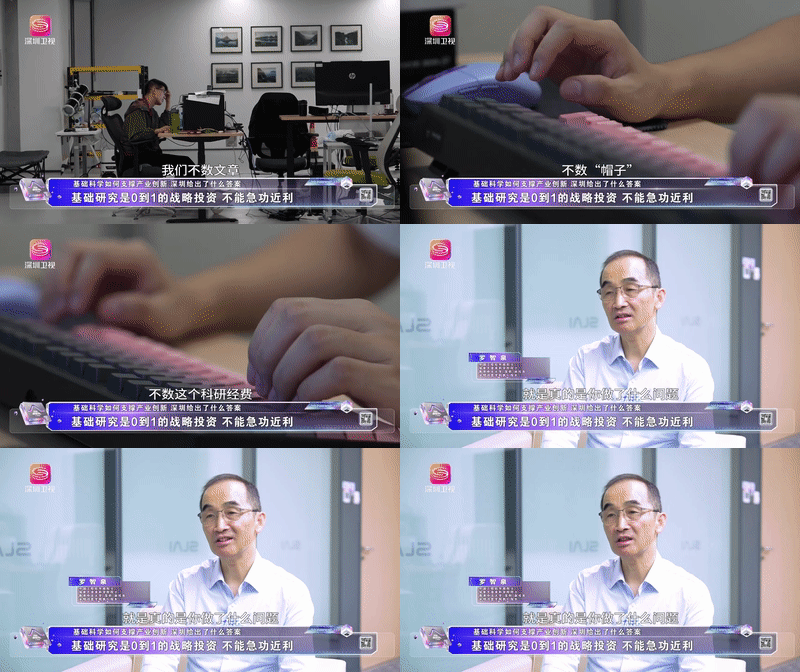
"Basic science matters because it leaves room for free exploration," Prof. Luo remarked, "allowing zero-to-one discoveries to gradually find their path to real-world application." This value, which persists across cycles, is precisely what makes fundamental research a strategic investment rather than a short-term pursuit.
Tackling Real Problems Reshapes Research Evaluation and Talent Development at SLAI
Speaking to SLAI's distinctive research orientation, Prof. Luo emphasized that the Institute, anchored in the core principle of tackling real problems, explicitly rejects metric-driven assessment—counting neither publications, nor titles, nor grants—in favor of a fundamental return to academic essentials. Rather than chasing trends or numeric indicators, the Institute encourages scholars to engage with genuine challenges in industry and science, guided by three core questions: what problem is being investigated, why it matters, and where the innovation resides.
On talent development, Prof. Luo underscored SLAI's commitment to nurturing students' ability to ask questions, guiding them through iterative inquiry to foster independent thinking and breakthrough innovation from the ground up. Such an evaluation system and educational philosophy, in turn, provides dedicated researchers with a steadfast platform to pursue their long-term academic endeavors.
Program Highlights
• How Prof. Nesterov's acceleration method equips AI training with an "intelligent navigator"
• How mathematics drives AI forward—and how AI, in turn, offers new tools for mathematical inquiry
• Why a top mathematician chose Shenzhen and the Greater Bay Area as his academic home
• Why fundamental research is a strategic investment in zero-to-one discovery
• How SLAI is redefining the way research is evaluated and talent is cultivated
Basic mathematics, some say, is the "inner strength" of technological innovation—invisible and formless, yet it shapes how high industry can rise and how far innovation can reach.
When Nesterov proposed his acceleration method more than forty years ago, AI was nowhere near the thriving force it is today. This fundamental research, decades in the making, now stands as a cornerstone of technological transformation—a testament to the enduring power of basic science.
The decision of a Gauss Prize winner stands as a powerful endorsement of SLAI's commitment to "tackling real problems." SLAI will sustain an open academic environment and a pragmatic evaluation system—one that supports dedicated scholars while bridging frontier research and industrial application.
The interview has now aired on Shenzhen TV's Frontiers of Sci-Tech Innovation. Click "Read More" at the end of this article to watch the full program.