Global Champion | SLAI BOYS Top ITU Telco Troubleshooting Agentic Challenge on Domestic AI Chips
In the recently concluded global finals of the ITU Telco Troubleshooting Agentic Challenge, the SLAI student team "SLAI BOYS" captured the world championship in Track B (IP Network Troubleshooting) with a commanding margin. Backed by the ITU AI for Good initiative and co-organized by global authorities including GSMA, ETSI, IEEE GenAINet, and TM Forum, the competition challenged participants to resolve authentic telecom network operations and maintenance (O&M) tasks using hidden test sets and multi-round blind evaluations—drawing top-tier international enterprises and professional squads, among them Cisco.
The SLAI BOYS' victory marks a milestone: their agent system, built atop the SLAI² Training Platform, demonstrated autonomous end-to-end closed-loop execution—from task comprehension and tool invocation to evidence gathering, fault localization, and final submission—within complex engineering environments. This achievement not only represents a pivotal leap for the platform—from model training and post-training to real-world agentic capabilities—but also provides robust validation that domestic AI chips can support cutting-edge AI applications.
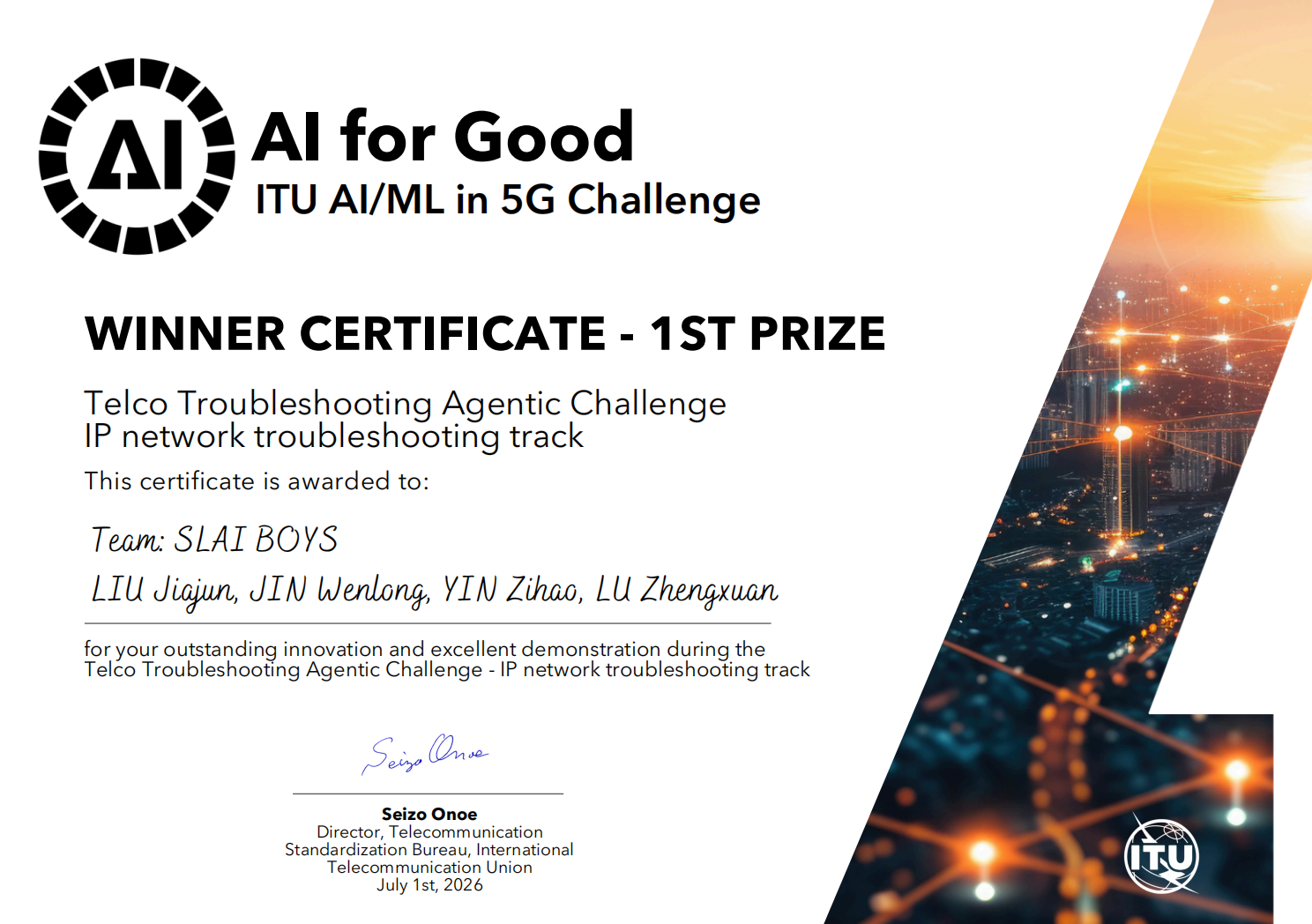
Award certificate of SLAI BOYS
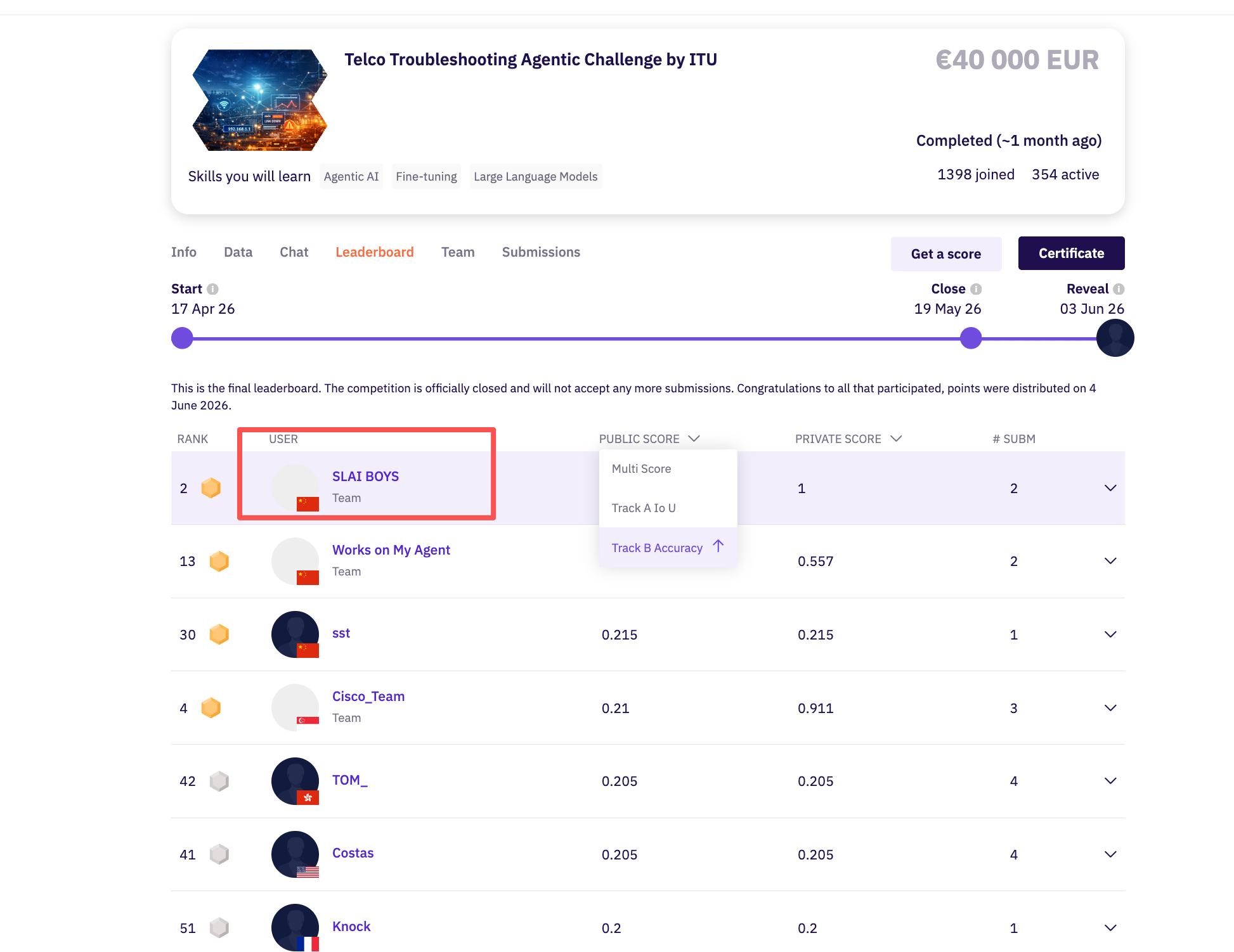
Official Award Announcement/Final Ranking Screenshot
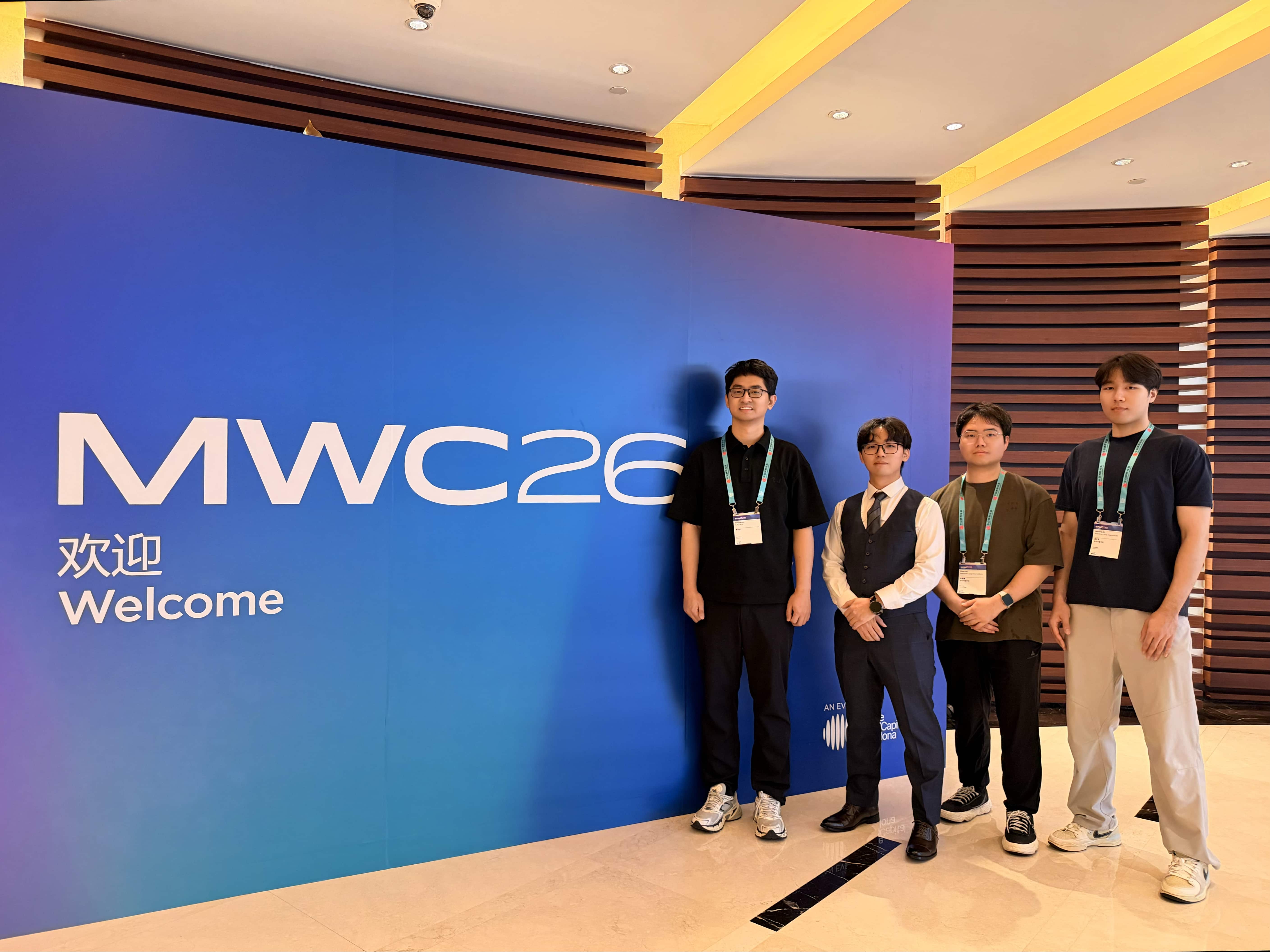
SLAI BOYS Team Invited to Accept Award On-Site
01
Authoritative Evaluation: Validating Real-World Competence Against International Standards
This event was far more than a single-model leaderboard; it was a global, practical evaluationorchestrated by international telecommunications standards bodies and industry alliances. Targeting real-world O&M scenarios, the challenge required participating agents to interact dynamically with simulated networks under a unified foundation model and tool environment. Agents had to proactively execute diagnostic commands, parse configurations and logs, analyze operational status, and continuously plan subsequent steps based on intermediate evidence. Hidden test sets and multi-round blind evaluations assessed each agent's holistic proficiency in tool invocation, information synthesis, reasoning and decision-making, and closed-loop task execution.
Track B specifically focused on IP network troubleshooting across multi-vendor equipment (Huawei, Cisco, and H3C). In a "black-box" setting with no human hints, agents were required to incrementally localize faults through path tracing, route verification, interface status checks, and configuration comparisons—submitting verifiable evidence and conclusive reports.
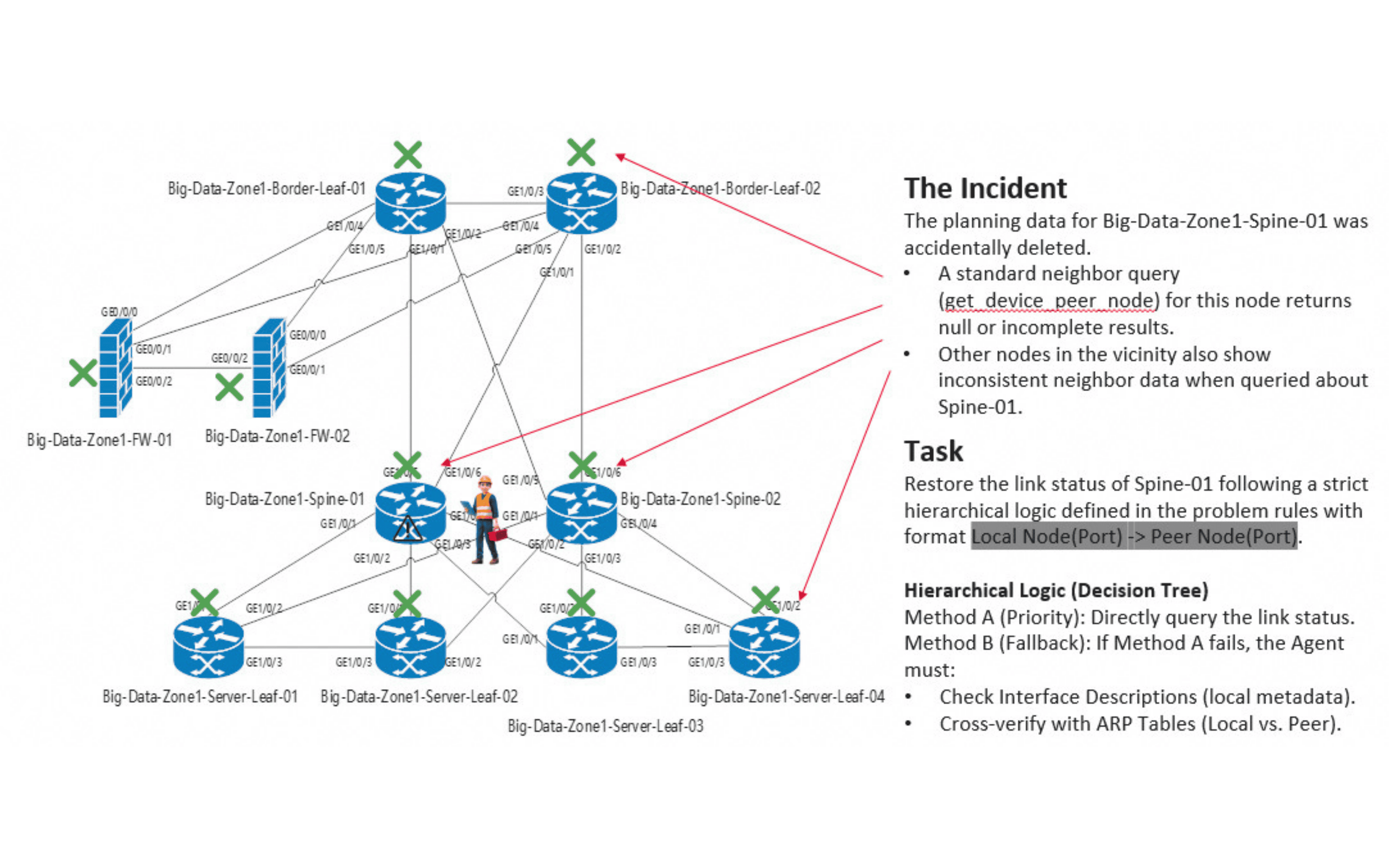
Contest Overview
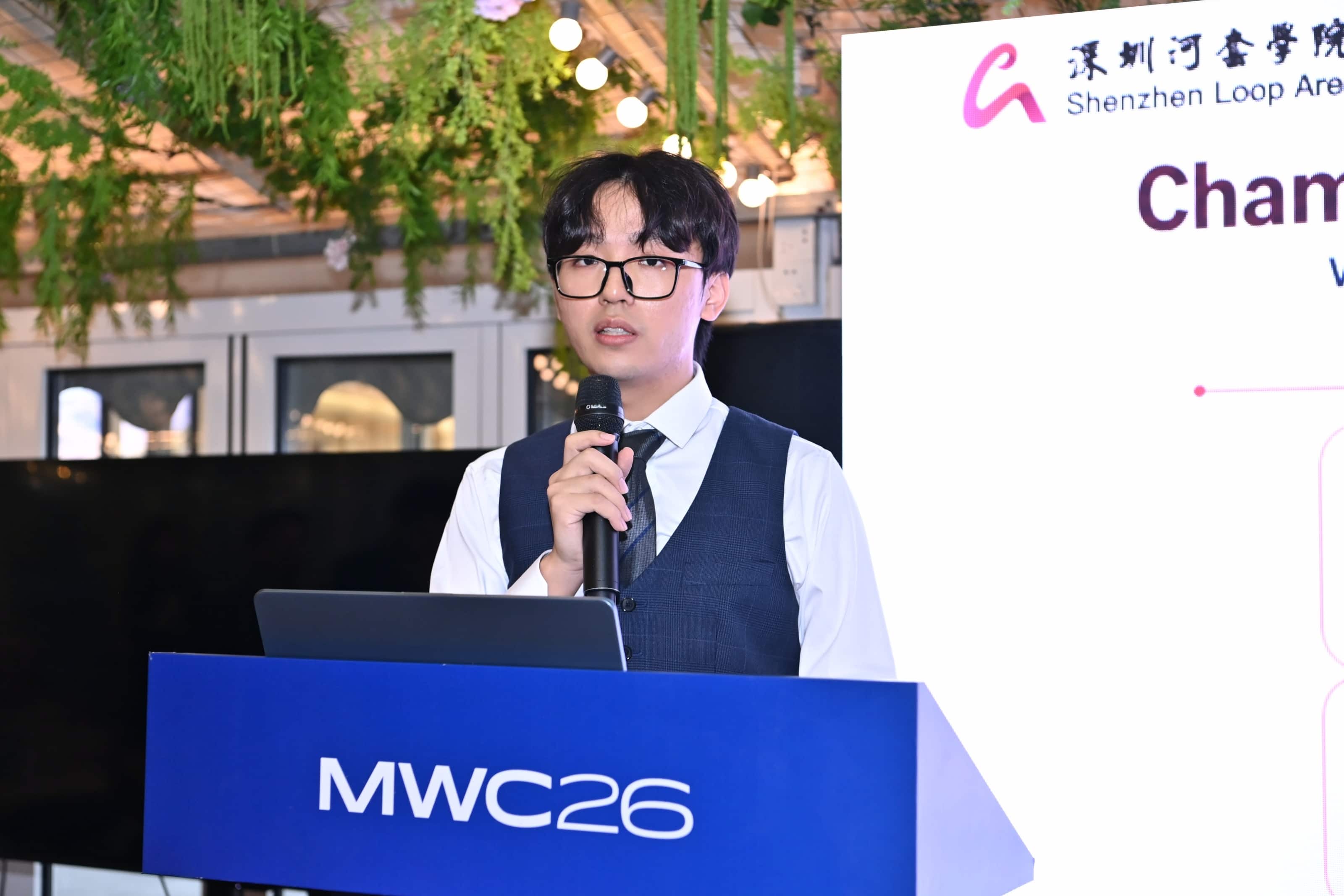
Jiajun Liu, Captain of SLAI BOYS, Presents the Solution On-Site
02
Outperforming the Pros: Surpassing Top Specialist Teams to Win Gold
The competition drew elite contenders from academia, research labs, and the telecom industry, including specialized teams from established players like Cisco with deep data communications expertise. These teams possessed intimate knowledge of network devices, protocol suites, topologies, CLI operations, and troubleshooting procedures, leveraging substantial advantages from years of engineering experience and domain know-how. By faithfully replicating industrial production environments, the challenge demanded not only superior AI agent engineering but also a profound grasp of network systems.
The SLAI BOYS roster—Jiajun Liu, Wenlong Jin, Zihao Yin, and Zhengxuan Lu, mentored by Kai Yang, Min Li, Dong Wang, Baotian Hu, and platform instructor Dongfang Li—harnessed domestic AI computing infrastructure for model training and system optimization. The team drove continuous iterations in model domain adaptation, tool invocation protocols, network path tracing, and system stability, while concurrently exploring technical avenues such as supervised fine-tuning, reinforcement learning, data augmentation, and tool optimization. Through rapid error diagnosis and remediation across multiple blind evaluation rounds and hidden tests, the team surpassed formidable rivals including Cisco through solid technical execution, securing the global title.
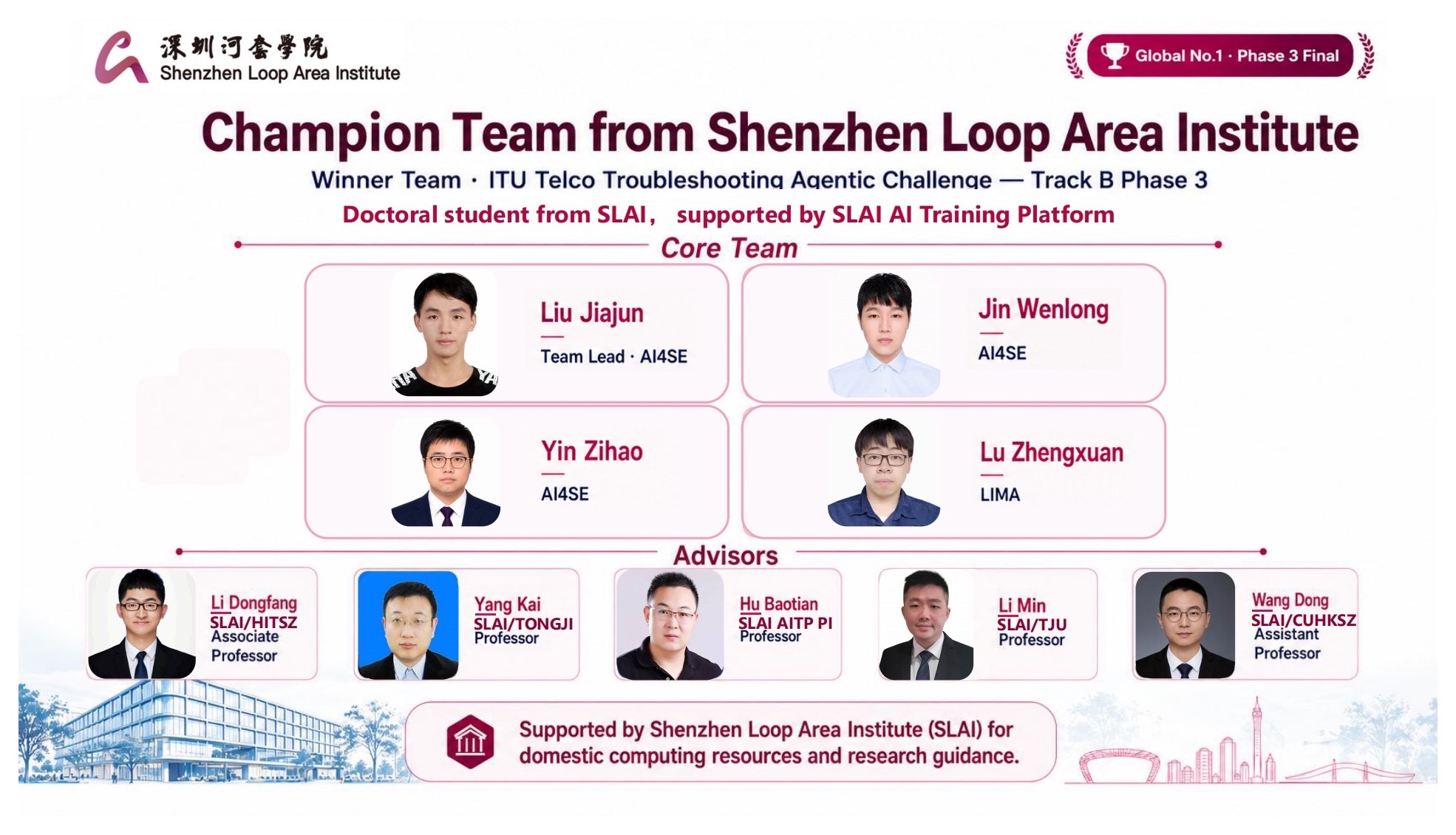
Introduction of SLAI BOYS Team Members and Their Mentors
03
Platform Milestone: Agents Achieve Top 1 Performance in Solving Real-World Problems
This championship transcends a contest victory; it constitutes a rigorous field validation of the training platform's agent capabilities in real-world settings. Unlike knowledge-based QA tasks or offline benchmarks, the challenge demanded that agents navigate unknown networks, making autonomous decisions to deliver reliable outcomes amid incomplete data, heterogeneous multi-vendor devices, complex fault chains, and severe time constraints.
To address these hurdles, the team engineered an "Evidence-Grounded Troubleshooting Agent" framework: large language models orchestrated task understanding, troubleshooting planning, and workflow control; network interaction interfaces, device command APIs, and professional diagnostic tools extracted critical network facts—including topology, configurations, routes, alarms, logs, and operational status; and structured evidence chains enforced reasoning and output constraints, ensuring that every conclusion was traceable and verifiable.
This approach transformed the agent from a mere answer generator into an active problem-solver. During hidden evaluations, the system executed the full workflow—from problem understanding and tool invocation to evidence collection, fault localization, and result submission—securing the global Top 1 ranking. This confirms that the agent system built on the SLAI² Training Platform is fully capable of handling complex, real-world engineering problems.
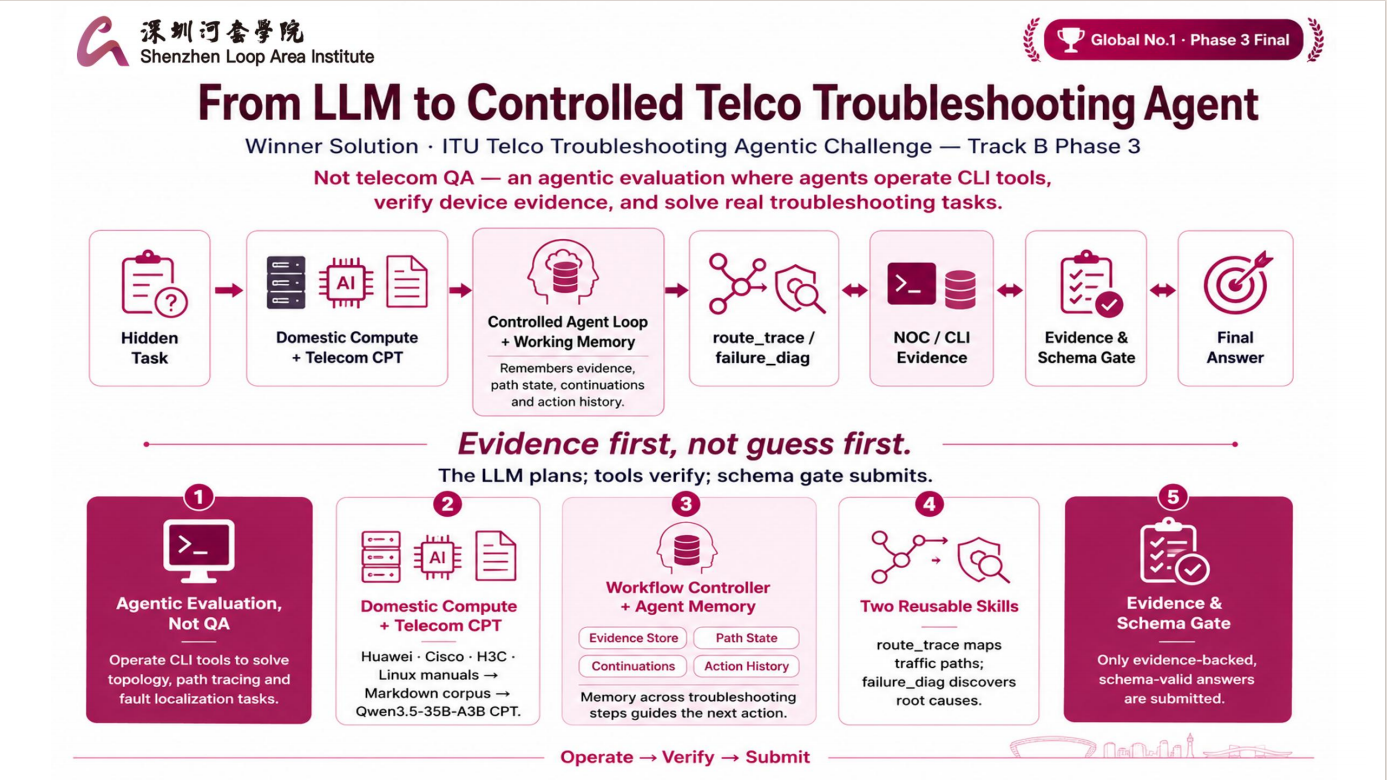
On-Site Solution and Architecture Presentation
04
Domestic Foundation: Closing the Loop from Model Adaptation to System Delivery
Powered by SLAI's domestic Ascend AI infrastructure, the team handled all preparation tasks—from model adaptation and agent scheduling to training and system debugging. Through multiple iterations within this homegrown software-hardware ecosystem, the team ultimately delivered a stable and verifiable system.
The challenge demonstrated that domestic AI chips can effectively support sophisticated agent development and engineering delivery. By curbing hallucinations, grounding reliable facts through tool invocation, and maintaining stability under time pressure, the platform codified an agent workflow that is executable, verifiable, and fully traceable.
Building on the proven success of domestic AI chip clusters in enabling full-parameter post-training, this victory signals a pivotal shift for the SLAI² Training Platform: from model training to agent training, and from metric-based validation to real-world problem solving. It also solidifies a virtuous cycle of integrated research and training, driven by domestic chip support, real-world task guidance, collaborative mentoring, and student-led practice.
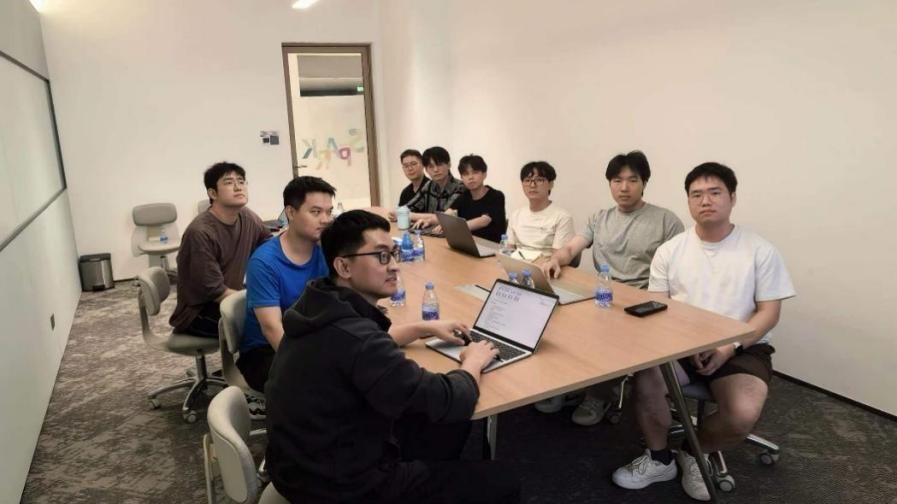
Instructor Dongfang Li Mentors Students on the Domestic AI Computing Platform
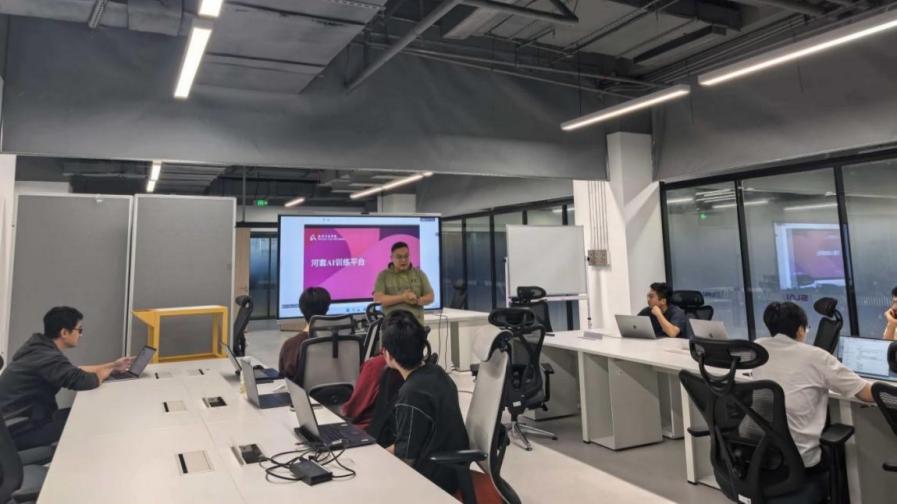
Project PI Professor Baotian Hu Drives Platform Capability Building
05
Cultivating Talent Through Competition: Pushing Boundaries in Complex Real-World Systems
Success in demanding environments like telecom and industrial networks hinges on an agent's ability to invoke tools, gather evidence, sustain continuous reasoning, and derive reliable conclusions. The ITU evaluation served as both a technological stress test and a comprehensive validation of SLAI's "competition-driven talent cultivation" model.
By treating elite global competitions as a "proving ground," SLAI places students at the forefront of domestic AI chip-based agent development, forging their systems-thinking capabilities through real-world engineering challenges. This approach validates a development paradigm driven by "research projects, major competitions, and domestic platforms."
Looking ahead, SLAI will leverage the SLAI² Training Platform to spearhead the adoption of Agentic AI and AI for Networks within the domestic ecosystem, tackling real-world scenarios across industries. Committed to nurturing AI talent with robust systems thinking and engineering excellence, SLAI empowers more young scholars to thrive through practice and break through barriers.
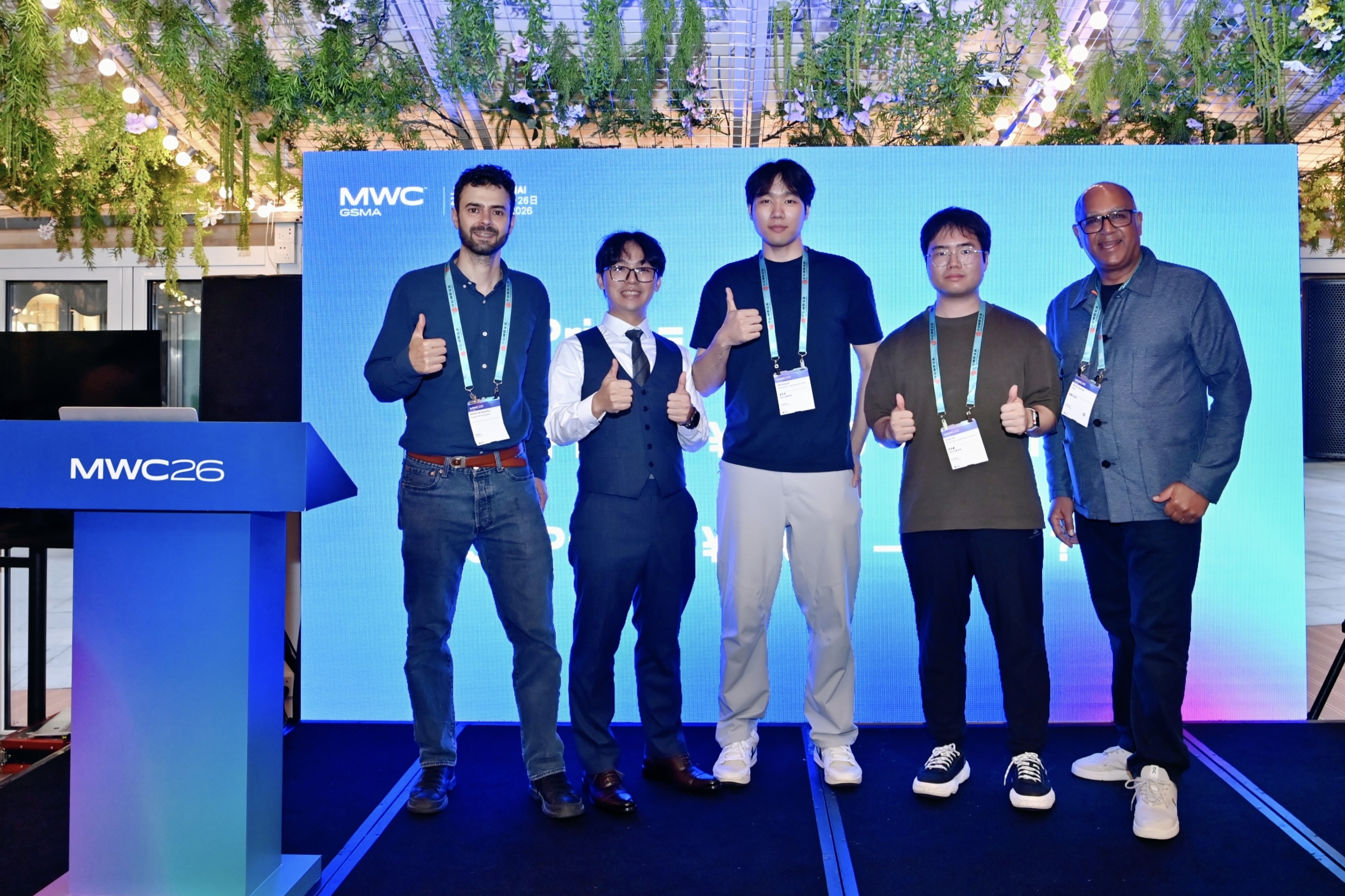
SLAI BOYS Team with Event Organizers
From late nights in the lab to the ITU global podium, the SLAI BOYS' triumph is more than a Top 1 title. It showcases the technical sophistication of the SLAI² Training Platform, the battle-proven strength of the domestic AI chip foundation, and the global validation of the "integrated research and training" model.
This victory—forged through real-world challenges—offers a blueprint for the industrial deployment of AI agents.
The race has begun. The journey starts now.