Student Highlights | SLAI Direct-Track PhD Student Liu Jiajun Wins National Second Prize in the 3rd Energy Electronics Industry Innovation Competition
Recently, the 3rd Energy Electronics Industry Innovation Competition and the 4th Advanced Energy Storage Technology Innovation Challenge concluded successfully in Tianjin. Under the guidance of Professors Yang Kai and Huang Jianwei, Liu Jiajun, a doctoral student at the Center for Intelligent Science and Engineering of SLAI, led his team as team leader. The project, Full Lifecycle Health Prediction System for Energy Storage Batteries, stood out in a highly competitive field and earned the National Second Prize.
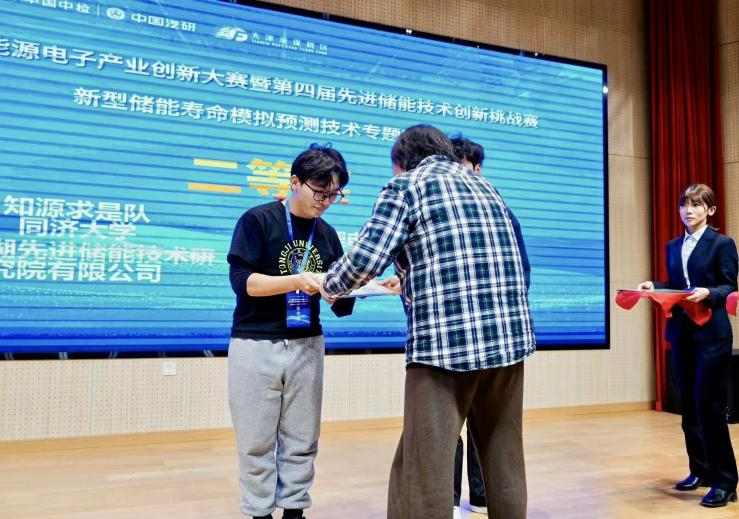
Award Ceremony Scene
01
Competition Overview
A Premier Competition Serving China's Dual-Carbon Strategy
The competition was organized by the Industry Development and Promotion Center of the Ministry of Industry and Information Technology and hosted by the China Automotive Engineering Research Institute Co.,Ltd. (CAERI), with strong support from leading industry companies including Contemporary Amperex Technology Co., Ltd. (CATL). It is acknowledged as one of China's most authoritative and high-level competitions in the field of energy electronics. The competition focused on major industry challenges such as long battery lifecycles, complex operating conditions, and significant degradation variability. Participants were required to use limited real-world testing data to accurately model the safety and reliability of batteries throughout their full lifecycle
A total of 18 elite teams from universities, research institutes, enterprises, and public institutions participated in the competition. Following the preliminary evaluation of algorithm accuracy, only 10 teams qualified for the final defense. The final round adopted a dual-dimensional evaluation framework consisting of "prediction accuracy (900 points) + methodological advancement (300 points)." Teams were assessed not only on the accuracy of SOH (State of Health) prediction across cycling, storage, and operational-condition scenarios, but also on the innovation and practical implementability of their technical solutions.
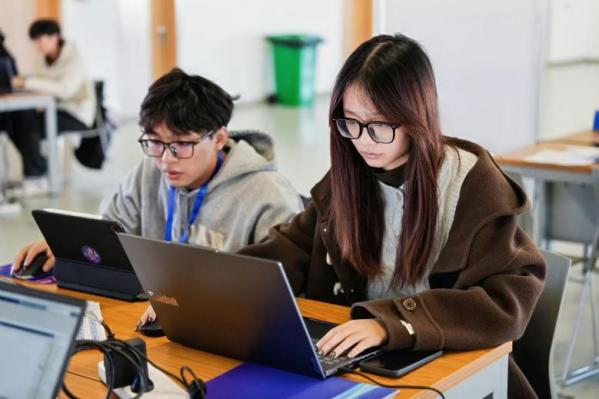 | 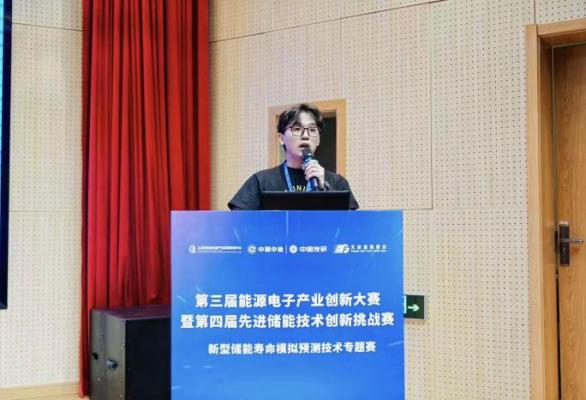 |
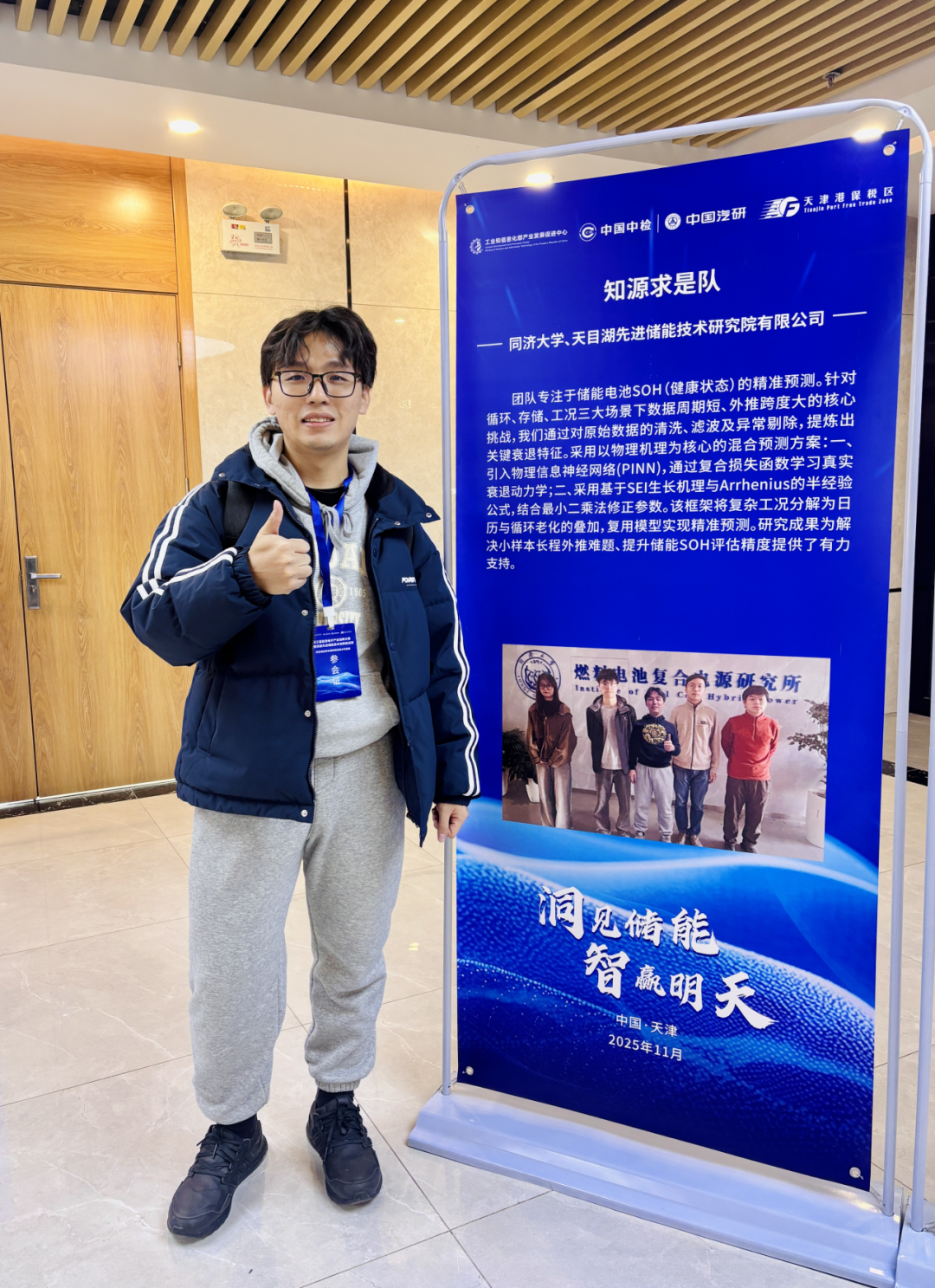
Competition Scene
02
Competition Highlights
A Robust Innovation Integrating Physical Intuition with Data Intelligence
Faced with the extreme challenge of "predicting the full lifecycle from short-term data," Liu Jiajun and his team abandoned conventional pure data-fitting approaches. They developed a framework centered on Physics-Informed Neural Networks (PINNs), creatively integrating physical principles such as Miner's Rule (Linear Cumulative Damage Theory) into deep learning models. This approach effectively addresses the long-standing industrial issue of divergence in purely data-driven models during long-term extrapolation, enabling precise tracking of battery aging trajectories under complex and dynamic operating conditions.
The proposed system delivers stable performance in conventional cycle life prediction and exhibits prominent algorithmic advantages in the more challenging storage life and dynamic operating condition prediction, maintaining industry-leading prediction errors. During the final defense, Liu Jiajun elaborated on the discrepancies in lifespan simulation across diverse operating conditions with solid data and clear presentation.The project's breakthroughs in both prediction accuracy and model robustness received high praise from the judging panel, ultimately securing the National Second Prize.
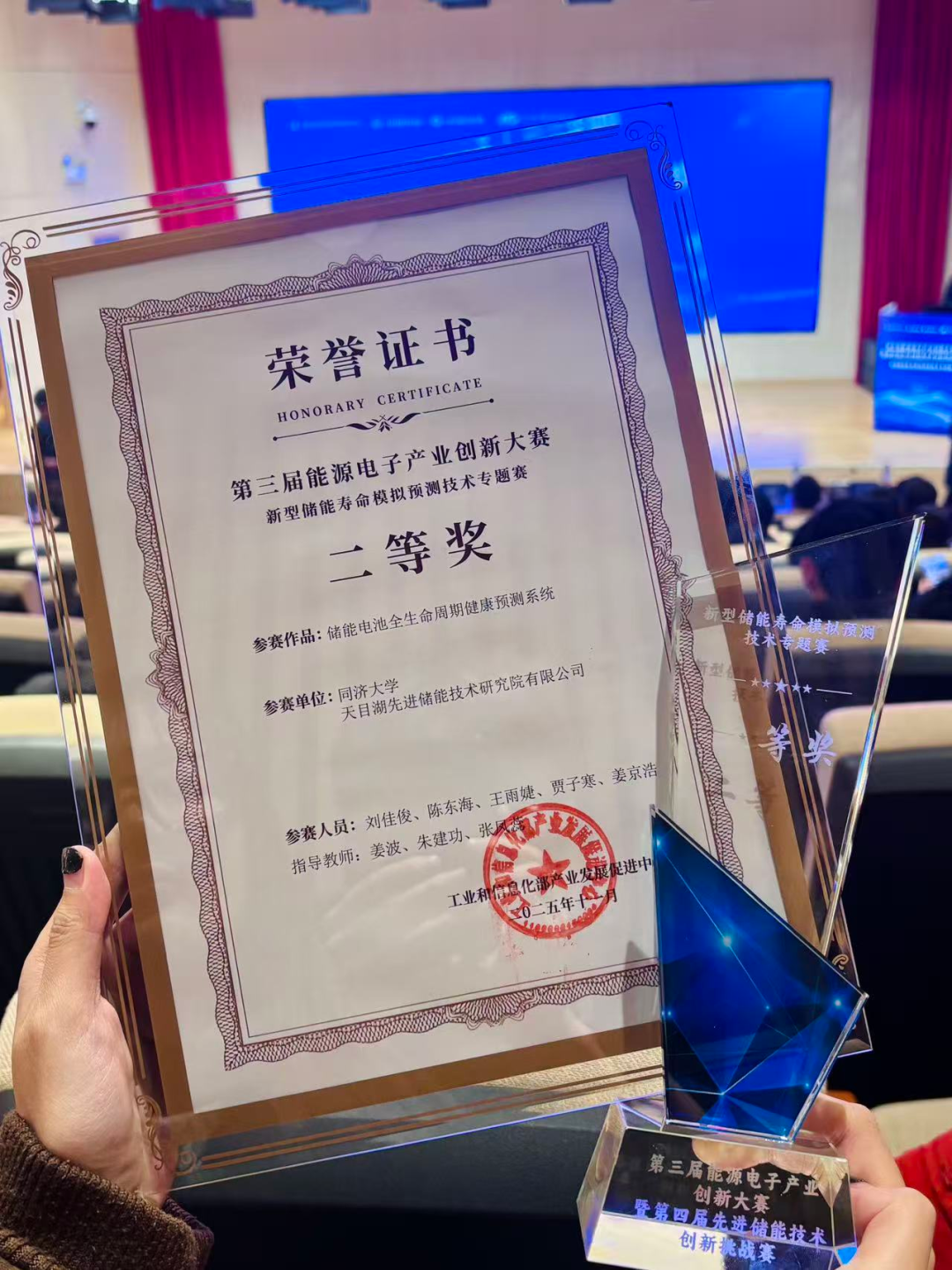 |  |
Award-receiving Moment
03
Platform Empowerment
From "Competition Laureate" to "Rising Research Talent"
Liu Jiajun's research focuses on the field of AI4Energy. With a strong theoretical foundation and outstanding engineering capabilities, he is currently engaged in the key research project on "Power System World Models for Multi-Source Uncertainty." This award reflects not only his long-term dedication to intelligent engineering research, but also SLAI's deep expertise and academic strengths in the AI4Energy field.
Notably, Liu Jiajun is a jointly trained doctoral student of SLAI and Tongji University. During his undergraduate studies at Tongji University, he had already demonstrated exceptional talent in algorithms and engineering. He has received numerous prestigious honors, including the National Grand Prize at the China Digital Automotive Competition, the National First Prize at the Baja Competition organized by the China Society of Automotive Engineers, and the First Prize at the Huawei ICT Academy Innovation Training Camp. He was also awarded the title of "Associate Engineer" by SAE China. After joining SLAI, Liu successfully integrated his previous competition experience with cutting-edge scientific research, achieving remarkable growth from a "gold-medal competition participant" to a "rising research star."
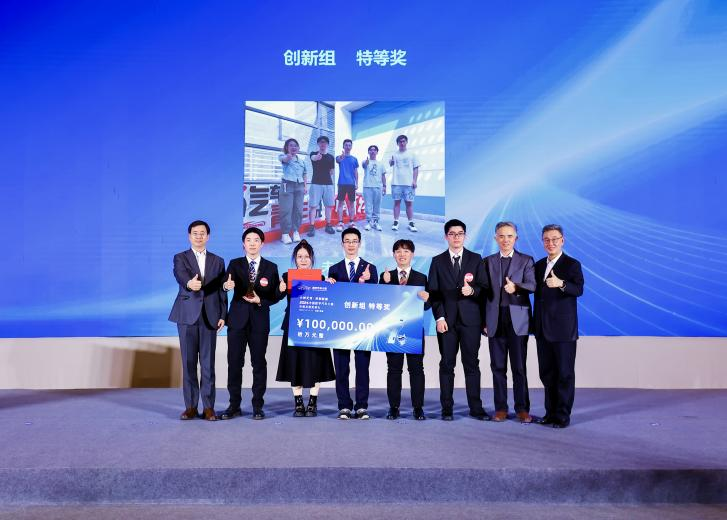
Liu Jiajun won the National Grand Prize in the 2024 China Digital Automotive Competition
04
Looking Ahead
Continuing to Empower the Cultivation of High-Level AI Talent
SLAI remains committed to cultivating high-level interdisciplinary innovators with global perspectives, strong theoretical foundations, and outstanding engineering practical capabilities. The Center for AI for Science and Engineering focuses on frontier directions in AI for Science & Engineering, providing students with world-class research platforms and a dynamic environment for growth through project-based learning, competition-driven training, and integration of industry and education. Liu Jiajun's achievement once again demonstrates SLAI's forward-looking strategic vision and educational strengths in key areas such as intelligent energy systems and AI4Energy.
Looking ahead, SLAI will continue targeting major frontier demands by advancing the deep integration of AI with foundational industries such as energy and electric power. SLAI is committed to cultivating more outstanding young talents who are bold in tackling challenges and capable of driving innovation, contributing its strength to China's dual-carbon strategy and the pursuit of greater self-reliance and strength in science and technology.