SLAI, Autokernel, and Huawei Co-Launch TrainBridge to Speed Up Training on Domestic NPUs
Introduction
How can model training on domestic computing infrastructure move from merely "running" to "running fast"? Shenzhen Loop Area Institute (SLAI), Autokernel (Shenzhen) Technology Co., Ltd., and Huawei Technologies Co., Ltd. have jointly released TrainBridge, an automated training optimization tool built on a fresh idea: let an AI agent borrow the mature compilation optimization experience accumulated on GPUs to further optimize training on Ascend NPUs, making it 1.7 to 2 times faster.
01 From Merely "Running" to "Running Fast"
Once migrated to an Ascend NPU, a training program typically executes correctly, but rarely at the desired speed. Consider a version of Modded-NanoGPT, a community-recognized language model pretraining benchmark: one complete training run takes just 128 seconds on 8 NVIDIA H100 GPUs, whereas the initial migrated version on 8 Ascend 910C NPUs requires 563 seconds, 4.4 times as long as on the GPUs.
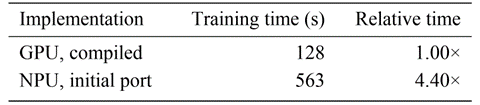
Figure 1: Training time for the same task on GPUs vs. NPUs
If the training program runs that slowly, why not let AI handle the optimization directly?
The research team first asked a general-purpose AI agent to modify the training code. After 12 hours of tuning, training time fell from 563 seconds to an average of 419.2 seconds, still a wide gap from the ideal.
What if the agent instead used profiling tools to locate the most time-consuming steps before editing anything? Experiments showed that this route demands endless loops of analysis, modification, execution, and verification, burning substantial computing resources on successive rounds of validation while yielding only modest gains. The underlying reason is simple: the slowest step is not necessarily the one with the most headroom for speedups; knowing where time is spent does not mean knowing where gains lie or how to achieve them. The question thus shifted: can the agent be handed a clearer optimization direction?
02 Putting GPU Compilation Experience to Work for NPU Tuning
So how can the agent be steered toward more promising directions? The answer lies in the GPU. After decades of development, GPUs feature mature compilation optimization technology that automatically simplifies computation and fuses operations before training to trim unnecessary runtime overhead. As noted earlier, the GPU finishes one training run in a mere 128 seconds, and compilation deserves much of the credit: with compilation switched off, the same run takes 338 seconds, meaning compilation alone makes training about 2.6 times faster.
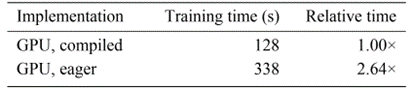
Figure 2: Training time for the same task on GPUs before compilation (eager execution) and after compilation
These optimization insights cannot be applied directly to NPUs, yet they serve as a valuable reference for NPU performance tuning. Acting on this idea, the team proposed TrainBridge, which assists the agent in two stages. In the first stage, TrainBridge compares the same training program before and after GPU compilation, extracts optimization directions worth trying, and rewrites the NPU training program accordingly. In the second stage, the agent turns to NPU profiling to clear the remaining bottlenecks.
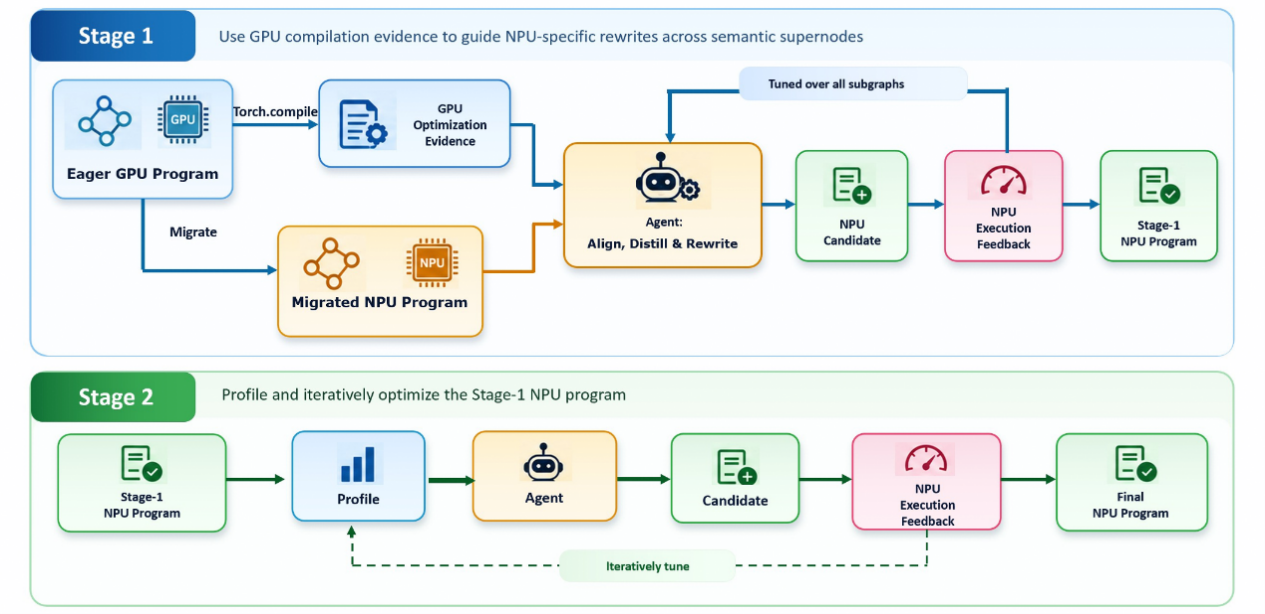
Figure 3: TrainBridge's two-stage tuning workflow
A concrete example makes this clear. In one step of attention computation for a language model, the original implementation generates a chain of redundant data copies. GPU compilation removes them automatically, but the NPU version keeps them in place. Guided by TrainBridge, the agent recognized this optimization intent and rewrote the NPU implementation to remove the redundant copies while remaining functionally equivalent. As a result, the step execution time fell from 2.604 milliseconds to 0.508 milliseconds, making it 5.13 times faster.
03 Experimental Validation of Faster Tuning and Training
The team evaluated TrainBridge systematically across a diverse task suite encompassing language model pretraining, image classification, and vision-language training.
● In a controlled experiment where a baseline general-purpose AI agent tuned for the same amount of time, the best training time the agent alone could reach averaged 419.2 seconds; adding TrainBridge reduced this to 283.2 seconds, a 32.4% cut that markedly improves tuning efficiency.
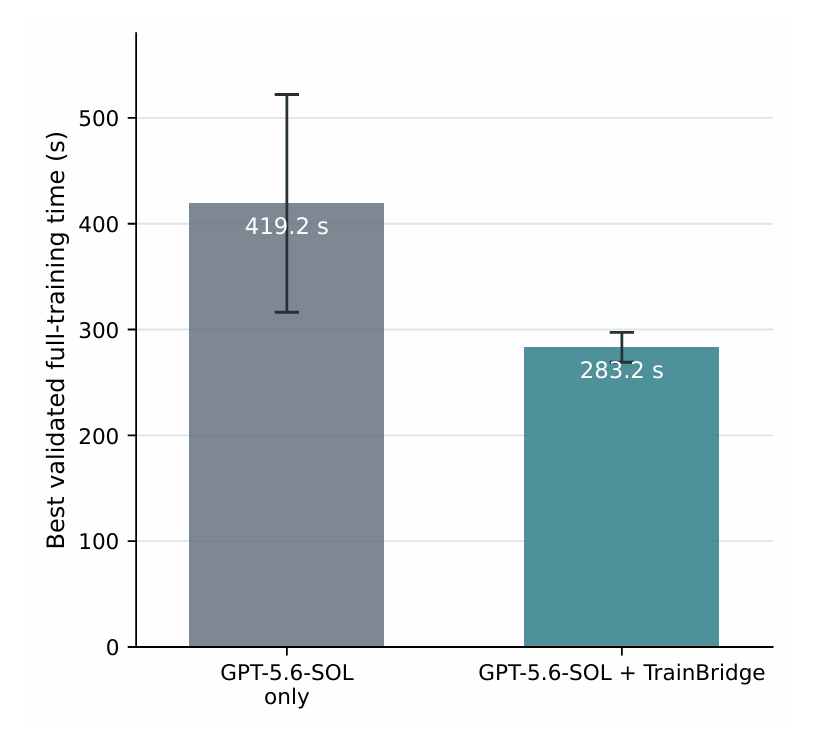
Figure 4: Tuning results for the same general-purpose agent with and without TrainBridge
● On a heavily optimized language model pretraining benchmark, the team randomly sampled 27 records from the top 50 in Modded-NanoGPT history and tuned each on 8 Ascend 910C NPUs. TrainBridge accelerated NPU training by an average of 1.95 times.
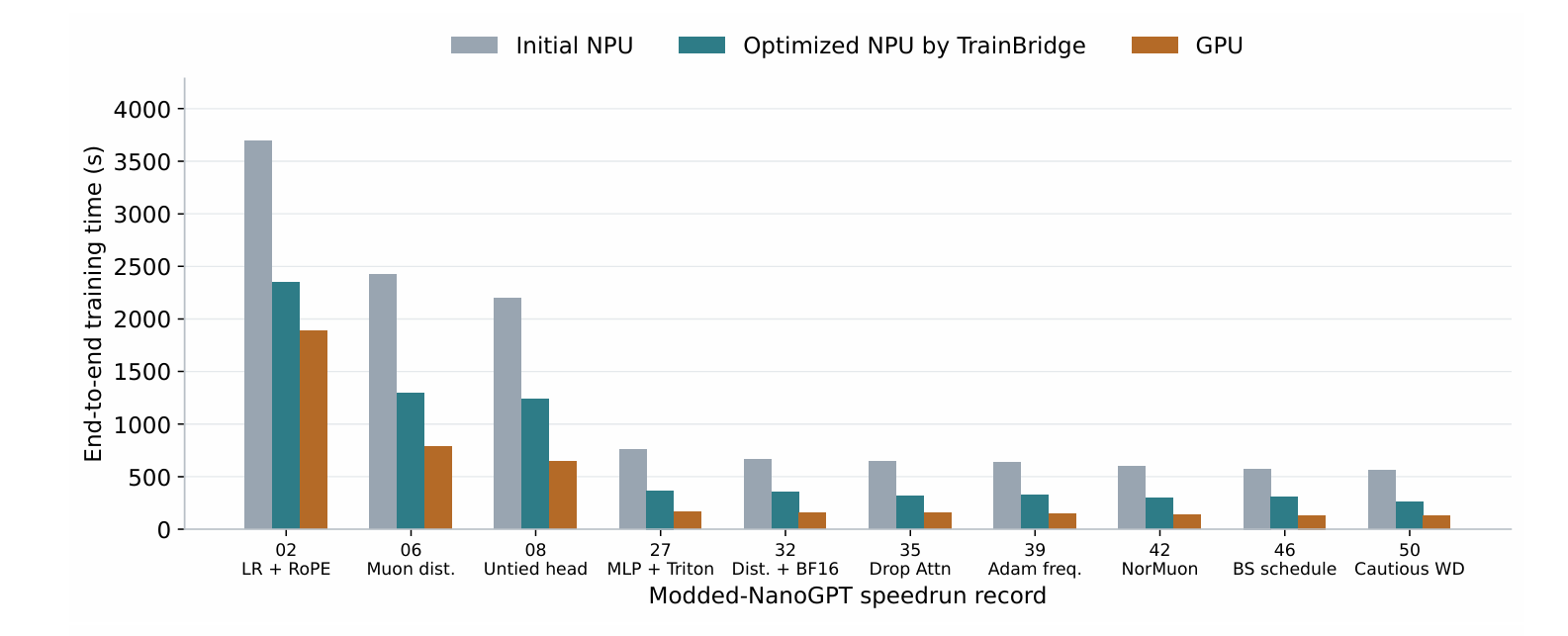
Figure 5: Full training time before and after tuning for 10 records sampled to spread approximately evenly across record IDs
● Across several common training tasks, TrainBridge speeded up training 2.22, 1.25, 1.68, and 1.84 times on CIFAR-10 AirBench (an image classification training speed benchmark), ViT (a Transformer-based image classification model), Qwen3-0.6B (a 600-million-parameter language model), and nanoVLM (a lightweight vision-language model), respectively, with an average gain of 1.7 times.
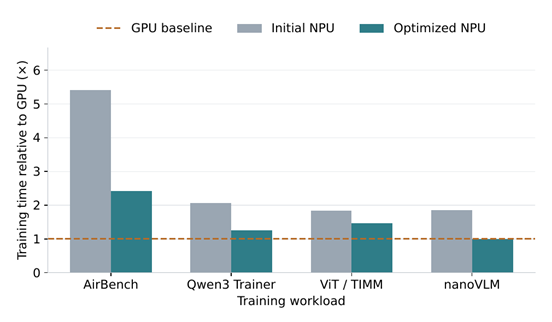
Figure 6: Training time for the four tasks before and after tuning
● The tool proves equally effective in real-world applications of scientific foundation models. Applied to BioMod, a single-cell model, TrainBridge speeded up each training epoch approximately 1.84 times on a pretraining dataset of 1.6 million cells and roughly 2.9 to 3.3 times on five cell-annotation datasets: Immune, Myeloid, HPancreas, MS, and Liver.
04 Building an Open Evaluation Benchmark Together to Enrich the Domestic Computing Training Ecosystem
To make these optimization results available to more developers for use and further improvement, the team built a tuned Modded-NanoGPT training benchmark on 8 Ascend 910C NPUs and launched the NPUTrainArena leaderboard website. Open to the community and covering tasks such as Modded-NanoGPT, AirBench, ViT, Qwen3, and nanoVLM, the benchmark gives researchers a common arena to keep setting new performance records under shared standards and to iterate on optimizations together.
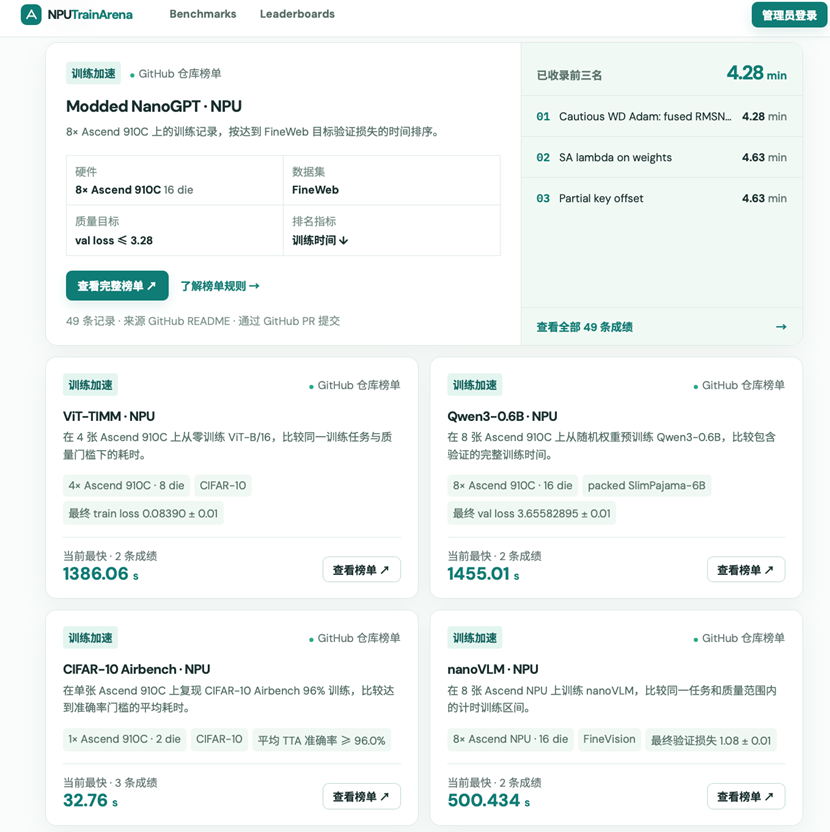
Figure 7: NPUTrainArena leaderboard website
05 Pooling Strength for Domestic Computing Adaptation, Cultivating Top AI Talent
For domestic computing to progress from "usable" to "truly useful", one decisive step is ensuring models not only run but also train with high efficiency. TrainBridge explores how to convert the compilation optimization experience built up in the GPU ecosystem into optimization leads that an AI agent can absorb and verify on NPUs. Beyond accelerating a single training run, the effort contributes something larger: a stock of reusable methods for cross-platform training optimization so that future model adaptation has proven practices to follow.
Real engineering challenges double as a training ground for AI talent. From model migration and performance profiling to agent tuning and benchmark validation, TrainBridge brings the coordination of algorithms, systems, and hardware into research practice. Students are expected not only to make code run correctly but also to understand performance bottlenecks, devise optimization plans, and verify the effects through experiments, thereby honing their systems thinking and engineering skills in solving real problems.
The goal is to make every optimization a starting point for others. Through the open evaluation benchmark and community collaboration, the team aims to make every optimization a step forward that the community can build on and share. In this way, young talent grows by tackling real problems, and domestic computing continues to unlock its potential through ongoing innovation. Together, these efforts cement a dual foundation of technology and talent for China's AI development.
Related Links
Code repository:
https://gitcode.com/SLAI/TrainBridge
NPU version of Modded-NanoGPT:
https://gitcode.com/SLAI/modded-nanogpt-npu
NPUTrainArena leaderboard:
Full paper: