SLAI Welcomes New Doctoral Cohort at Opening Ceremony 2026
On the morning of September 4, Shenzhen Loop Area Institute (SLAI) formally welcomed its incoming doctoral class at the Opening Ceremony 2026 in the Institute's auditorium. The new students arrive from 37 participating universities across the Chinese Mainland, Hong Kong, and Macao, and they now begin their research journey at an innovation hub entrusted with a major strategic mission.
Video (WeChat Channels): https://weixin.qq.com/sph/AKmR549RQj
The ceremony opened at 10:00 a.m. to the strains of the national anthem.
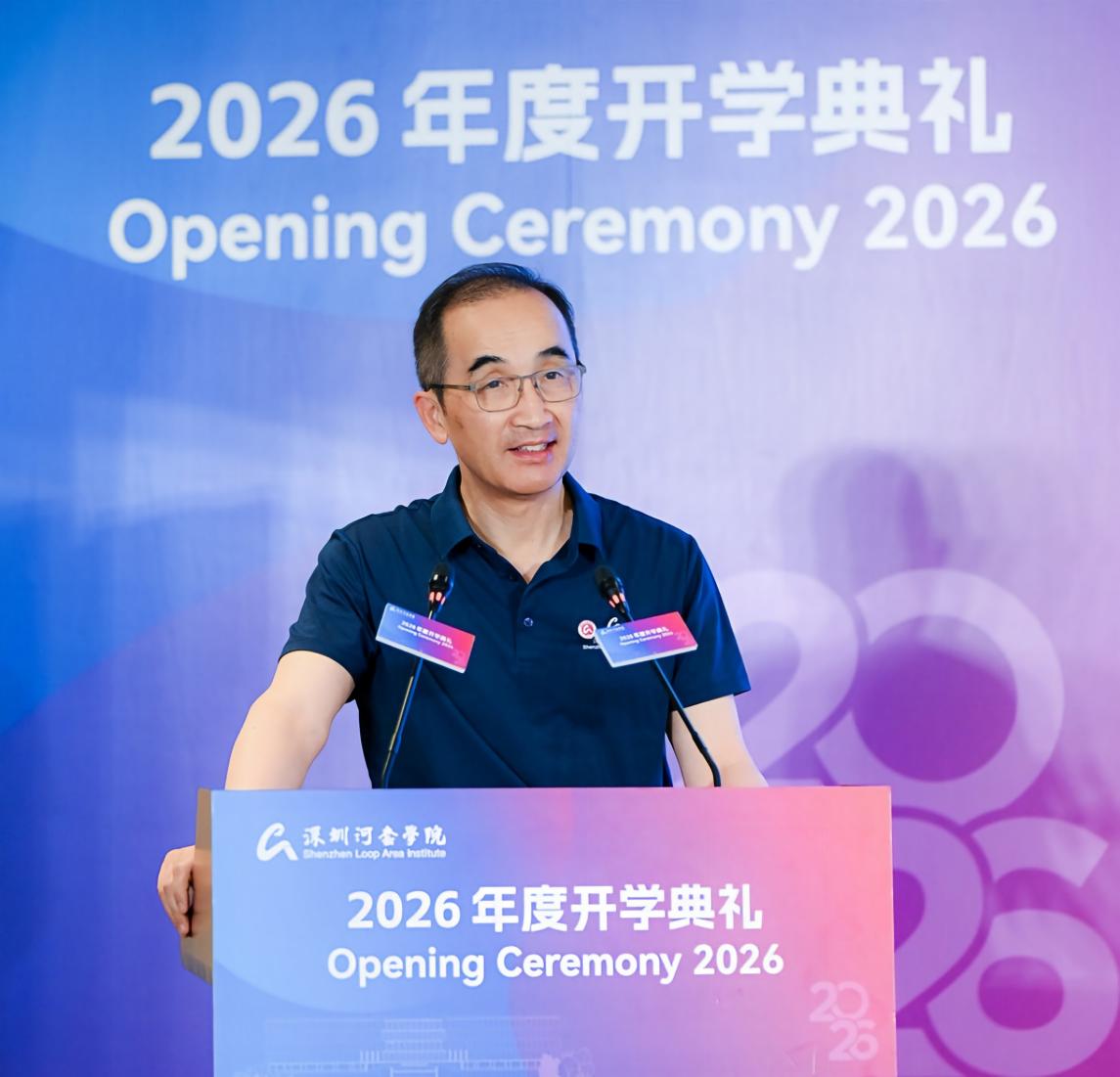
Remarks by Prof. Zhi-Quan (Tom) Luo, Executive Dean of SLAI
On behalf of the Institute, Professor Zhi-Quan (Tom) Luo, Executive Dean of SLAI, extended a warm welcome to the new cohort. "You have not chosen an ordinary academic path," he told the students. "You have stepped into an innovation hub entrusted with a major strategic mission." As artificial intelligence (AI) advances from technological breakthroughs toward a rethinking of scientific paradigms, he observed, SLAI is determined to write its own answer for this era.
During his address, Luo shared a landmark achievement: working with Huawei, the Institute has completed full-parameter post-training of large language models (LLMs) such as DeepSeek-V4-Pro on domestic computing clusters, demonstrating that domestic computing power is, in his words, "not only usable, but outstanding." The Institute's global footprint is expanding just as quickly: an agreement has been signed with Archimedes, a research unit of the Athena Research Center in Greece; partnerships are advancing with top universities in Russia, Europe, and the Asia-Pacific; and close collaboration mechanisms have been established with a number of universities in Hong Kong.
Luo also highlighted the Institute's international character. SLAI recruits students and faculty from around the world and is already home to scholars from Russia, Japan, Greece, Italy, Singapore, and other countries and regions, including a number of professors from Hong Kong, China.
Turning to the new cohort, Luo urged the newcomers to live out the Institute's motto: "Spark: ignite new ideas, challenge assumptions, and push beyond boundaries; Lead: turn vision into action, set direction, and inspire others; Audacity: stand firm in the face of uncertainty, embrace risk, and persevere; Inquiry: never stop asking, exploring, and pursuing the essence of things." History, he emphasized, favors those who strive, who dare, and who refuse to give up. AI is a young person's endeavor, and the future belongs to those who dare to dream and innovate without fear. The Institute, he added, will give the newcomers the broadest stage possible, and he expressed his hope that the 2026 cohort will write their own brilliant chapter in the boundless universe of AI.
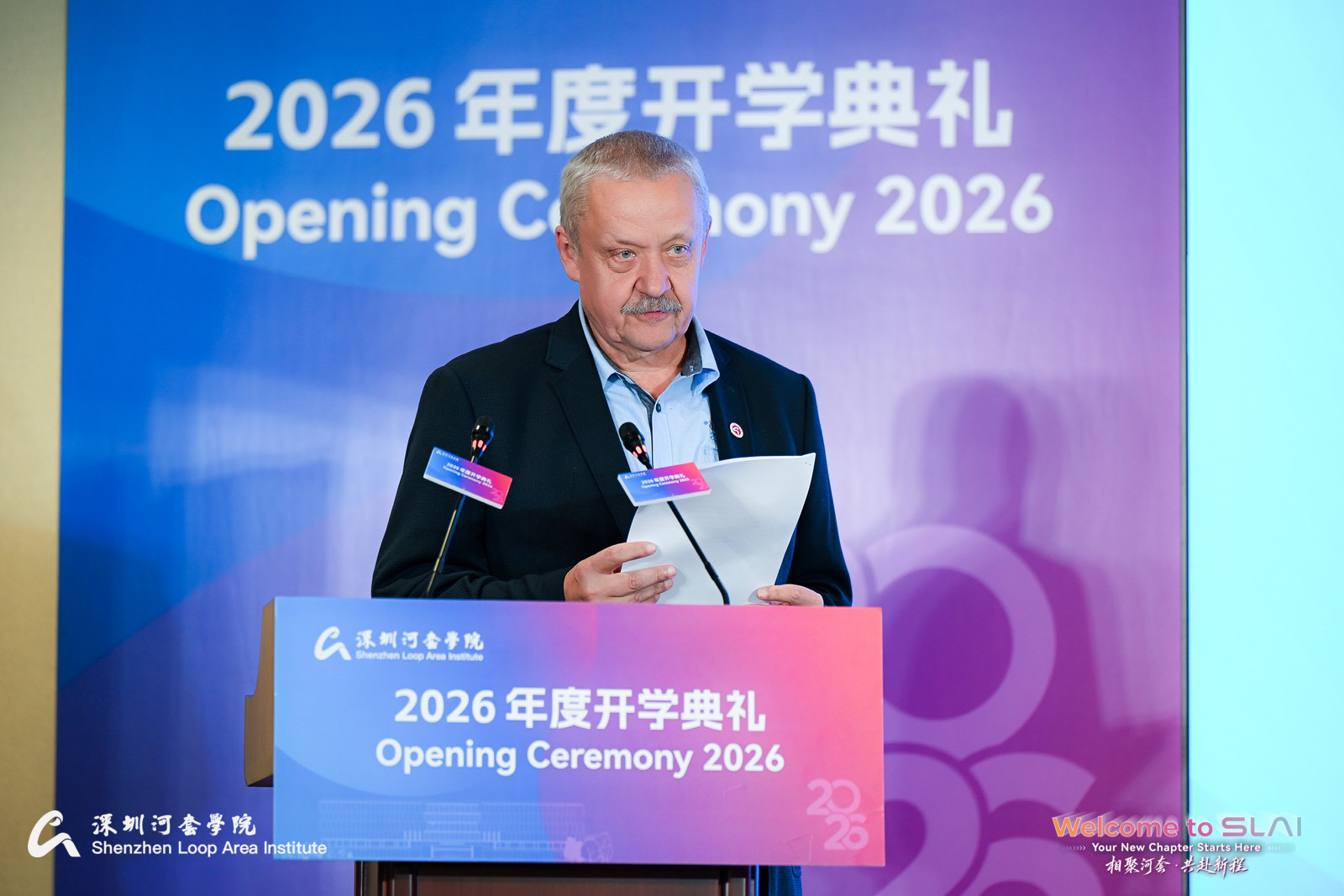
Speech by Professor Yurii Nesterov of the Center for AI Theoretical Foundation and Systems at SLAI
Professor Yurii Nesterov of the Center for AI Theoretical Foundation and Systems at SLAI, the winner of the 2026 Gauss Prize and an International Member of the U.S. National Academy of Sciences, addressed the ceremony as a special guest. Prof. Yurii Nesterov formally joined SLAI in June of this year; just over 1 month ago, he received the Gauss Prize, the highest honor in applied mathematics worldwide.
In his remarks, Nesterov turned to the metaphor of a jigsaw puzzle to examine what separates human creativity from AI. "AI is good at assembling the pieces of a puzzle," he said, "but only if all the pieces already exist. Scientific knowledge, by contrast, is created by human beings. Mathematicians are captivated by the beauty of structures; physicists are driven by the mysteries of phenomena." Exploration undertaken without knowing where it will lead, he noted, lies at the core of human creativity and is precisely what algorithms find hardest to formalize.
For students just setting out on their doctoral careers, Nesterov identified the hardest part of research as not how to solve a problem, but which problem to choose. He called on them to keep the courage to take on difficult questions, the patience to delve into the unknown, the scientific taste to recognize what matters, and the willingness to explore purely out of curiosity. "The greatest discoveries often begin with a question to which no one yet knows the answer," he said, urging the newcomers to let the light of human intellect shine on in the age of AI.
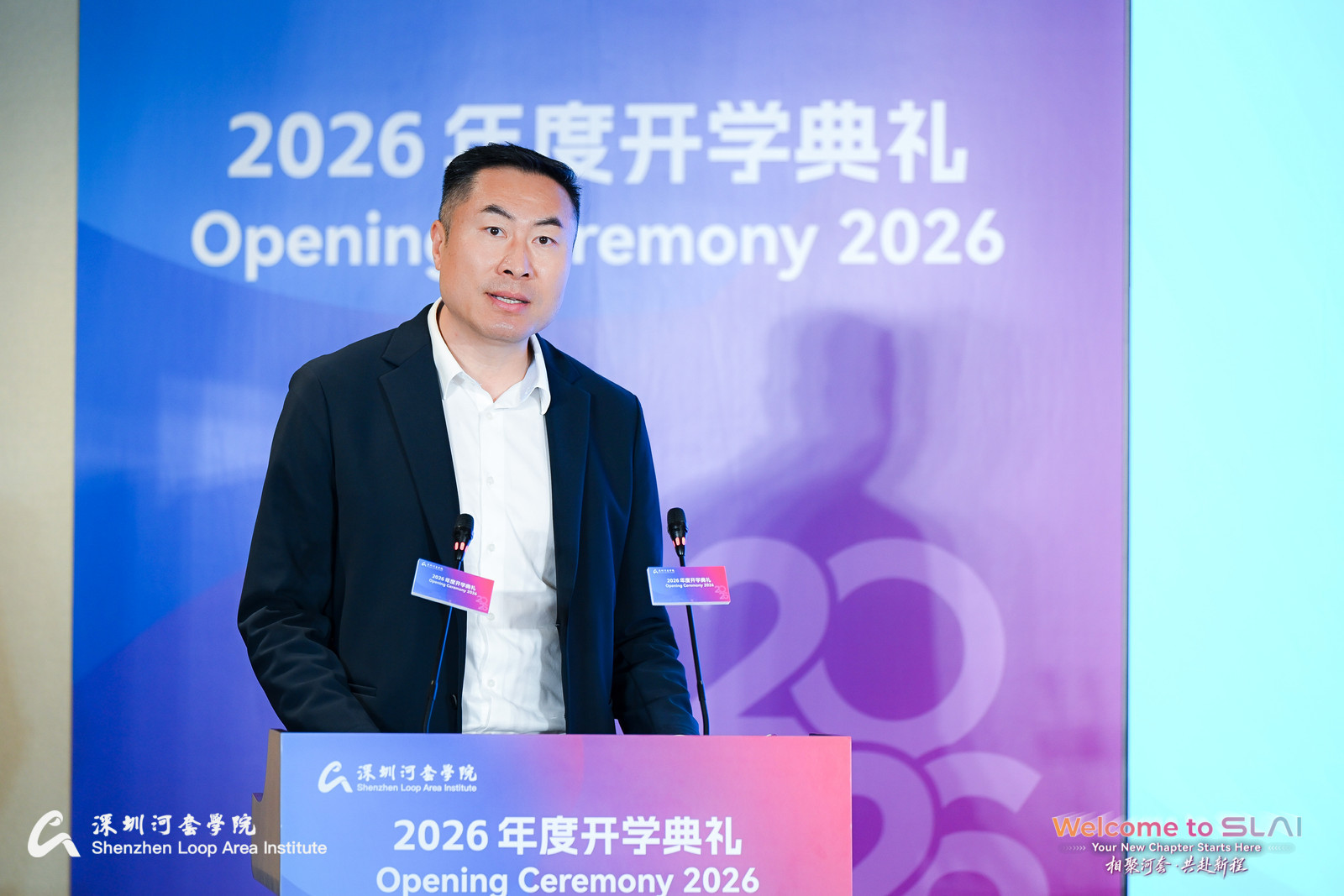
Remarks by Haigang Ma, Deputy Party Secretary and General Manager of the Learning and Development Department at Tencent
Haigang Ma, Deputy Party Secretary and General Manager of the Learning and Development Department at Tencent, spoke as the representative of corporate guests. He first looked back on the "two-way commitment" between Tencent and SLAI. Since the two sides formally signed a university-enterprise Memorandum of Understanding (MoU) last November, their collaboration has moved well beyond simple project matching to complete an industry-academia-research loop in which real industry problems set the agenda, hands-on industrial practice supplies the validation, and top talent flows into industry. The 2 pre-enrollment bootcamps co-hosted this summer grew rapidly, from several dozen participants in the 1st session to nearly 200 in the 2nd. By front-loading real industry problems and practical assessments from Tencent's day-to-day operations, the camps gave students an early encounter with genuine industrial challenges before enrollment.
Looking ahead, Ma laid out 3 sustained commitments. First, sustained investment: opening up Tencent's accumulated real-world problems, core data, and valuable computing resources to students. Second, sustained mutual empowerment: drawing on the industry frontier to help the Institute consolidate its foundation for developing top-tier innovative talent, while building a pipeline of outstanding young researchers for Tencent's future. Third, sustained integration: through offline co-creation workshops, academic pub talks, scholarship incentives, and shared course content, keeping student development and employee growth in sync, so that industry-academia-research collaboration becomes deeper, broader, and more concrete.
"Talent development should begin earlier; industry, academia, and research should converge in real-world settings; and the fruits of university-enterprise cooperation should benefit more young people," Ma said. He expressed the hope that the students would hone hardcore capabilities in authentic industrial settings, grow alongside Tencent, and add a remarkable chapter to the story of China's young generation in the AI era.
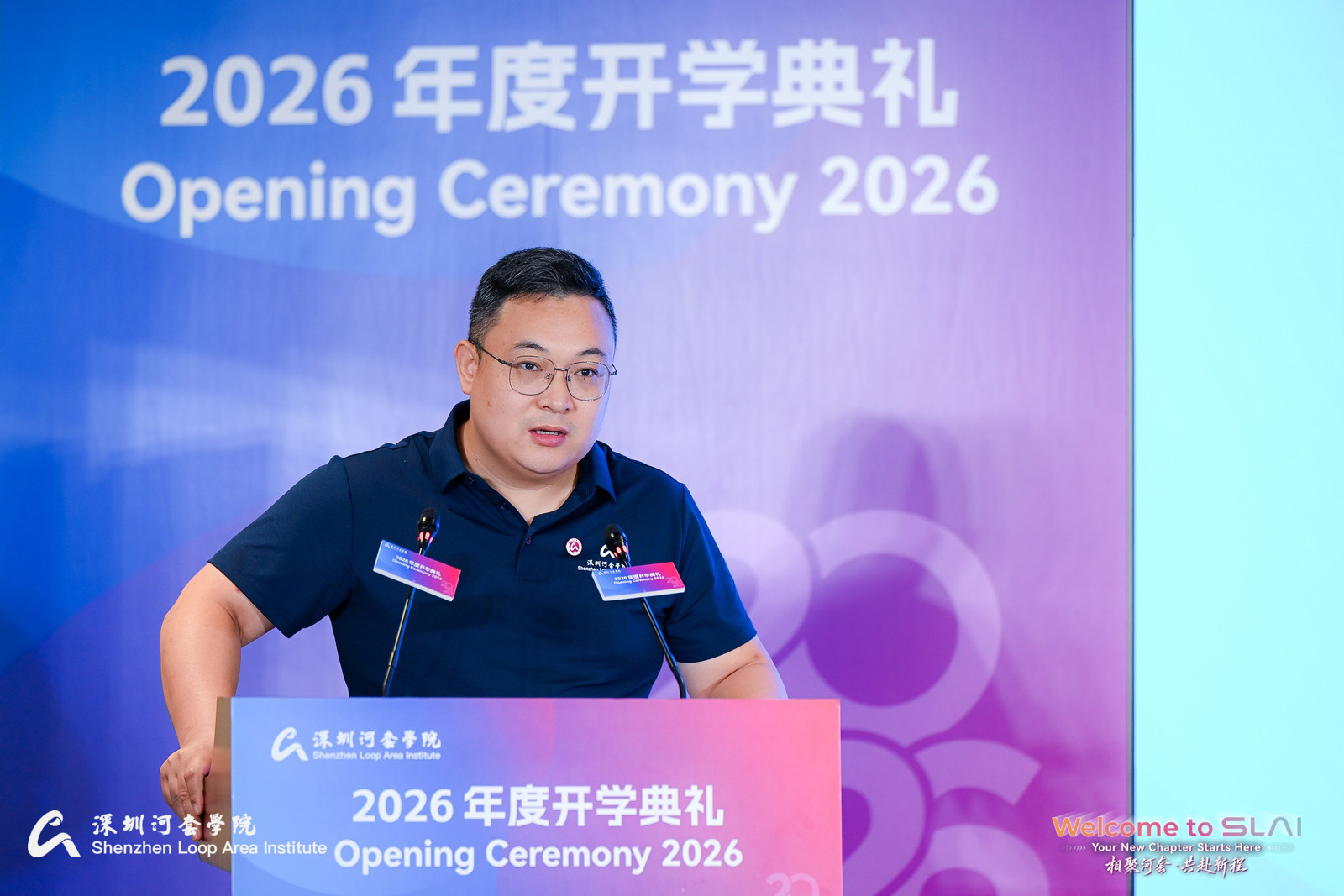
Remarks by Professor Baotian Hu of the Center for Language, Intelligence and Machines
Professor Baotian Hu of the Center for Language, Intelligence and Machines at SLAI, as the Institute's faculty representative, spoke in candid terms that struck a chord with faculty and students alike. "You have chosen a different kind of institution," he told the newcomers. "It has no centuries-old walls, but it offers first-class computing power and the most cutting-edge problems. It does not select students by standardized tests, but it aspires to develop people who will define the next generation of AI."
As one of the builders of the Institute's AI training platform, Hu spoke from direct experience: this year, his team completed full-parameter post-training of a trillion-parameter model in just one month on the Ascend 910C domestic computing cluster. He drew a lesson from that journey for the newcomers: "Real AI capability does not live in PowerPoint slides. It grows out of one training crash after another, one all-night debugging session after another. Domestic computing power and technological self-reliance are an opportunity, and even more, a responsibility."
"As faculty," he concluded, "we care not only about how many papers you publish, but about the kind of people you become: people with vision, with a sense of responsibility, with hands-on ability, and with the courage to innovate."
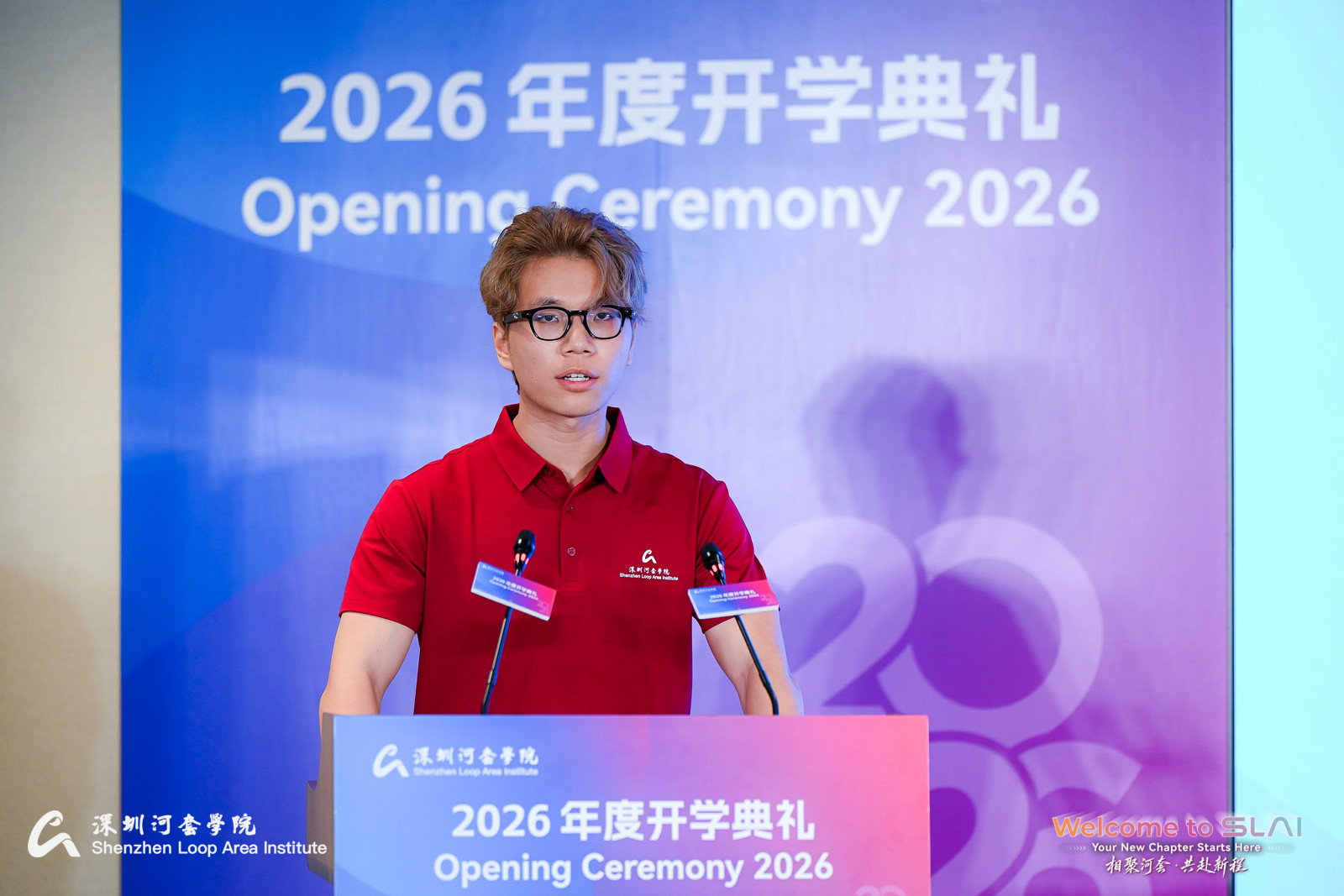
Student voice: Jingyu Lu
Jingyu Lu, the new student representative and a doctoral student in a joint program between SLAI and The Hong Kong University of Science and Technology, reflected on his choice. As a graduate of the Zhi Class at Peking University, he said that what drew him to SLAI was not any single research direction, but an environment that encourages young people to think boldly and keeps research close to the real world.
He summed up that spirit with the Institute's motto: Spark, Lead, Audacity, Inquiry. "They stand for the kind of researchers we hope to become," he said, "those who ignite new ideas, lead through action, challenge what is taken for granted, and, above all, never lose the spirit of inquiry."
He closed with the Institute's slogan: "From 1 to Infinity. That '1' may begin with a question, an idea, or a single brave attempt. From there, there is no limit to how far we can go."
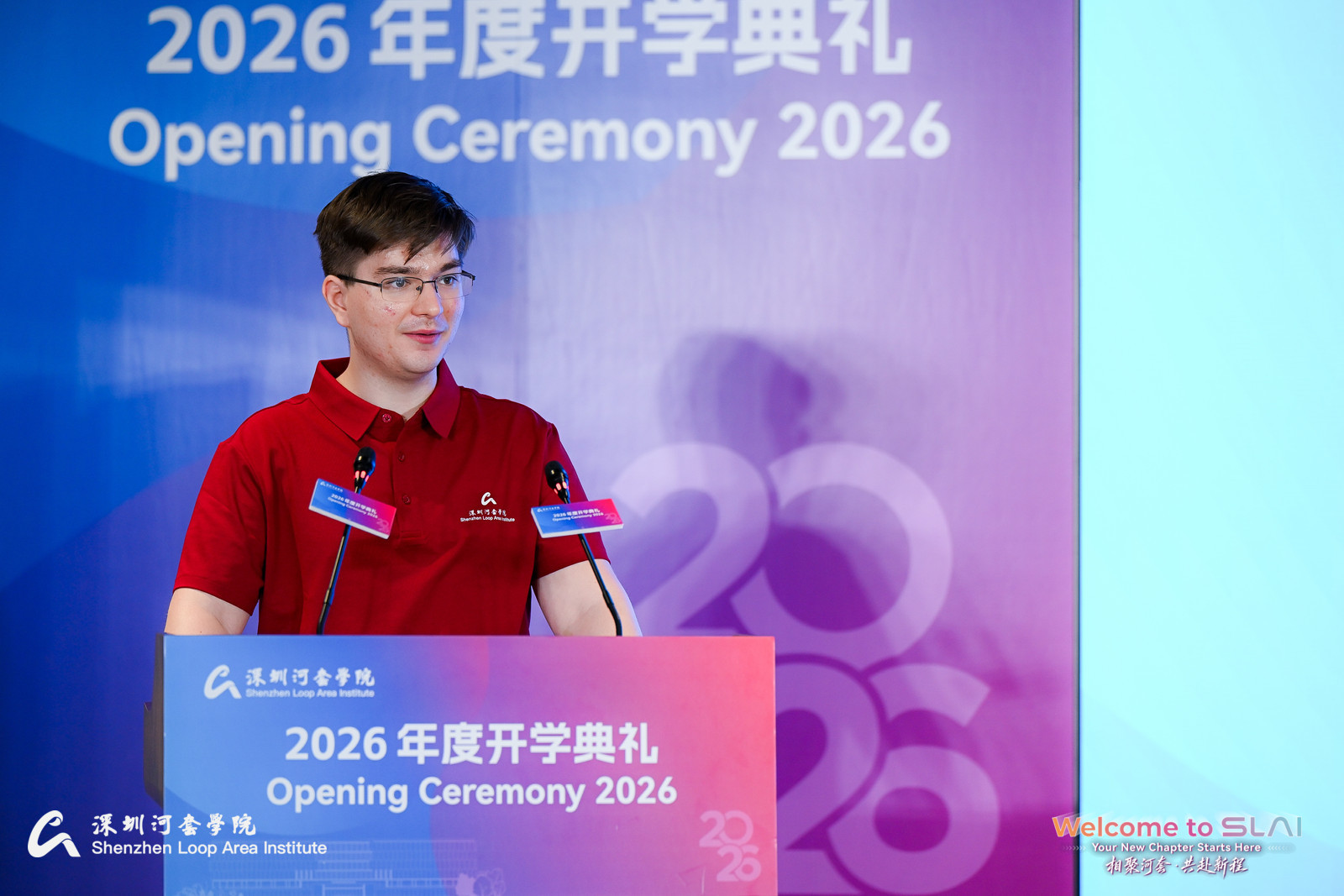
International student voice: Andrey Pudovikov
Andrey Pudovikov, the international student representative and a doctoral student in a joint program between SLAI and The Chinese University of Hong Kong, Shenzhen, recounted his own path to the Institute. Last December, he first visited SLAI as a member of a China-Russia academic exchange program. The research environment, the facilities, and above all the faculty and fellow students left a deep impression on him. "After that visit," he recalled, "I was certain: this is the right place for me to pursue my studies."
"I want to be part of the SLAI community, to do meaningful research, contribute to the Guangdong–Hong Kong–Macao Greater Bay Area, and let my academic life and personal growth flourish together," he said. He also extended an open invitation to the room: anyone working on something interesting, or simply up for a chat about research over coffee, is welcome to seek him out.
 |  |
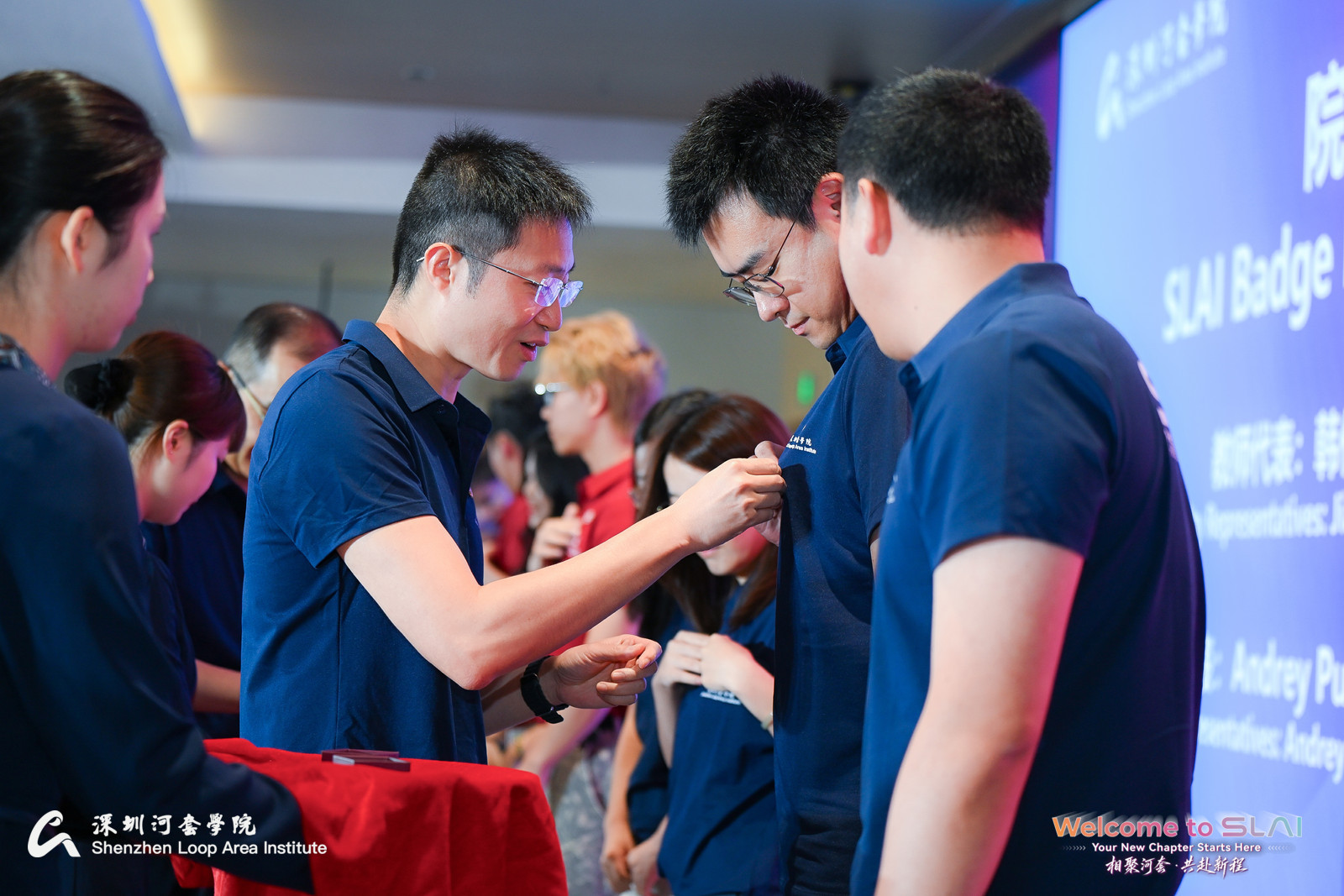 | 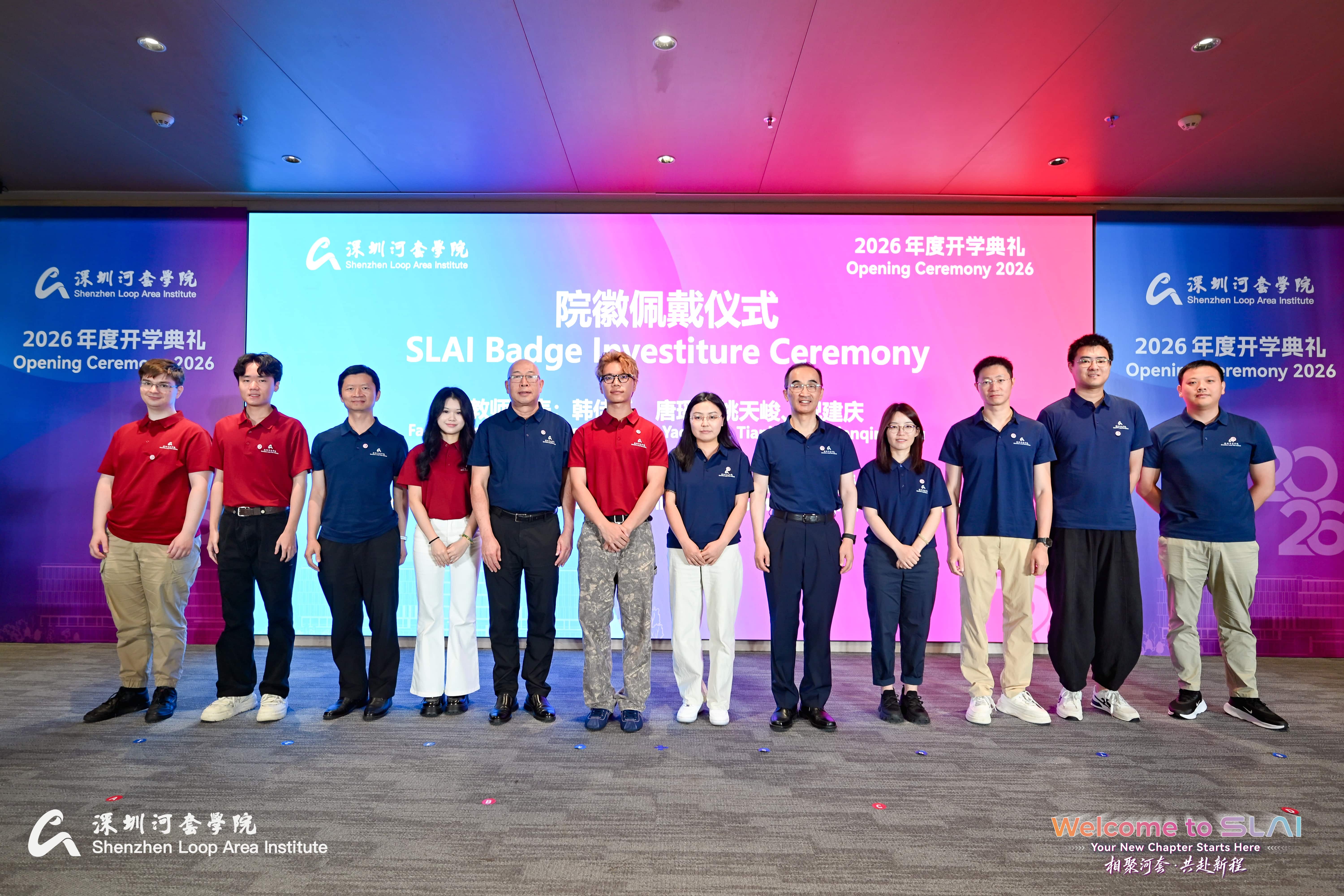 |
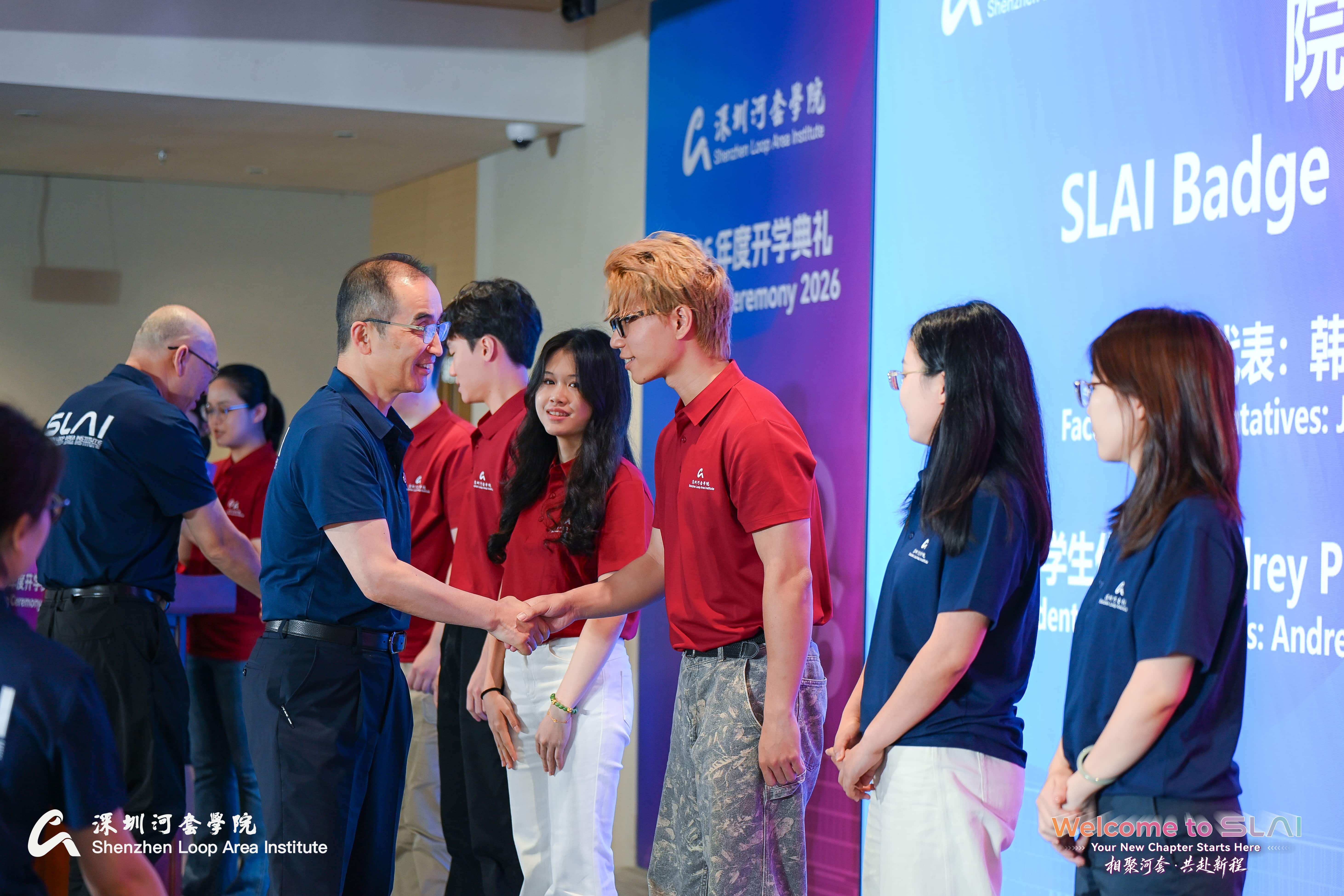
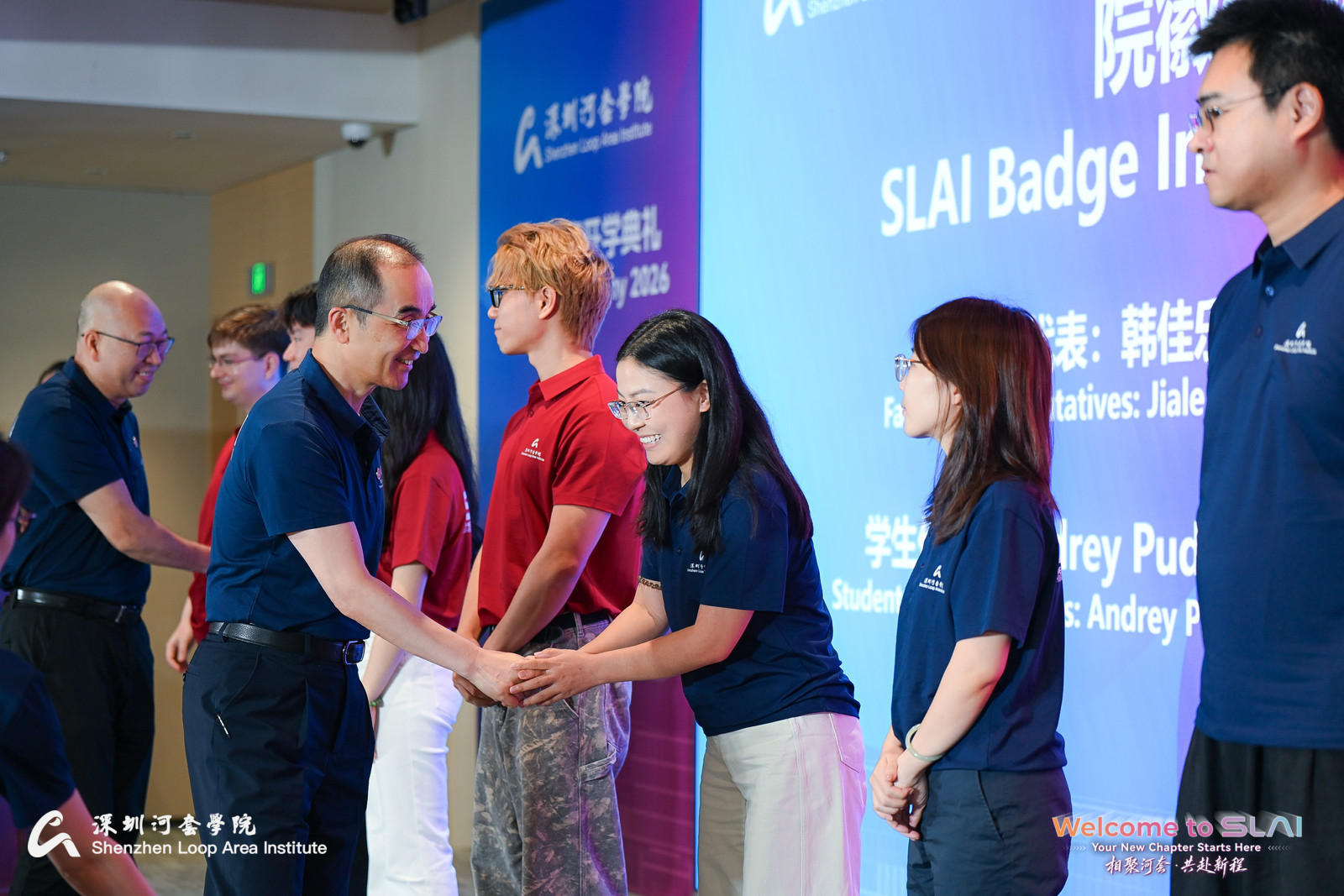
Badge-pinning ritual
During the ceremony, Institute leaders pinned SLAI badges on representatives of newly joined full-time faculty and of the incoming students. Donning the badge marks the moment they officially become members of the SLAI community and begin a new research journey.
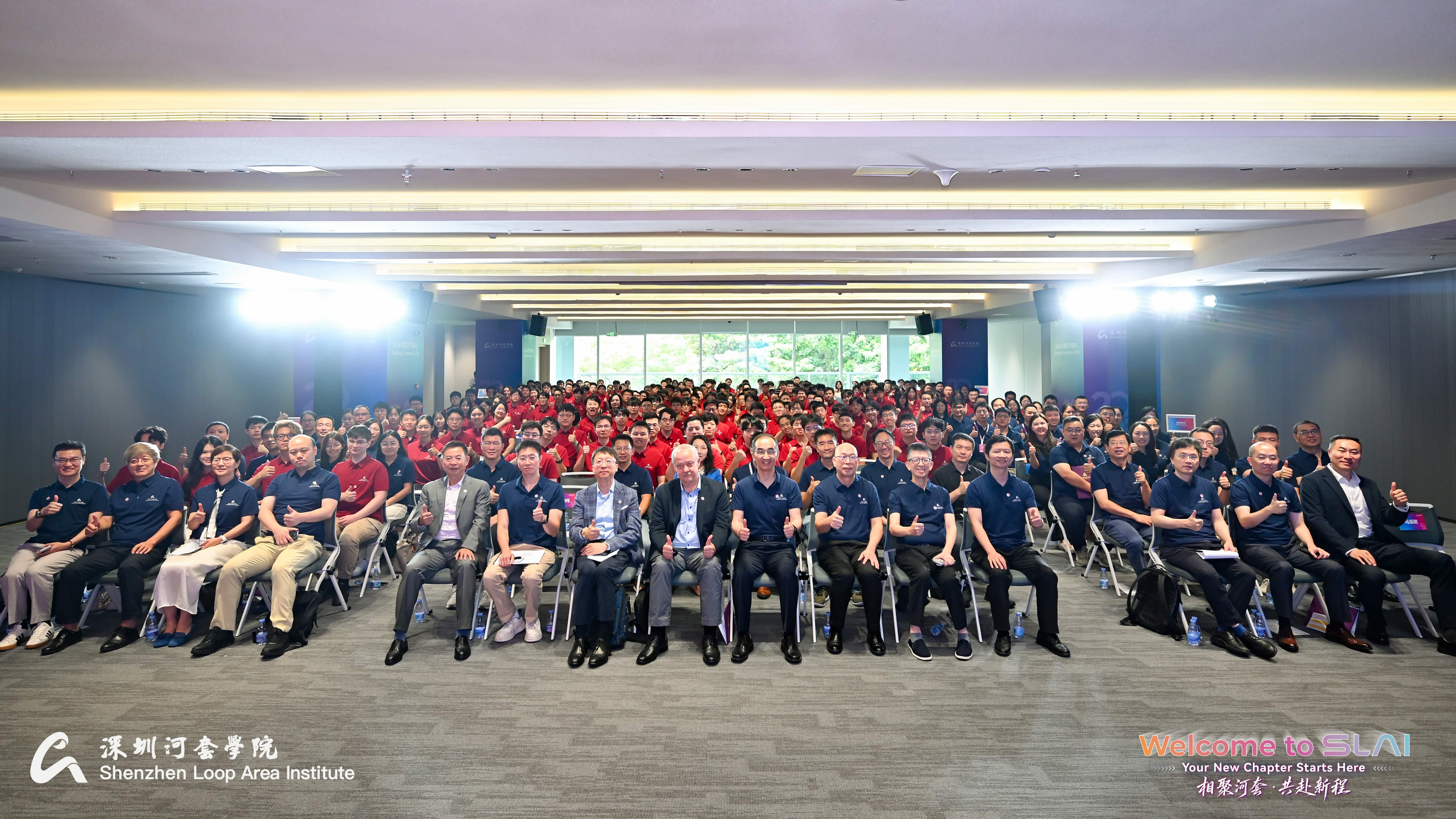
Group photo at the Opening Ceremony
As the ceremony drew to a close, all faculty and students gathered for a group photo in the auditorium on the 2nd floor. Beyond the windows in the frame, innovation is springing up among the towers of the Hetao Shenzhen-Hong Kong Science and Technology Innovation Cooperation Zone.
Heads of the Institute's research centers and faculty representatives attended the ceremony, joined by invited guests from leading companies including Huawei and Tencent.
 |  |
 |  |
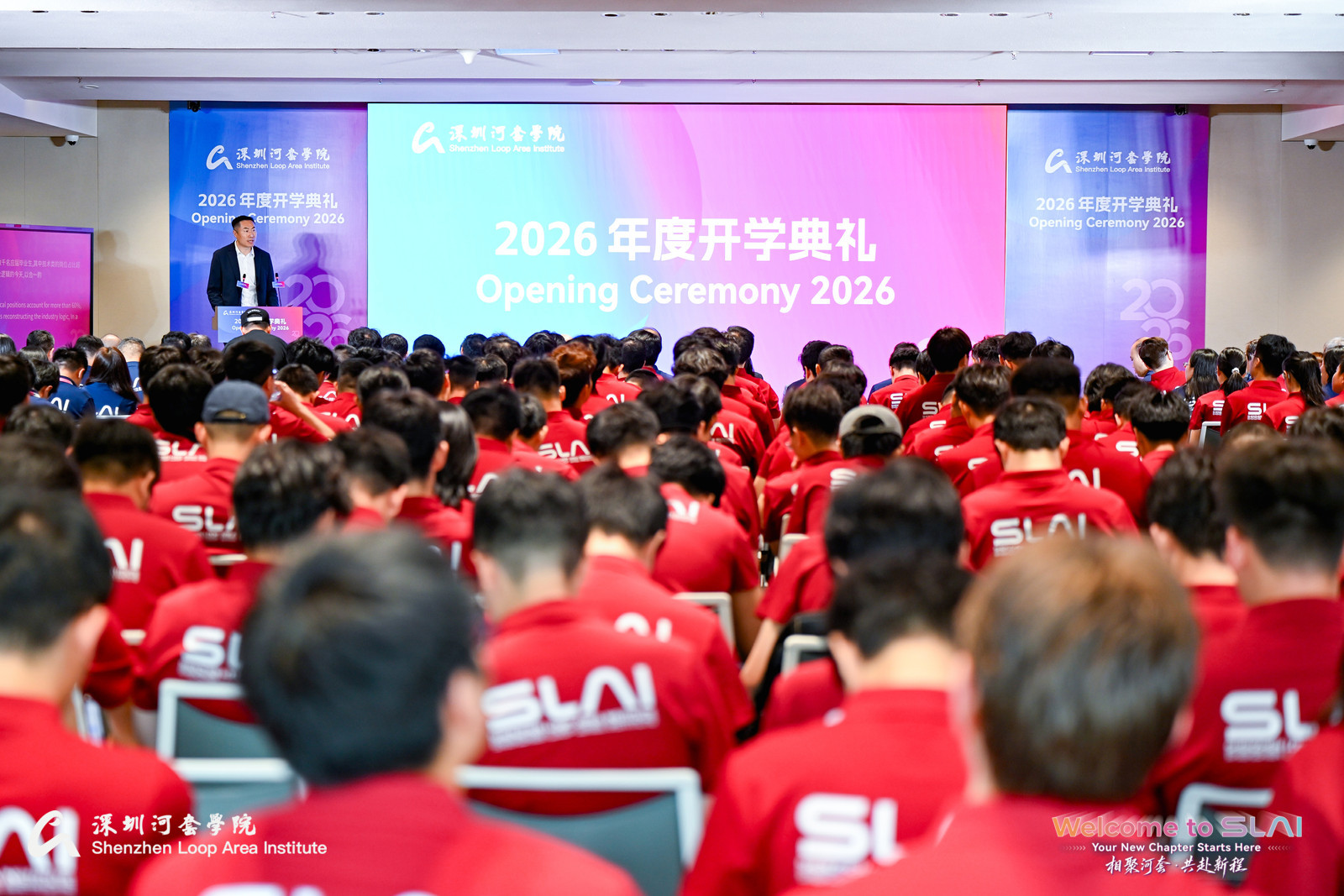 | |
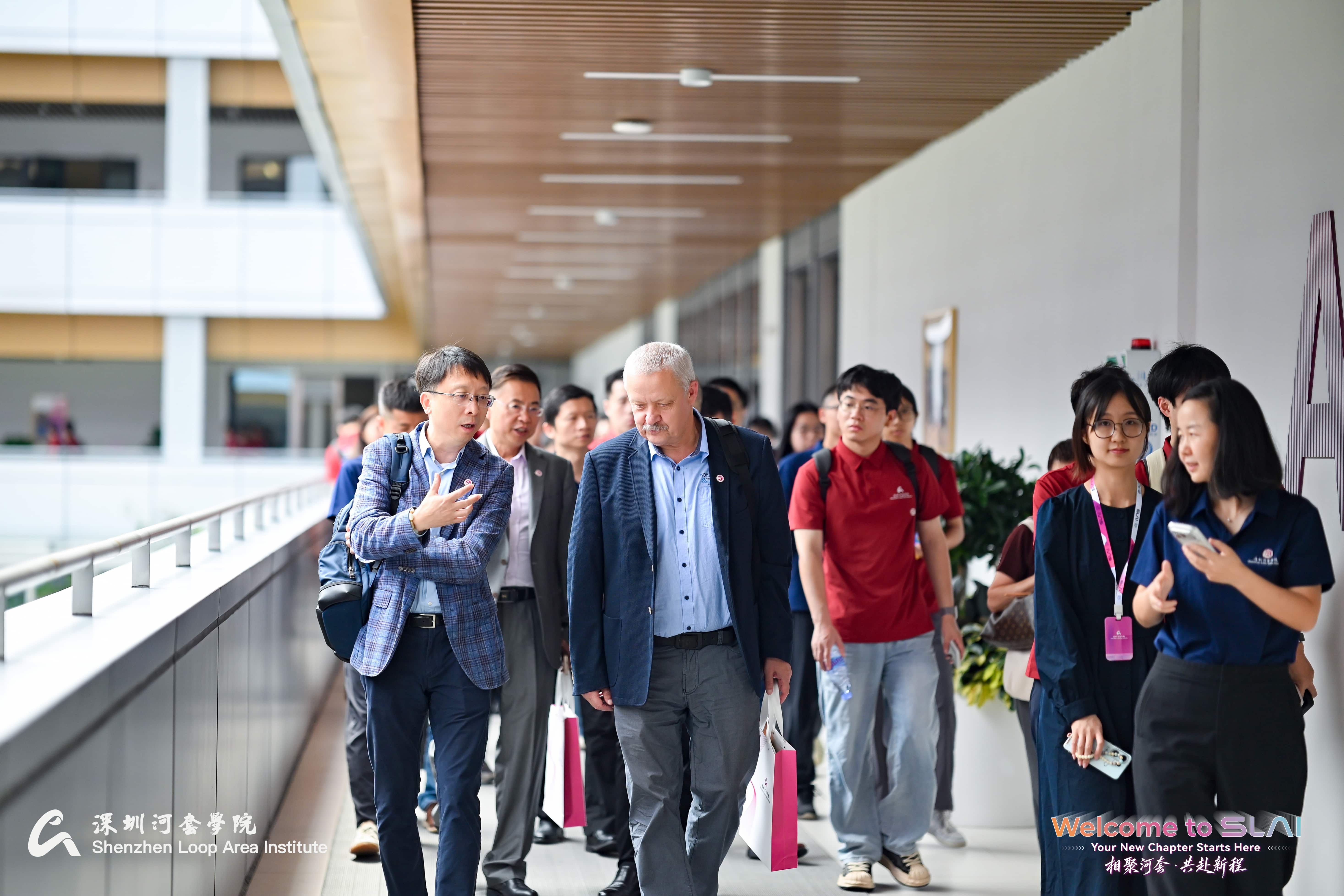
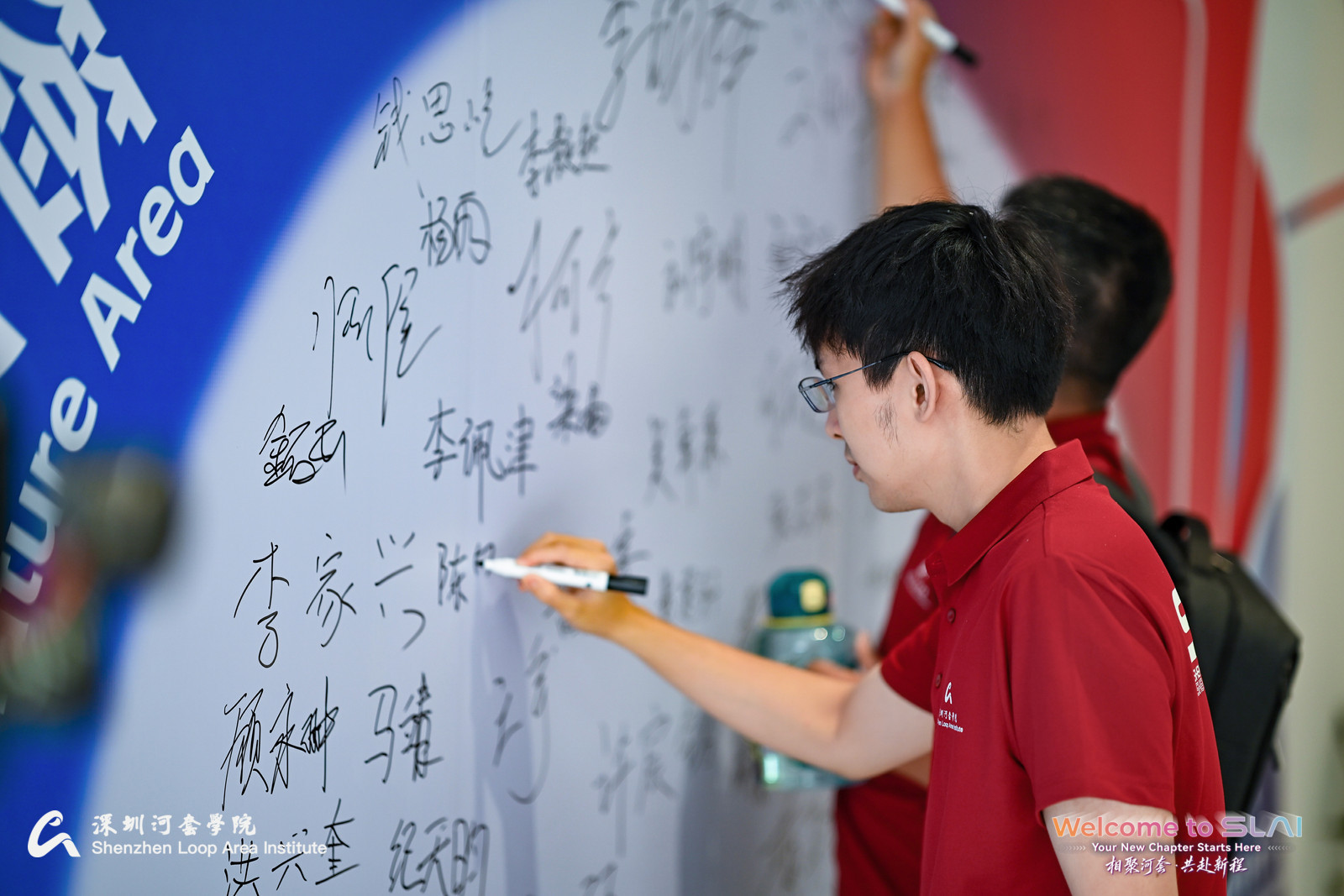
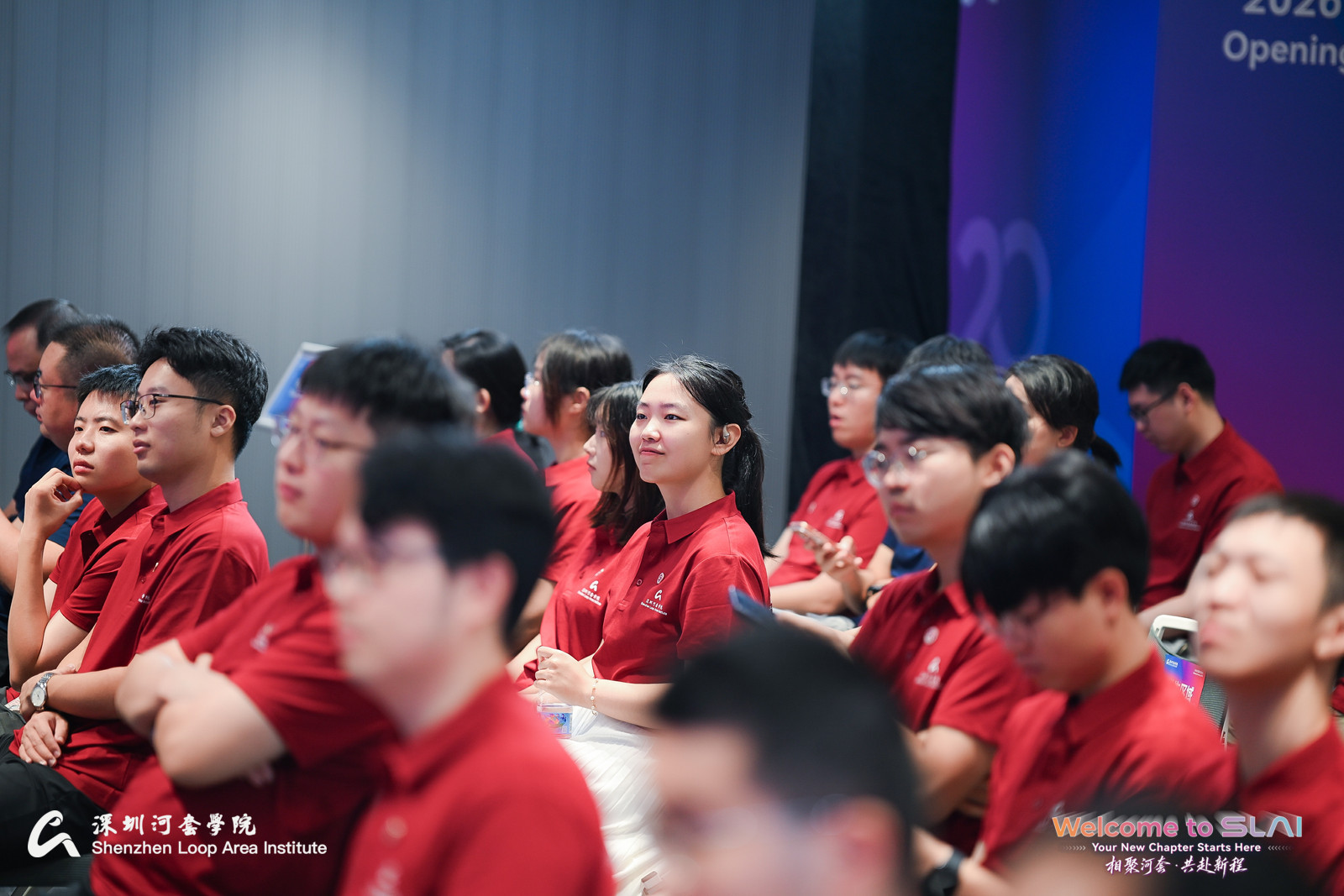
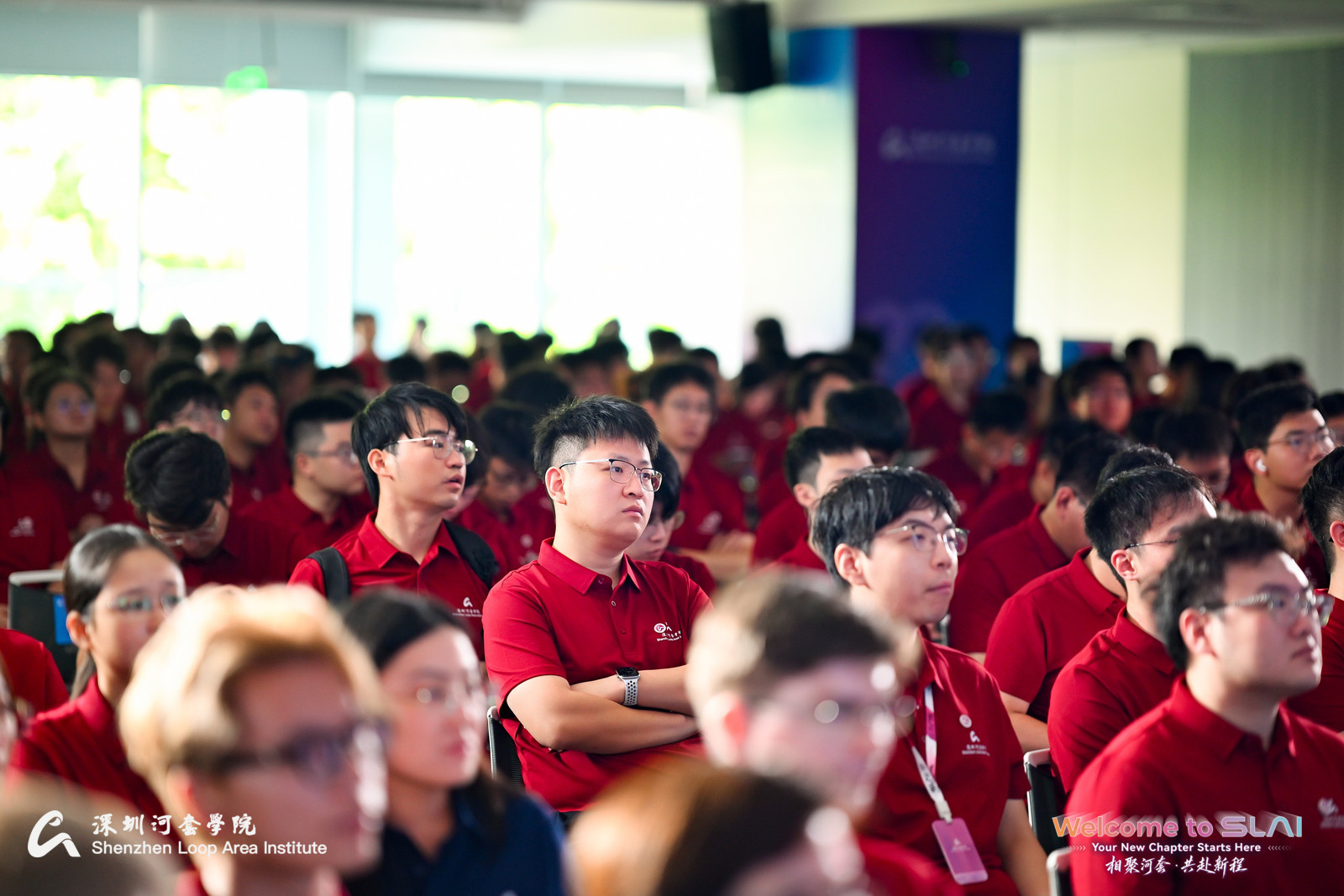
Behind-the-scenes moments from the Opening Ceremony
One from Peking University, one from Russia: the stories of Jingyu Lu and Andrey Pudovikov capture this year's incoming class in miniature.
They converge here from different academic backgrounds and cultural perspectives, setting out from curiosity to question the unknown. Through real-world projects that bring together domestic computing power, interdisciplinary collaboration, and industry-academia-research integration, they temper passion into hardcore capability.
The direction is clear, and the path is laid. May the new cohort of 2026 turn the Institute's motto of "Spark, Lead, Audacity, and Inquiry" into strength for the road ahead, setting out from curiosity and advancing toward infinity.