预告 | SLAI Seminar第五十三期
2026年9月15日(周二)下午2:30,深圳河套学院荣幸地邀请到苏黎世大学的Volker Dellwo教授和Pavo Orepic博士,在B301教室分别带来主题为“人际交流中的声音-身份认知研究”和“声音中的自我:从感知与大脑机制到幻觉与人工智能”的学术报告分享。诚挚欢迎学院师生及对该领域感兴趣的产学研界同仁参与讲座。
Title 1
人际交流中的声音-身份认知研究
Voice identity as a communicative signal
About the Speaker

沃尔克・戴尔沃 教授
Prof. Volker Dellwo
沃尔克・戴尔沃是苏黎世大学语音学教授,主持语音学与言语科学研究组以及法医语音学与声学中心。他的跨学科研究探讨说话人身份在人类与机器语音处理过程中如何编码、感知与建模,重点研究方向包括法医语音学、声纹生物识别、机器学习、合成语音以及语音与语言之间的关联。
Volker Dellwo is a professor of phonetics at the University of Zurich, where he leads the Phonetics & Speech Sciences Group and the Centre for Forensic Phonetics and Acoustics. His interdisciplinary research examines how speaker identity is encoded, perceived, and modelled in human and machine speech processing, with particular interests in forensic phonetics, voice biometrics, machine learning, synthetic speech and voice-language relationships.
Abstract
人类听者能够通过声音中的身份线索识别他人。大多数关于人类与计算机说话人识别的研究,重点探讨的是:尽管同一说话人的声音存在巨大差异,稳定的身份表征是如何形成的。这种对不变性的侧重,留下了一个有待解答的问题:这类声音差异本身是否具备系统性结构,且承载着交流意义。本文研究表明,说话人专属信息在语音中的分布并不均匀,会系统性地集中在特定说话风格之中。在高度亲和的语境下产生的语音,包括对婴儿说话、对伴侣说话的语音,可以为自动识别系统提供效果更好的训练数据。这种更强的身份可识别性具备交流功能,有助于建立或维系紧密的社会联结。该训练优势与这类语音风格特有的基频扫变以及表观声道长度调制相关,这些特征能够提升说话人专属声道信息的可提取性。综上,研究结果说明:说话风格会系统性地重新分配声音身份信息,以此实现交流与社会功能。
Human listeners recognise others from identity cues in the voice. Most accounts of human and computational speaker recognition focus on how stable identity representations are formed despite substantial within-speaker variability. This emphasis on invariance leaves open whether that variability is itself systematically structured and communicatively meaningful. Here, I show that speaker-specific information is unevenly distributed across speech and systematically concentrated in particular speaking styles. Speech produced in highly affiliative contexts, including infant-directed and romantic-partner-directed speech, provides more effective training data for automatic recognition. This enhanced identifiability serves a communicative function by helping establish or maintain close social bonds. The training advantage is associated with fundamental-frequency sweeps and apparent vocal-tract-length modulations characteristic of these styles, which may increase the recoverability of speaker-specific vocal-tract information. Together, the findings suggest that speaking style systematically redistributes vocal-identity information in ways that may serve communicative and social functions.
Title 2
声音中的自我:
从感知与大脑机制到幻觉与人工智能
The Self in the Voice: From Perception and Brain Mechanisms to Hallucinations and AI
About the Speaker
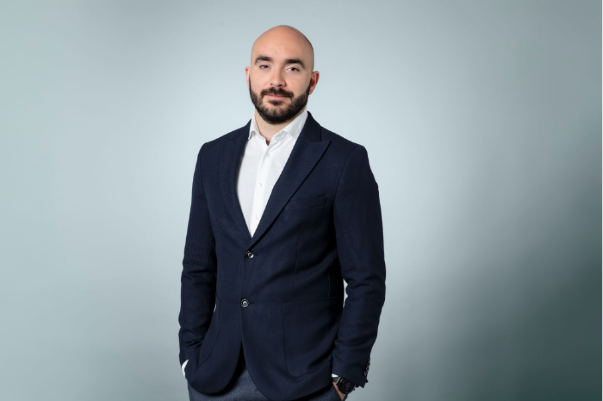
帕沃・奥雷皮奇 博士
Dr. Pavo Orepic
帕沃・奥雷皮奇是苏黎世大学的博士,他的研究方向为大脑如何处理人声与言语,尤其关注人对自身声音的感知。他拥有计算机科学与神经科学专业背景,融合认知神经科学、心理物理学、声学以及颅内电生理学技术,从基础神经机制层面研究言语与人声,同时探究其在临床病症下的变化。他的博士论文获得两项最佳论文奖提名,相关研究受到国际媒体关注,曾两次接受《纽约时报》采访。
Pavo Orepić holds a PhD from the University of Zurich. His work investigates how the brain processes voices and speech, with a particular interest in the perception of one’s own voice. Trained in computer science and neuroscience, he combines cognitive neuroscience, psychophysics, acoustics, and intracranial electrophysiology to study speech and voice from basic neural mechanisms to their alterations in clinical conditions. His PhD thesis was nominated for two best-thesis awards, and his research has received international media attention, including two interviews with The New York Times.
Abstract
我们自身的声音是自我与外部世界之间的关键交互界面。它不仅是一种交流工具,更是身份标识,承载着关于自我的生理、心理与社会信息。声音由我们产生,再以声波形式传回自身,因此自我声音不仅会影响他人对我们的看法,也会塑造我们对自己的认知。在多种临床病症中,都观测到自我声音加工功能受损的现象,这表明自我声音识别有望成为病理性自我加工的临床标志物。例如在精神分裂症中,患者难以识别自己声音的症状与言语性幻听(也就是“听到不存在的声音”)密切相关。跳出临床场景来看,随着人工智能工具能够实现逼真、定向的语音修改,并有针对性地影响情绪与行为,自我声音的重要性正不断提升。举例来说,把我们的声音调整得听起来更欢快或悲伤,能够诱发对应的情绪,即便我们没有察觉到声学上的变化。在本次演讲中,帕沃・奥雷皮奇将介绍他关于自我声音感知与加工的跨学科研究,涵盖行为学、神经科学、声学以及临床研究成果。他将探讨一系列问题:为什么录音里自己的声音听起来很陌生;大脑如何表征我们脑海中听到的内心声音;以及机器人如何让我们听到本不存在的声音。
Our own voice is a key interface between the self and the external world. It is not only a means of communication, but also a marker of identity, carrying physical, psychological, and social information about the self. Because it is generated by us and then returned to us as sound, self-voice can shape not only how others perceive us, but also how we perceive ourselves. Disruptions in self-voice processing have been observed across several clinical conditions, suggesting that self-voice recognition could serve as a clinical marker of pathological self-processing. In schizophrenia, for example, difficulty recognizing one’s own voice has been closely linked to auditory-verbal hallucinations, or “hearing voices”. Beyond the clinic, self-voice is becoming increasingly important as AI tools enable realistic, targeted voice manipulations that can selectively influence emotion and behavior. For example, altering our voice to sound happier or sadder can induce the corresponding emotion, even without us noticing the acoustic change. In his talk, Pavo Orepić will present his interdisciplinary research on self-voice perception and processing, spanning behavioral, neural, acoustic, and clinical findings. He will address questions ranging from why our voice sounds unfamiliar in recordings and how the brain represents the inner voice we hear in our heads, to how a robot can make us hear voices that are not there.
Host
岳政君 教授
Prof. Zhengjun Yue
Date & Tim
2026年9月15日(星期二)
下午2:30-4:00
September 15, 2026, Tuesday,
2:30pm-4:00pm
Venue
深圳河套学院B301教室
(深圳市福田区福保街道红棉路6号,地图导航“深圳河套学院-南门”)
Room B301, Shenzhen Loop Area Institute
(6 Hongmian Rd, Fubao Sub-Street, Futian District, Shenzhen, navigate to "Shenzhen Loop Area Institute (South Gate)" on the map.)
Online link
扫码加入会议
Join the Meeting Online

腾讯会议号:948-1135-4043
Tencent Meeting: 948-1135-4043