预告 | SLAI Seminar第五十一期
2026年9月1日(周二)上午9:30,深圳河套学院荣幸地邀请到阿里巴巴集团副总裁叶杰平博士,在B401教室带来主题为“下一前沿大模型:能力边界在哪里?”的学术报告分享。诚挚欢迎学院师生及对该领域感兴趣的产学研界同仁参与讲座。
Title
下一前沿大模型:能力边界在哪里?
LLMs at the Next Frontier: Where Are the Boundaries of Capability?
About the Speaker
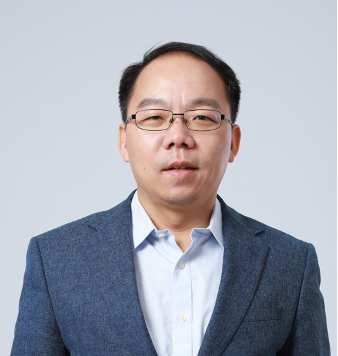
叶杰平 博士
Dr. Jieping Ye
叶杰平博士现任阿里巴巴集团副总裁,IEEE 会士、ACM杰出科学家,曾任密歇根大学正教授。研究方向包括机器学习与大语言模型,相关技术落地于交通、智慧城市、生物医药领域。他在国际顶级期刊与会议发表论文500余篇,谷歌学术总引用超58000次,h指数121。学术服务方面,他曾任《IEEE模式分析与机器智能汇刊》(TPAMI)、《IEEE知识与数据工程汇刊》(TKDE)编委,并多次担任 NeurIPS、ICML、ICLR等顶会程序主席与领域主席。所获荣誉包括2017年度中国计算机学会(CCF)科技进步卓越奖、2019年度丹尼尔・H・瓦格纳运筹学实践杰出奖,以及多项国际会议最佳论文奖。
Dr. Jieping Ye is Vice President of Alibaba Group. An IEEE Fellow and an ACM Distinguished Scientist, he was previously a full professor at the University of Michigan. His research interests include machine learning and large language models, with applications in transportation, smart cities, and biomedicine. He has published more than 500 papers in leading journals and conferences, with over 58,000 Google Scholar citations and an h-index of 121. In academic service, he has served on the editorial boards of IEEE TPAMI and IEEE TKDE, and has repeatedly served as program chair and area chair at major conferences including NeurIPS, ICML, and ICLR. His honors include the 2017 CCF Science and Technology Award for Outstanding Scientific and Technological Progress, the 2019 Daniel H. Wagner Prize for Excellence in the Practice of Operations Research, and multiple best paper awards at international conferences.
Abstract
过去数年间,大模型的能力边界被不断刷新:在模型规模、数据与训练范式进步的推动下,这类模型已不再局限于语言理解与生成,逐步具备推理、规划和自主执行等通用能力,并不断深入科学研究与实际生产的核心环节。在此背景下,大模型正处于全新发展阶段,一个清晰的趋势已然显现:模型的发展重心正从“变得更聪明”转向“落地办成事”,能够自主完成越来越长、复杂度越来越高的任务。与此同时,行业正发生多项深刻转变:模型规模持续扩大,但其架构却朝着稀疏化、高效化方向发展;模型开始展现出一定的自我优化能力;人工智能正成为科学发现的全新范式;同时,让这类模型摆脱黑盒属性,具备可解释性与可靠性的重要性日益凸显。本次报告将探讨上述新兴趋势,并分享团队在模型架构、自优化系统、科学专用模型以及可解释性方向的最新研究成果。
Over the past few years, the capability frontier of large language models has been continually redefined: driven by advances in scale, data, and training paradigms, these models have moved beyond language understanding and generation toward general capabilities in reasoning, planning, and autonomous execution, gradually penetrating the core of scientific research and real-world production. Against this backdrop, large language models are standing at a new frontier. A clear trend has emerged: they are shifting from being smarter to getting things done, autonomously completing tasks that are increasingly long and complex. At the same time, we are witnessing several profound shifts: models are growing larger yet more sparse and efficient in architecture; they are beginning to exhibit a degree of self-improvement; AI is becoming a new paradigm for scientific discovery; and making these models transparent and trustworthy, rather than black boxes, is becoming ever more important. This talk explores these emerging trends and shares some of our team's latest work in model architecture, self-improving systems, scientific models, and interpretability.
Host
张俊 教授
Prof. Jun Zhang
Date & Time
2026年9月1日(星期二)
上午9:30-11:30
September 1, 2026, Tuesday,
9:30am-11:30am
Venue
深圳河套学院B401教室
(深圳市福田区福保街道红棉路6号,地图导航“深圳河套学院-南门”)
Room B401, Shenzhen Loop Area Institute
(6 Hongmian Rd, Fubao Sub-Street, Futian District, Shenzhen, navigate to "Shenzhen Loop Area Institute (South Gate)" on the map.)
Online link
扫码加入会议
Join the Meeting Online

腾讯会议号:948-1135-4043
Tencent Meeting:948-1135-4043