SLAI Seminar NO.53
Title 1
Voice identity as a communicative signal
About the Speaker
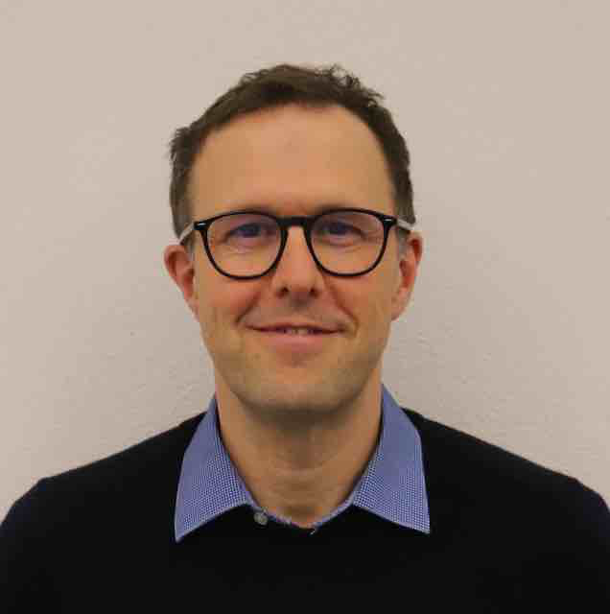
Prof. Volker Dellwo
Volker Dellwo is a professor of phonetics at the University of Zurich, where he leads the Phonetics & Speech Sciences Group and the Centre for Forensic Phonetics and Acoustics. His interdisciplinary research examines how speaker identity is encoded, perceived, and modelled in human and machine speech processing, with particular interests in forensic phonetics, voice biometrics, machine learning, synthetic speech and voice-language relationships.
Abstract
Human listeners recognise others from identity cues in the voice. Most accounts of human and computational speaker recognition focus on how stable identity representations are formed despite substantial within-speaker variability. This emphasis on invariance leaves open whether that variability is itself systematically structured and communicatively meaningful. Here, I show that speaker-specific information is unevenly distributed across speech and systematically concentrated in particular speaking styles. Speech produced in highly affiliative contexts, including infant-directed and romantic-partner-directed speech, provides more effective training data for automatic recognition. This enhanced identifiability serves a communicative function by helping establish or maintain close social bonds. The training advantage is associated with fundamental-frequency sweeps and apparent vocal-tract-length modulations characteristic of these styles, which may increase the recoverability of speaker-specific vocal-tract information. Together, the findings suggest that speaking style systematically redistributes vocal-identity information in ways that may serve communicative and social functions.
Title 2
The Self in the Voice: From Perception and Brain Mechanisms to Hallucinations and AI
About the Speaker
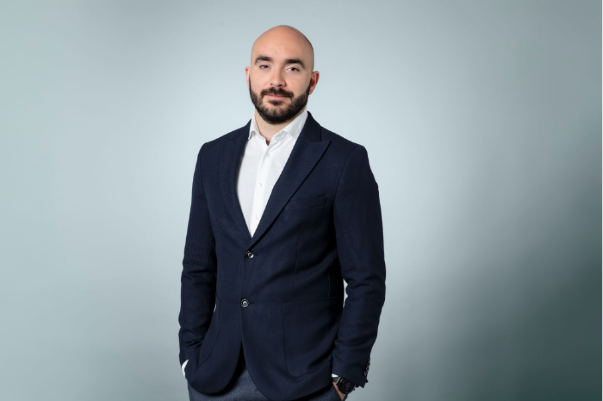
Dr. Pavo Orepic
Pavo Orepić holds a PhD from the University of Zurich. His work investigates how the brain processes voices and speech, with a particular interest in the perception of one’s own voice. Trained in computer science and neuroscience, he combines cognitive neuroscience, psychophysics, acoustics, and intracranial electrophysiology to study speech and voice from basic neural mechanisms to their alterations in clinical conditions. His PhD thesis was nominated for two best-thesis awards, and his research has received international media attention, including two interviews with The New York Times.
Abstract
Our own voice is a key interface between the self and the external world. It is not only a means of communication, but also a marker of identity, carrying physical, psychological, and social information about the self. Because it is generated by us and then returned to us as sound, self-voice can shape not only how others perceive us, but also how we perceive ourselves. Disruptions in self-voice processing have been observed across several clinical conditions, suggesting that self-voice recognition could serve as a clinical marker of pathological self-processing. In schizophrenia, for example, difficulty recognizing one’s own voice has been closely linked to auditory-verbal hallucinations, or “hearing voices”. Beyond the clinic, self-voice is becoming increasingly important as AI tools enable realistic, targeted voice manipulations that can selectively influence emotion and behavior. For example, altering our voice to sound happier or sadder can induce the corresponding emotion, even without us noticing the acoustic change. In his talk, Pavo Orepić will present his interdisciplinary research on self-voice perception and processing, spanning behavioral, neural, acoustic, and clinical findings. He will address questions ranging from why our voice sounds unfamiliar in recordings and how the brain represents the inner voice we hear in our heads, to how a robot can make us hear voices that are not there.
Host
Prof. Zhengjun Yue
Date & Tim
September 15, 2026, Tuesday,
2:30pm-4:00pm
Venue
Room B301, Shenzhen Loop Area Institute
(6 Hongmian Rd, Fubao Sub-Street, Futian District, Shenzhen, navigate to "Shenzhen Loop Area Institute (South Gate)" on the map.)
Online link
Join the Meeting Online

Tencent Meeting: 948-1135-4043