【SLAI Seminar】34th:Empowering Natural Intelligence with Artificial Intelligence: a Mathematician's Perspective (April 21, 10:00)
SLAI Seminar 34th Session will be discussing the topic on "Empowering Natural Intelligence with Artificial Intelligence: a Mathematician's Perspective ", from 10:00am-11:30am, April 21 (Tuesday) at Room B401, online participation is welcome.
(Tencent Meeting ID: 304-729-930)
About the Speaker:
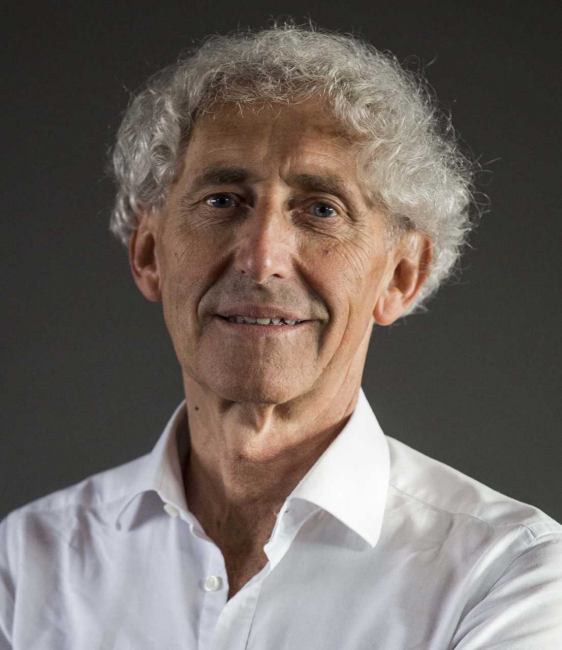
Alfio Quarteroni is an Emeritus Professor at Politecnico di Milano and at EPFL, Lausanne. He is the founder of MOX (the laboratory of Modeling and Scientific Computing) at Politecnico di Milano. Quarteroni is a member of several prestigious academies, including the Italian Accademia Nazionale dei Lincei (the oldest scientific Academy in Europe founded by Galileo Galilei), the European Academy of Sciences, the Academy of Europe, the Lisbon Academy of Sciences, the Swiss Academy of Engineering and Technology, and the Italian Academy of Engineering and Technology. He has authored 25 books translated into several laanguages and more than 450 research papers. He has been a member of the last Fields Medal Committee. Quarteroni has been honored with numerous awards, including the NASA – Group Achievement Awards (1992), the Galilean Chair from Scuola Normale Superiore in 2011, the International Galileo Galilei Prize for Sciences in 2015, the ECCOMAS Euler Medal in 2022, the ICIAM Lagrange Prize in 2023, the Blaise Pascal Prize for Mathematics in 2024, the ECCOMAS Ritz-Galerkin medal in 2024, the SIAM Ralph Kleinman Prize in 2025. His research spans applications in medicine, earthquake geophysics, environmental science, aeronautics, and the oil industry. He led the mathematical modeling for the design of Alinghi, the Swiss yacht that won the America’s Cup in 2003 and 2007, and for the preliminary mathematical project of Solar Impulse, the first solar-powered aircraft. He also developed the first comprehensive mathematical model of the human heart.According to Google Scholar, he is the most highly cited Italian mathematician.
Abstract:
Over the past decades, computational models grounded in physical laws have profoundly transformed our ability to understand and predict complex phenomena in the natural world. a These models, by providing rigorous framework in which scientific insight and technological innovation can flourish, embody what may be called natural intelligence: the cumulative result of centuries of scientific reasoning, mathematical structure, and physical understanding.This lecture begins by illustrating how this paradigm has shaped modern computational science through selected examples. We will discuss large-scale simulations in earthquake engineering, the use of mathematical modeling to enhance sports performances; and a comprehensive mathematical model of the complete cardiac function. The second part of the lecture turns to artificial intelligence and machine learning, which represent a fundamentally different paradigm, driven primarily by data rather than by physical principles. We will review the strengths of purely data-driven approaches, highlighting some of their remarkable success, while also discussing their limitations.These considerations naturally lead to the emerging field of Scientific Machine Learning, where physics-based modeling and data-driven methods are no longer seen as competing philosophies, but as complementary sources of intelligence. Scientific Machine Learning offers a new generation of computational models that are more accurate and trustworthy.In this perspective, the fusion of “natural intelligence” and artificial intelligence is not merely a technical development, but a conceptual shift: a unique opportunity to combine the explanatory power of science with the adaptive strength of data-driven learning. The lecture will argue that this synthesis represents one of the most promising directions for the future of computational science, opening new avenues for understanding complex systems and for translating mathematics into tangible benefits for society.