SLAI Seminar No. 52 | Cross-Scale Multimodal Microscopic Imaging and Computation
Title
Cross-Scale Multimodal Microscopic Imaging and Computation
About the Speaker
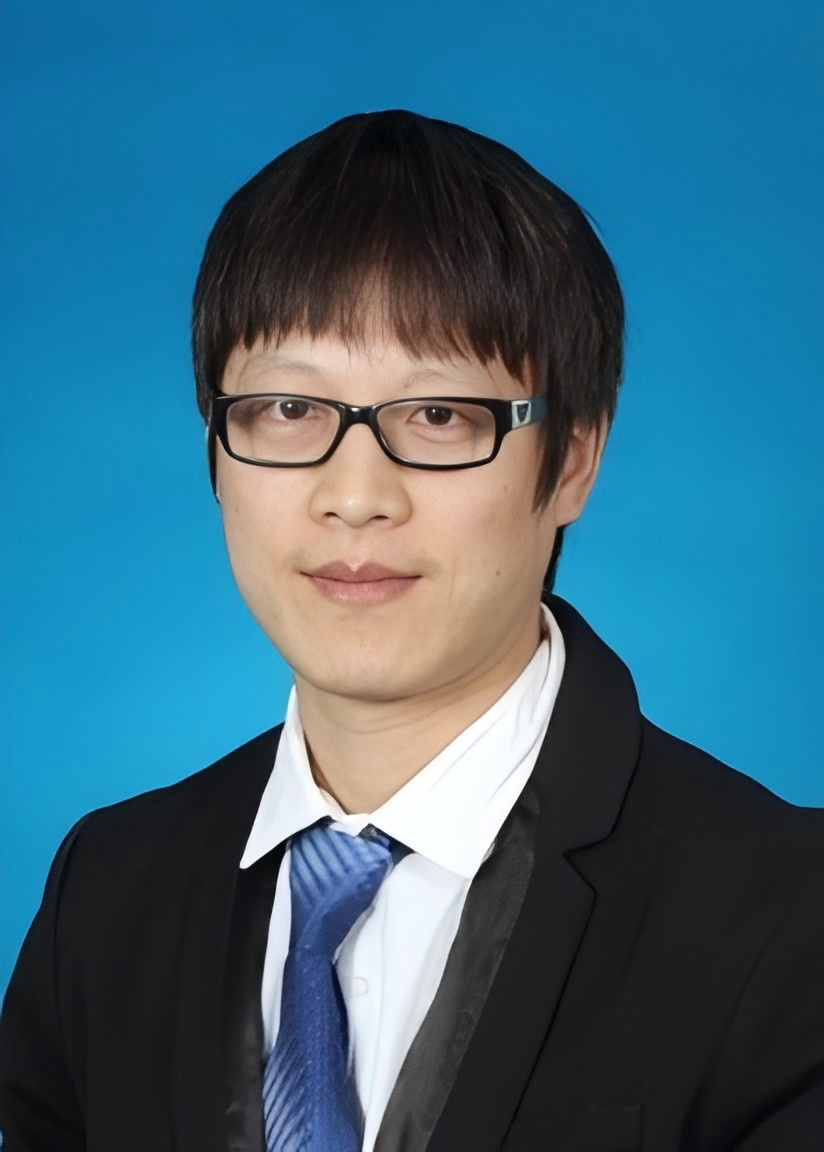
Prof. Yongbing Zhang
Yongbing Zhang is a Professor and Doctoral Supervisor at the School of Computer Science and Technology, Harbin Institute of Technology (Shenzhen). He has long conducted research in computational imaging and visual information processing. Through in-depth interdisciplinary integration of deep learning, signal processing, Fourier optics, and related fields, he explores novel methods and devices for image acquisition and intelligent processing. He has published more than 100 papers in top journals and conferences, including journals in the Nature portfolio, IEEE Trans, NeurIPS, CVPR, and ICCV, and has received three paper awards at international conferences. He has undertaken more than 10 research projects, including projects under the National Natural Science Foundation of China (Key Program, Young Scientists Fund-Type B, and General Program), the Guangdong Provincial Science and Technology Program, and the Key Program of Shenzhen Fundamental Research. He has been granted more than 50 invention patents. He has received multiple science and technology honors, including the Second Prize of the State Scientific and Technological Progress Award, the First Prize of the Technical Invention Award of the China Society of Image and Graphics, and the title of Leading Talent in Scientific and Technological Innovation of Guangdong Province.
Abstract
High-resolution microscopic imaging and computation provide key technical support for precision medicine, life sciences, and other fields. In precision medicine, high-resolution imaging and analysis of large-sized pathological specimens are required to further investigate the mechanisms of tumor occurrence and progression. However, the trade-off between the speed and quality is particularly prominent in existing imaging methods, and the large amount of data generated by large field-of-view, high-resolution images and limited annotations also pose significant challenges to efficient intelligent analysis. In the life sciences, dynamic processes such as DNA transcription and ribozyme catalysis mostly occur at the nanoscale and millisecond time scales, and information perception requires continuous observation and analysis of molecular behavior under extreme spatiotemporal constraints. In addition, the transient and highly stochastic nature of molecular motion poses fundamental challenges to the acquisition and understanding of molecular trajectories. How to theoretically overcome various limitations, achieve cross-scale multimodal microscopic imaging, and further realize real-time, intelligent, and precise computation and analysis has become a key challenge that urgently needs to be addressed. This presentation will first introduce our recent work in high-dimensional pathological imaging, pathological image analysis, and multimodal pathology analysis. Then, we will share our work on single-molecule tracking imaging and analysis for sensing micro dynamic processes. Finally, we will provide an outlook on the development of high-dimensional multimodal microscopic imaging and computation.
Host
Prof. Zhiguo Zhang
Date & Time
September 9, 2026, Wednesday,
9:30am-11:30am
Venue
Room B301, Shenzhen Loop Area Institute
(6 Hongmian Rd, Fubao Sub-Street, Futian District, Shenzhen, navigate to "Shenzhen Loop Area Institute (South Gate)" on the map.)
Online link
Join the Meeting Online

Tencent Meeting:948-1135-4043